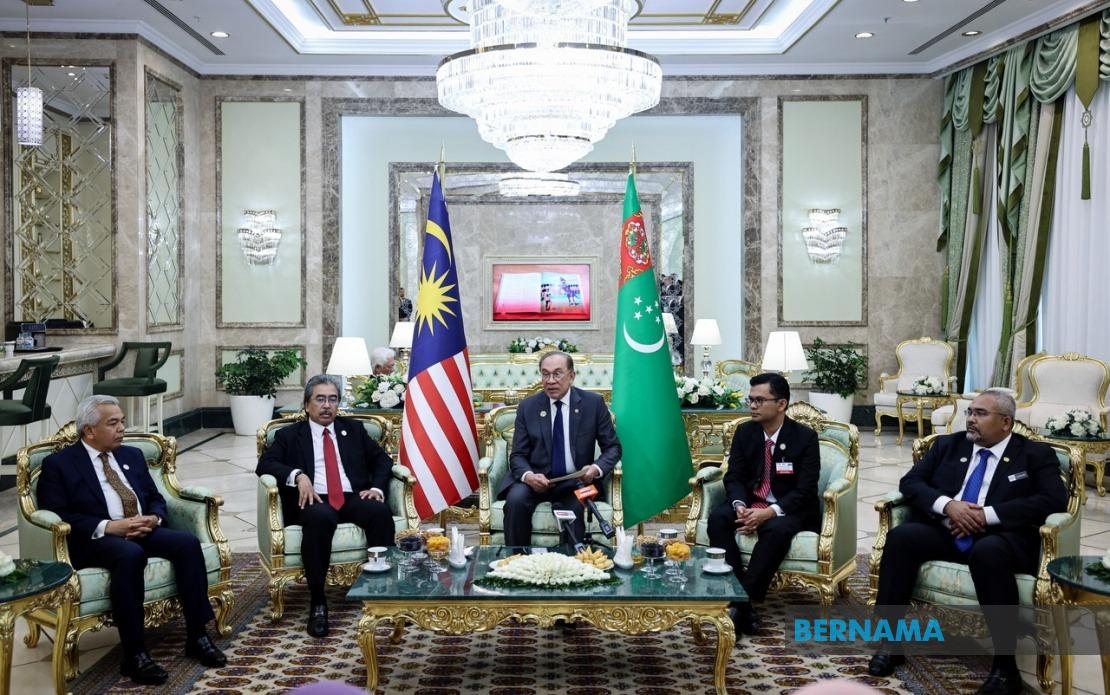
Prime Minister Datuk Seri Anwar Ibrahim has declared his official working visit to Turkmenistan a success, highlighting the journey as instrumental in deepening friendly relations and establishing fresh strategic frameworks between Malaysia and the Central Asian nation. The two-day delegation, which commenced on June 18, represents the first time Anwar has travelled to Turkmenistan in an official capacity since his appointment as Malaysia's 10th prime minister in November 2022, arriving at the personal invitation of Turkmenistan President Serdar Berdimuhamedov.
The timing of this visit underscores Malaysia's growing interest in diversifying its international partnerships and energy sourcing arrangements beyond its traditional spheres of engagement. Turkmenistan, a nation with substantial natural gas reserves—among the world's largest—holds considerable strategic importance for energy-dependent Southeast Asian economies seeking to secure long-term supply agreements. The energy sector emerged as the primary focal point during discussions, with both sides recognising substantial untapped potential that could benefit their respective populations and drive economic growth across the region.
Anwar's delegation comprised a carefully selected team reflective of Malaysia's multi-faceted engagement strategy. Accompanying the Prime Minister were Minister of Investment, Trade and Industry Datuk Seri Johari Abdul Ghani and Minister of Economy Akmal Nasrullah Mohd Nasir, alongside representatives from the Prime Minister's Office and the Foreign Ministry. This composition demonstrates the comprehensive nature of the bilateral agenda, encompassing not merely diplomatic courtesies but substantive economic and commercial negotiations requiring expertise across investment, trade mechanisms, and economic policy frameworks.
Particularly noteworthy was the presence of PETRONAS officials within the delegation. Malaysia's national petroleum corporation has long played a pivotal role in the country's energy diplomacy, and its participation signals serious intent regarding potential hydrocarbon cooperation. PETRONAS has extensive experience in gas exploration and liquefied natural gas operations throughout Southeast Asia and beyond, positioning it favourably to facilitate collaborative ventures with Turkmenistan's energy sector.
In a statement released through Facebook, Anwar extended formal gratitude to President Berdimuhamedov for the warm reception afforded to the Malaysian contingent, acknowledging the pivotal roles played by various stakeholders in facilitating successful arrangements. The Prime Minister specifically recognised the contributions of ministry personnel, the Malaysian Embassy in Ashgabat, security operatives, and media representatives, reflecting the multidisciplinary coordination required for high-level international visits of this nature.
The characterisation of this visit as inaugurating a fresh chapter in bilateral cooperation carries particular significance for Southeast Asian observers. Malaysia, as ASEAN's largest energy importer and a nation with growing energy security concerns, has increasingly sought partnerships with reliable suppliers outside traditional Western spheres. Central Asia, and particularly Turkmenistan, represents an emerging frontier for such engagement, offering geographical distance from competitive supply dynamics elsewhere and diversified sourcing resilience for Malaysia's long-term development strategies.
The emphasis upon opening new avenues for collaboration across multiple sectors suggests discussions likely extended beyond the hydrocarbon domain. Trade relationships, investment frameworks, educational exchanges, and cultural initiatives typically feature within comprehensive bilateral agendas between nations seeking to establish or upgrade formal partnerships. The mention of areas of mutual interest indicates flexibility in identifying complementary economic opportunities beyond energy, potentially encompassing manufacturing, technology transfer, and professional services sectors where Malaysia possesses competitive advantages.
From Malaysia's strategic perspective, deepening ties with Turkmenistan reflects broader regional geopolitical recalibration. As traditional energy suppliers face political uncertainty or capacity constraints, Southeast Asian nations must cultivate alternative relationships ensuring supply reliability. Turkmenistan's geographical position along historical Silk Road corridors provides potential transport route advantages for energy shipments destined toward Asian markets, though infrastructure development remains prerequisite for actualising such possibilities.
The successful characterisation of this visit, announced through social media channels accessible to Malaysian constituents, demonstrates the government's commitment to projecting an image of active diplomatic engagement and achievement. For domestic audiences, particularly those concerned with energy security and economic development, such high-level missions underscore governmental seriousness regarding prosperity objectives and international positioning. The involvement of senior economic ministers reinforces messaging that bilateral engagement carries tangible commercial prospects rather than representing ceremonial diplomacy divorced from practical outcomes.
Looking forward, the groundwork established during this inaugural visit likely positions both nations for substantive follow-up engagements and possible memoranda of understanding governing specific collaborative frameworks. Malaysian observers should monitor subsequent announcements regarding energy supply agreements, investment pledges, or technology cooperation initiatives that may formalise the foundations laid during these June discussions. The success of this maiden visit may establish precedent for expanded Malaysian diplomatic presence throughout Central Asia, a region historically receiving limited Southeast Asian government-level attention despite emerging strategic relevance.
The broader significance of this visit extends to Malaysia's international positioning within evolving Asian power dynamics. By cultivating partnerships with resource-rich nations across varied geographical regions, Malaysia reinforces its image as a pragmatic player pursuing national interests through diversified engagement rather than remaining dependent upon established relationships. This approach aligns with ASEAN's fundamental principle of maintaining equidistant strategic positioning among global powers while ensuring adequate autonomy in charting independent foreign policy courses responsive to member nations' particular requirements and circumstances.