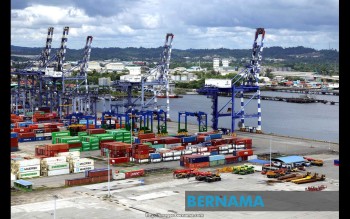
Apex Securities Bhd has substantially upgraded its export growth projection for Malaysia in 2026, lifting the forecast to 26.2 per cent from an earlier estimate of 16.3 per cent. The revision reflects the country's surprisingly strong export performance during the opening months of the year, signalling that Malaysia's outbound trade momentum is accelerating faster than initially anticipated. This upgraded outlook aligns with the securities firm's confident 5.0 per cent gross domestic product growth forecast for 2026, suggesting the broader economy is poised for solid expansion fuelled by international demand.
The revised forecast underscores Malaysia's continued reliance on high-value electronics and semiconductor exports as a primary engine of growth. Apex Securities emphasises that the electric and electronic sector should maintain its resilience through the second half of 2026, providing sustained momentum for overall shipments abroad. Beyond traditional manufacturing, the firm identifies emerging opportunities within artificial intelligence-related production, electric vehicle supply chains, and allied industrial segments, which collectively promise to sustain a healthy order pipeline extending into the medium term. For Malaysian policymakers and business leaders, this diversification beyond conventional electronics represents a crucial structural shift in the nation's export base.
Commodity exports present an equally compelling narrative for Malaysia's trade prospects in the latter half of 2026. Elevated crude oil prices globally are expected to support the country's petroleum sector, particularly as geopolitical uncertainties persist. Should disruptions materialise in the Strait of Hormuz—a critical shipping chokepoint through which vast quantities of Middle Eastern oil transit—Malaysia stands to benefit from trade diversion effects, as buyers source alternative supplies. This dynamic could provide a welcome boost to government revenues and foreign exchange earnings during a period when oil demand remains structurally robust.
Palm oil, Malaysia's iconic agricultural export, is receiving particular attention from analysts tracking commodity dynamics. The prospect of stronger biodiesel demand from Indonesia, driven by B50 blending mandates and domestic policy support, should underpin firm demand for Malaysian palm oil throughout the year's final quarter. More significantly, meteorological forecasts suggesting an intensification of El Niño conditions between October and December carry profound implications for crop yields and pricing. The hotter and drier weather patterns characteristic of El Niño episodes typically constrain palm oil production across Southeast Asia, thereby supporting prices at elevated levels and benefiting exporters like Malaysia.
Price momentum in palm oil has already validated this optimistic outlook. The commodity has appreciated 16.8 per cent to RM4,596 per metric tonne as of August 19, 2026, measured from the start of the calendar year. This substantial price appreciation enhances the value of Malaysia's palm oil exports even in volumetric terms remain stable, providing meaningful support to rural livelihoods, plantation companies, and downstream processing industries. For Malaysian consumers and manufacturers dependent on palm oil as an input, however, the price strength presents inflationary pressures that policymakers must monitor carefully.
Yet Apex Securities tempers its bullish outlook with substantial cautionary notes regarding downside risks. As 2026 progresses toward year-end, exports may encounter considerable headwinds as the front-loaded demand generated by earlier stockpiling activities exhausts itself. Importers who accelerated purchases earlier in the year to secure inventory ahead of anticipated price increases or supply constraints will gradually normalise their buying patterns, potentially depressing demand in the fourth quarter. Additionally, the statistical base from the corresponding period in 2025 was exceptionally strong, meaning that year-on-year comparisons will grow more challenging as the year concludes.
Geopolitical instability looms as perhaps the most consequential external risk to Malaysia's export ambitions. Any significant escalation of tensions in the Middle East beyond current levels could rapidly dampen global economic growth and business confidence, translating into softer international demand for Malaysian goods. Companies worldwide would likely defer capital investments and discretionary purchases, particularly in sectors such as electronics and industrial equipment where Malaysia maintains significant export exposure. The fragility of global supply chains means that even regionally contained conflicts can produce outsized economic consequences across interconnected trading networks.
American trade policy uncertainty represents an additional structural headwind confronting Malaysian exporters. The ongoing United States Section 301 investigation into excess industrial capacity maintains the threat of tariff escalation, potentially targeting Malaysian manufactured goods alongside other Asian competitors. Malaysia's position as a major electronics and semiconductor exporter makes it particularly vulnerable to any protectionist measures emanating from Washington. Should the incoming US administration adopt more aggressive trade stances, Malaysia could face tariff barriers that erode the competitiveness of its exports and reduce the appeal of domestic manufacturing investment.
The divergence between the optimistic baseline forecast and the genuine constellation of downside risks illustrates the precarious balance characterising Malaysia's economic outlook in 2026. While structural trends in electronics, artificial intelligence adoption, and commodity markets present authentic growth opportunities, geopolitical volatility and trade policy uncertainty could quickly derail these positive trajectories. Malaysian policymakers must therefore pursue a dual strategy: maximising competitiveness and industrial capability to weather potential external shocks, while simultaneously engaging multilateral forums to advocate for open trading systems that benefit nations like Malaysia dependent on unfettered international commerce.

