Egypt's Arab League Secretary-General Nabil Fahmy has issued an urgent call for the Trump administration to take a firmer stance on Israeli policies affecting Palestinians, warning that the Middle East stands on the precipice of deeper turmoil. Speaking ahead of planned talks between Trump and Israeli Prime Minister Benjamin Netanyahu in Washington, Fahmy characterised the current trajectory as perilously destabilising, with multiple flashpoints threatening to ignite simultaneously across the region.
The Arab League chief's intervention reflects mounting anxiety within the Arab world over the trajectory of Israeli-Palestinian tensions and their potential to destabilise neighbouring countries. Fahmy specifically attributed the deteriorating situation to what he termed a "deadlock" surrounding the Palestinian question, combined with what he described as "reckless escalation and brinkmanship" tactics linked to ongoing Gulf region disputes. This framing underscores how deeply interconnected the Palestinian issue remains with broader Middle Eastern security architecture, a dynamic often overlooked by outside observers focused solely on Israeli-Palestinian dynamics.
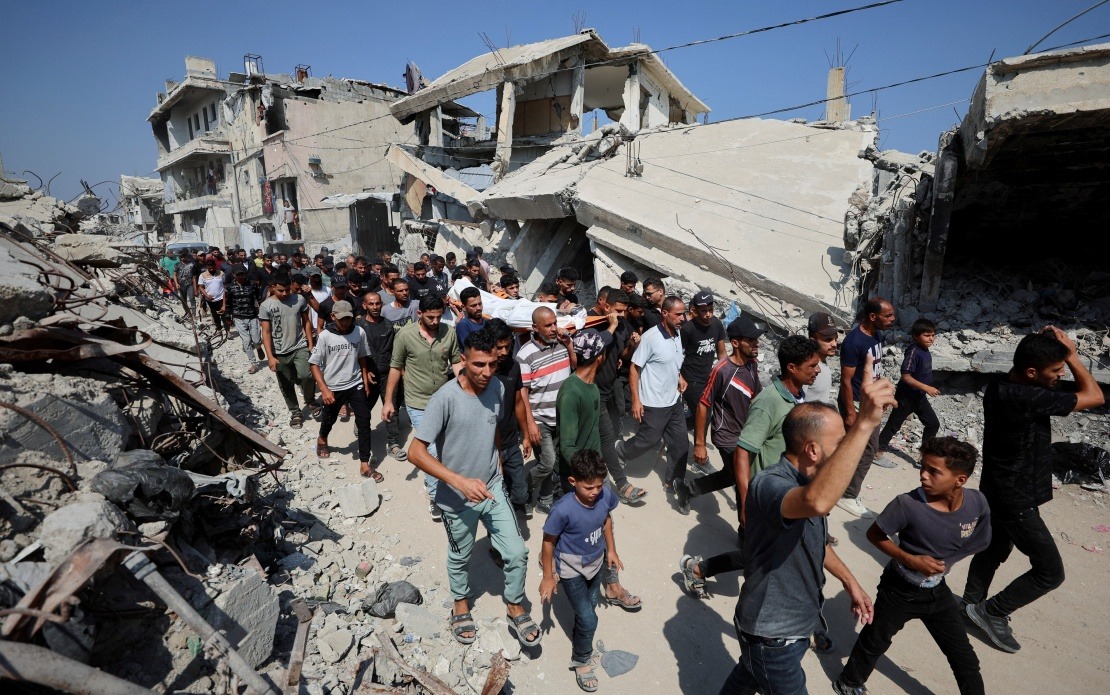
The scale of the humanitarian crisis underlying this diplomatic urgency cannot be understated. Since Israel launched its military campaign in Gaza in October 2023, the conflict has claimed the lives of over 73,000 people, with a further 174,000 sustaining injuries. Beyond Gaza's borders, the occupied West Bank has witnessed a sharp escalation in violence, resulting in nearly 1,200 Palestinian deaths across the same timeframe. These figures illustrate how the conflict has metastasised far beyond the initial flashpoint, creating multiple zones of acute danger that have strained the region's fragile equilibrium.
The broader geopolitical context compounds these concerns considerably. February saw coordinated Israeli and American military strikes against Iran, a development that prompted Tehran to launch retaliatory attacks on Gulf locations hosting American military infrastructure. These tit-for-tat escalations demonstrate how quickly localised disputes can metastasise into direct great-power confrontation, with smaller regional states caught in the crossfire. For Southeast Asian nations with significant strategic interests in Gulf security and freedom of navigation, these dynamics carry direct implications for regional stability and economic wellbeing.
Fahmy's message to Trump carries particular weight given America's historical role as a regional power broker and Israel's chief security guarantor. The Arab League chief argued explicitly that the United States bears distinctive responsibility for maintaining regional stability, framing Washington's approach as fundamental to de-escalation efforts. This positioning reflects the Arab consensus view that American diplomatic pressure remains the most credible mechanism for moderating Israeli government actions, even as it acknowledges the asymmetrical influence dynamic that leaves Arab actors dependent on American goodwill.
The Arab League chief specifically referenced Trump's September 2025 peace proposal for Gaza, which outlined a comprehensive framework encompassing ceasefire arrangements, prisoner exchanges, staged Israeli military withdrawal, establishment of interim Palestinian administrative structures, and reconstruction funding for the devastated territory. Fahmy's invocation of this plan suggests the Arab League views it as a potentially viable pathway forward, despite its modest prospects. His call for Trump to "rein in the extremist ambitions of the Israeli government" implies that Tel Aviv's current trajectory diverges sharply from even this American-sponsored framework.
Settlements in occupied territories remain a persistent source of regional contention. Fahmy accused the Israeli government of pursuing what amounts to the complete erasure of Palestinian presence through aggressive expansion of illegal settlements and continuation of displacement operations. This characterisation reflects the Arab League's view that current Israeli policies constitute a fundamental assault on Palestinian national existence rather than legitimate security measures. Malaysian observers should note that these settlement dynamics have parallels in other disputed territories globally, making this a matter of broader international law significance.
Fahmy also advocated for urgent American-Iranian diplomatic engagement aimed at reversing the February escalation cycle. His call for restoration of previously agreed understandings between Washington and Tehran, coupled with renewed negotiations designed to stabilise the region, suggests the Arab League views de-escalation in the Iran-US relationship as prerequisite to achieving broader Middle Eastern equilibrium. He further stressed the importance of maintaining freedom of navigation through critical chokepoints including the Bab el-Mandeb Strait in the Red Sea, an issue of acute concern to global shipping networks and by extension to Southeast Asian trading economies dependent on these passage routes.
The convergence of these issues—Palestinian rights, Israeli expansionism, Iranian-American tensions, and maritime security—illustrates why regional leaders regard the current moment as exceptionally precarious. For Malaysia and other Southeast Asian nations, developments in the Middle East carry implications stretching far beyond humanitarian concerns. Disruptions to shipping lanes directly affect supply chains; refugee flows create humanitarian pressures; and broader regional conflict threatens the stability underpinning global commerce. Fahmy's warning that the region approaches "a moment of explosion on more than one level" should therefore resonate with regional policymakers across the Indian Ocean.
The timing of Fahmy's statement, positioned precisely before the Trump-Netanyahu meeting, represents an attempt at diplomatic leverage during what appears a critical window for policy decisions. Whether the Arab League's concerns gain traction with an American administration historically disposed toward Israeli perspectives remains uncertain. Nonetheless, the Secretary-General's public intervention signals that Arab governments view the current trajectory as unsustainable and are determined to place Palestinian issues squarely before international decision-makers, even if prospects for meaningful policy shifts appear limited.

