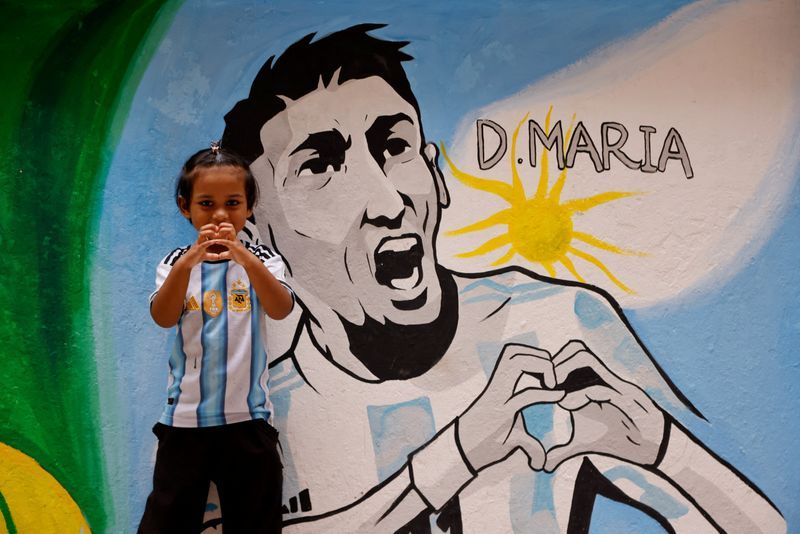
Argentina and Switzerland will clash in the World Cup quarter-finals on Saturday, carrying with them the ghosts of a gruelling encounter from over a decade ago when the South Americans emerged victorious in Brazil. That 2014 round-of-16 meeting in São Paulo saw Angel Di Maria strike in extra time to finally breach Swiss resistance, sending Lionel Messi's squad through to the later stages of a tournament that had eluded them since 1986. The two nations now return to face each other once more, but the landscape of global football has shifted considerably in the intervening years.
When these teams last met in 2014, Argentina were shouldering the weight of a 28-year World Cup drought while attempting to harness the extraordinary talents of a player in his absolute prime. Switzerland, by contrast, had become a fixture at the World Cup but remained frustrated in their pursuit of a quarter-final berth, their last appearance in that stage dating back to 1954. The psychological burden on Argentina was palpable then; the hope that Messi might finally deliver the trophy that had eluded his nation was a constant undercurrent through their campaign.
Today's context could hardly be more different for the South Americans. Argentina arrive in Kansas City as defending champions following their triumph at Qatar 2022, a victory that represented both vindication and closure for a footballing nation. Beyond that success, they finished as runners-up at the 2014 tournament, meaning they have now claimed three final appearances in the past decade alone. The pressure has shifted from desperate longing to the burden of defending hard-won glory, a different challenge altogether.
Messi, now 39 years old, is no longer the explosive athlete who terrorised defences in his prime years. Physical decline is inevitable at his age, and the pace that once defined his game has understandably diminished. Yet the tournament continues to orbit around his presence. In Argentina's last-16 match against Egypt, his side demonstrated remarkable character and resilience, staging a stunning 3-2 comeback after falling two goals behind with only eleven minutes remaining. Speaking after that dramatic turnaround, Messi reflected on the emotional toll of such matches while emphasising his team's unwillingness to surrender, a quality he clearly sees as central to their identity.
Switzerland's progress to this stage represents something more than a simple qualification; it constitutes a genuine historical breakthrough for a nation that has long punched above its weight at the World Cup despite consistent underachievement in knockout rounds. Under the guidance of Murat Yakin, the Swiss secured their first quarter-final appearance in 72 years by disposing of Colombia, earning their passage through a penalty shootout following a tense goalless draw. This achievement alone has galvanised the nation and created genuine belief that they can pose a serious threat to even the strongest opposition.
Only three players remain from the 2014 encounter: Messi himself, Swiss captain Granit Xhaka, and defender Ricardo Rodriguez. This minimal overlap underscores how football's landscape transforms across a dozen years. Xhaka, at 33, carries the experience of being part of that previous defeat but also represents Switzerland's maturation as a footballing nation. His respect for Messi is evident, though he notes that Argentina's threat extends well beyond their famous number ten. Rodriguez, similarly aged at 33, echoes this assessment, acknowledging Argentina's collective strength while recognising the singular threat posed by Messi specifically.
Swiss football has evolved beyond the rigid defensive frameworks that once defined their approach. While discipline remains central to their identity, Yakin has attempted to introduce greater creativity and attacking ambition into his team's play. The potential return of midfielder Johan Manzambi from a knee injury could prove significant, as his creative contributions were noticeably absent during the Colombian encounter and are deemed essential for Swiss aspirations in this quarter-final.
Yakin has identified potential vulnerabilities in Argentina's recent form, pointing to unconvincing performances against Cape Verde and Egypt as evidence that the defending champions are not invulnerable. This assessment, while tactically astute, reflects genuine Swiss confidence rather than mere bravado. The coach recognises that this represents a rare opportunity to test themselves against the world's best and believes tactical discipline can yield surprising results.
Argentina's coaching staff, led by Lionel Scaloni, are preparing for what they anticipate will be another stern examination. Scaloni is expected to retain most of the lineup that defeated Egypt, signalling continuity and trust in the players who produced that remarkable comeback. He has publicly acknowledged Switzerland's rich World Cup tradition and the quality of individual performers within their squad, indicating appropriate respect for an opponent that has proven it belongs among the tournament's elite eight.
The tactical dimension of Saturday's encounter promises to be particularly intriguing. Switzerland will seek to exploit any defensive frailties that may have been exposed by Egypt, while Argentina will rely on their championship experience and the creative genius of a player who has achieved almost everything in the sport. For Swiss supporters, this represents a moment of genuine possibility; for Argentina, it is another necessary hurdle on the path to retaining their crown. The 2014 meeting ended with Messi and Di Maria celebrating; whether 2024's sequel produces a similar outcome remains football's most compelling question.

