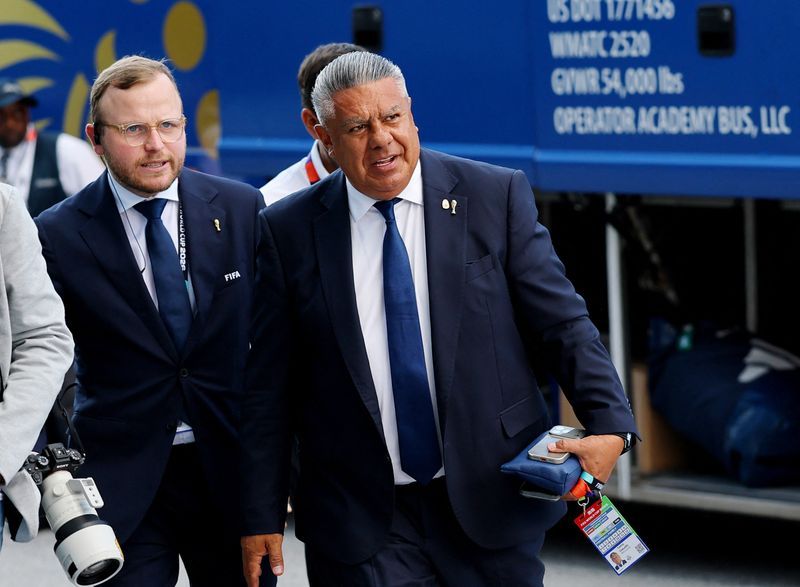
Argentina's football association moved swiftly to refute claims that its leadership faced legal pressure from American authorities, issuing a categorical denial on Wednesday following reports that FBI agents had detained officials at New York's JFK Airport. The AFA statement sought to distance both president Claudio Tapia and treasurer Pablo Toviggino from any formal legal obligations, though the organisation acknowledged that authorities had pursued questioning and witness testimony related to its operations and financial dealings.
According to multiple media reports citing eyewitness accounts, federal agents intercepted Tapia and Toviggino as the Argentine national squad prepared to depart after the World Cup final, with the questioning lasting approximately half an hour on a bus positioned on the airport tarmac. The timing of this encounter, coupled with reports that agents had sought access to Tapia's electronic devices, sparked widespread speculation about the scope and seriousness of any potential investigation into Argentine football governance and financial management. The incident marked a significant moment of international scrutiny on one of South America's most prominent sporting institutions.
The association's formal response attempted to create clear separation between the two senior officials and any judicial compulsion. The AFA statement explicitly rejected allegations that Tapia or Toviggino had received summonses requiring their testimony, nor had their personal devices been seized or confiscated. In characterising these claims as "absolutely false", the organisation emphasised that no procedural obligations had been imposed on either executive and that they remained free from formal legal constraints stemming from this matter.
Yet beneath this defensive posture lay an important concession: the AFA acknowledged that a third party had indeed been summoned before a US grand jury. This unnamed individual faced potential questioning regarding multiple people, with a specific focus on AFA officials and their roles in various transactions. The refusal to identify this third party raised questions about whether internal actors or external business associates might be cooperating with authorities or facing legal pressure themselves.
US authorities appear focused on investigating commercial contracts valued at more than $300 million linked to the AFA, according to reporting from Argentine media outlet Infobae. This inquiry represents an expansion of earlier enforcement actions, with December raids in Argentina targeting money-laundering networks that intersected with football finance. The scale of the investigation suggests American authorities are taking seriously potential violations involving cross-border financial flows and the integrity of major sporting institutions operating within US jurisdictions.
The broader context involves persistent concerns about governance and financial transparency within Argentine football. The national football authority has faced ongoing scrutiny regarding how it manages commercial arrangements, broadcasting rights, and sponsorship agreements. These arrangements generate substantial revenue but have been susceptible to opaque dealing, with questions about whether all parties involved are acting in the institution's genuine interests. The US investigation appears to target potential irregularities in how these contracts were structured, negotiated, or executed.
For Southeast Asian observers, the incident highlights how international sports governance increasingly intersects with law enforcement priorities in major economies. US authorities have demonstrated willingness to extend their investigative reach into foreign sports organisations when financial flows cross American borders or involve entities with American business connections. This trend has implications for how regional sporting bodies in Southeast Asia manage their commercial relationships and financial record-keeping.
The timing also matters. Argentina had recently concluded its World Cup campaign, a high-stakes period when international attention focuses intensely on the sport. Federal agents' decision to approach officials during this sensitive moment suggested either tactical considerations about availability or an intention to apply visible pressure during a period of maximum public interest. The approach caught both the players and administration at a moment of national celebration, creating awkward optics for all parties involved.
The investigation's trajectory remains unclear. Should charges eventually emerge against AFA officials or associated parties, Argentina's football community would face a significant governance crisis. Conversely, if authorities pursue cases against external contractors or intermediaries, the focus might rest on cleaning up the commercial ecosystem around Argentine football rather than holding internal leadership directly accountable. The third-party summons suggests that cooperation from outside sources may be driving the investigation forward.
For Malaysian readers following international football governance, this episode underscores vulnerabilities inherent in how major sports associations manage large sums of money. It also demonstrates that geographic distance offers limited protection when investigations involve financial flows connected to major economies like the United States. As Southeast Asian football develops economically, similar scrutiny could eventually extend to regional organisations, making transparent financial practices and clear contractual frameworks increasingly important.
The AFA's forceful denial served as damage control, attempting to reassure stakeholders that leadership remained unencumbered and the association capable of functioning normally. Whether this characterisation remains accurate may depend on how the investigation evolves and whether the unnamed third party provides testimony implicating Tapia, Toviggino, or other officials. The coming months will likely determine whether this represents a contained external inquiry or the beginning of a more serious institutional challenge.

