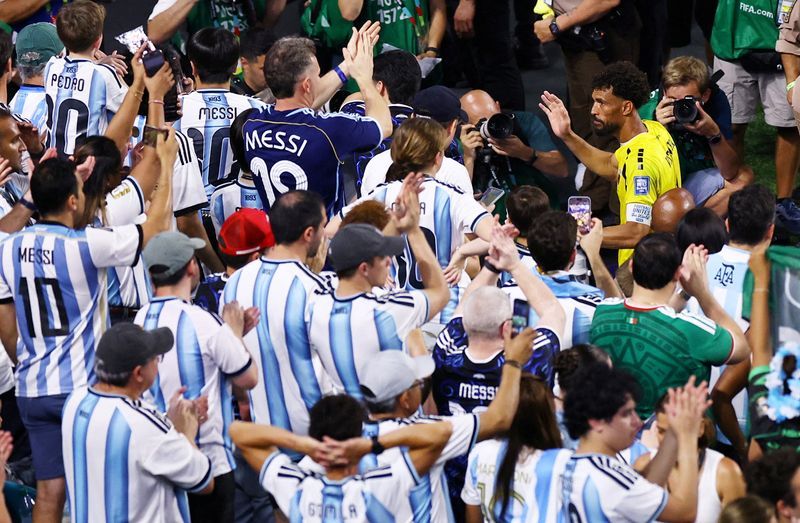
Argentina's passage to the World Cup knockout stage came at a cost on Wednesday in Kansas City, Missouri, when the reigning champions required extra time to overcome Cape Verde 3-2 in a match that left their supporters and analysts questioning their readiness for the tournament's decisive phase. What should have been a routine progression instead became a cautionary tale about complacency and tactical vulnerabilities that could haunt Lionel Scaloni's squad as they prepare to face Egypt in Atlanta on Tuesday.
The narrative of this encounter belonged as much to Cape Verde's spirited defiance as it did to Argentina's eventual triumph. The African nation, making their first appearance in a World Cup, demonstrated the kind of organised resistance and tactical discipline that tournament debutants rarely muster against established powerhouses. Twice Cape Verde clawed their way back into the contest after falling behind, each recovery serving as a reminder that the tournament's main stage produces surprises regardless of pedigree. The decisive moment arrived when defender Cristian Romero's header proved crucial, though not before an own goal from Cape Verde's Diney Borges added a layer of fortune to Argentina's advancement.
Coach Scaloni had publicly flagged the danger posed by Cape Verde before the match, particularly after observing their performances against Spain and Uruguay in the group stage. Yet the breadth of that challenge clearly exceeded expectations within the Argentina camp. For a team that had dispatched Algeria, Austria and Jordan with commanding scorelines in their opening fixtures, the prospect of genuine opposition within their group had seemed remote. That dominance in the earlier rounds now appears less like a demonstration of supreme quality and more like a product of an undemanding draw that left their defensive organisation largely untested against teams capable of executing sophisticated attacking patterns.
The structural weakness exposed during this encounter reflects a broader vulnerability that emerged during Argentina's preparation phase. Iceland had provided their sole meaningful examination against European opposition since their 2022 World Cup victory, a timeline that revealed the limited opportunities to stress-test their system against genuinely competitive sides. When opposition finally materialised in the form of Cape Verde's determined pressing and possession-based approach, Argentina's inability to manage the ball and control the tempo became painfully apparent. The team struggled to maintain the kind of elevated defensive line and collective pressing shape that modern tournament football demands.
Former River Plate manager Marcelo Gallardo, who experienced the World Cup as a player in 1998 and 2002, offered perhaps the most measured assessment of the encounter. Rather than dismissing the performance, Gallardo framed the close call as potentially beneficial, suggesting that the competitive shock of facing genuine resistance might catalyse the improvements necessary for Argentina to compete against the tournament's elite sides. His perspective carries weight given his intimate knowledge of Argentine football psychology and the particular vulnerability that arises when expected dominance fails to materialise.
Messi's contribution epitomised the individual quality that kept Argentina competitive throughout. The captain extended his World Cup goal-scoring record to twenty, yet even his clinical finishing could not mask the systemic problems that plagued Argentina's collective performance. Messi's own observations highlighted the tactical disarray, acknowledging that his team's inability to press effectively and maintain compact defensive shape created exhausting chases across the pitch. At thirty-nine years old, Messi bore the physical consequences of these structural failings, finishing visibly fatigued as Argentina ceded possession and tempo control for extended periods.
Scaloni's response to the criticism emphasised collective resilience and the absence of straightforward matches at World Cup tournaments. His insistence that the team had stepped up during adversity contained truth, yet it somewhat obscured the uncomfortable reality that Argentina had been genuinely vulnerable to a team that, while organised and committed, lacked the technical sophistication of the opponents awaiting them in the knockout rounds. The manager's deflection suggested institutional defensiveness rather than the kind of ruthless self-assessment that typically precedes meaningful tactical adjustment.
Two defensive figures whose personal journeys added poignancy to the narrative drove Argentina's advancement. Lisandro Martinez, returning from an anterior cruciate ligament injury sustained in early 2025, scored the crucial second goal, while Cristian Romero shook off recent knee problems that had limited his availability earlier in the tournament. Their performances, and particularly Martinez's emotional acknowledgment of the difficulty overcome, provided human narratives that somewhat obscured tactical deficiency. Yet individual courage and determination, however admirable, cannot substitute for the coordinated defensive structure that Argentina clearly lacked against Cape Verde's methodical approach.
The implications for Tuesday's encounter against Egypt extend beyond the immediate fixture. Argentina's defensive vulnerabilities, suddenly exposed after the pristine group stage, suggest that the team's construction contains inherent weaknesses that stronger opposition will certainly exploit. Egypt, though challenging as opponents, represent merely the beginning of a path that could include encounters with genuinely elite sides if Argentina progress further. The defensive frailties evident against Cape Verde—the inability to maintain shape under pressure, the gaps between defensive lines, the lack of effective pressing triggers—represent systematic problems that a single training session cannot remedy.
Argentina's return to their Miami base on Saturday provides limited time for meaningful tactical recalibration. The psychological challenge of recovering from a near-elimination experience, combined with the practical constraints of tournament scheduling, suggests that the team entering the Egypt match may not dramatically differ from the one that struggled against Cape Verde. Whether Scaloni possesses the tactical flexibility to implement fundamental changes, or whether Argentina will rely instead upon individual quality to overcome structural deficiencies, remains unclear heading into the knockout stages.

