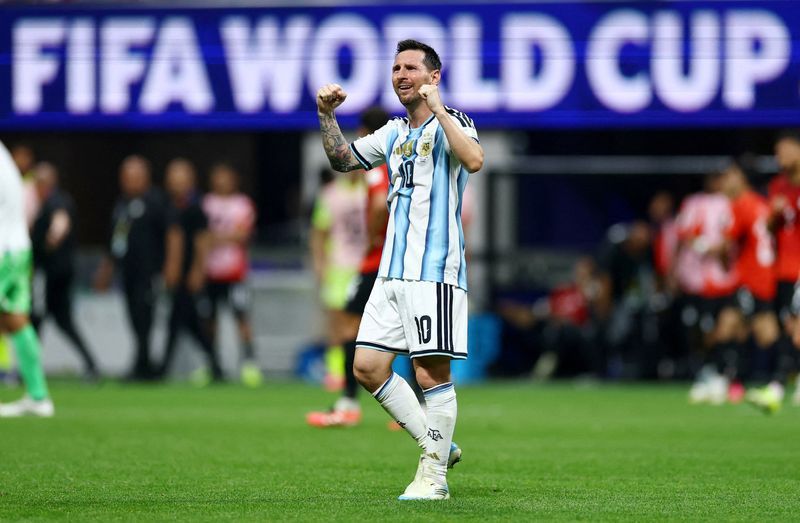
Argentina's path to defending their World Cup title has taken an unexpectedly turbulent turn in the knockout stages, a stark departure from their commanding group phase performance. After dispatching Algeria, Austria and Jordan with near-flawless execution during the initial rounds, Lionel Scaloni's squad has been forced to dig deep through two consecutive survival matches, most dramatically against Egypt in Atlanta on Tuesday where they recovered from a seemingly insurmountable 2-0 deficit with just 11 minutes remaining to secure a 3-2 victory. The Argentine federation now prepares for a Saturday quarter-final encounter against Switzerland in Kansas City, with the team's mental resilience becoming as crucial as their technical ability.
The Egypt match encapsulated a narrative that few observers anticipated when Argentina dominated the group stage. Despite their vast superiority in the opening week, Scaloni's defending champions have discovered that knockout football demands a different mentality, one forged through adversity rather than asserting dominance. Lionel Messi orchestrated the comeback himself, inspiring teammates to believe salvation remained possible even when the scoreline suggested otherwise. Former Argentina striker Carlos Tevez, analysing the performance on ESPN Argentina, emphasised that the team's defining quality was not their technical brilliance but rather the "heart they showed, the determination not to give up" when facing elimination.
What makes Argentina's journey particularly instructive for regional football audiences is how their vulnerabilities have been exposed precisely when they matter most. The holders conceded four goals across two knockout encounters, a dramatic departure from their miserly group stage defence which yielded only a single goal against Jordan—a match where Scaloni had rotated his lineup and rested key personnel. This defensive fragility suggests that opponents have identified weaknesses in their structure that were disguised by the relative weakness of their initial opponents. Yet Scaloni maintains that tactical improvements can be made, arguing that Argentina's performance against Egypt demonstrated genuine progress compared to the Cape Verde knockout, where they needed extra time to advance.
Scaloni's assessment of his team's display against Egypt reveals a manager searching for positives amid the chaos. He highlighted numerous first-half opportunities, including a penalty Messi failed to convert, suggesting Argentina created the chances necessary to win convincingly had they maintained their composure. This observation carries weight—the team generated genuine attacking opportunities rather than simply benefiting from Egyptian errors. The difference between exiting the tournament and advancing often hinges on converting one or two additional chances during crucial moments, a distinction that separates champions from pretenders in knockout football.
The psychological dimension of Argentina's recent performances cannot be overstated, particularly given the regional context where mental fortitude often determines tournament outcomes. Midfielder Leandro Paredes articulated this after Tuesday's victory, stating "we never felt out of it, we never stopped believing... it was a hard blow, but this team will always fight." Messi himself reinforced this message, noting that "this group never gives up and keeps trying until the end." Such expressions of collective determination represent the intangible qualities that occasionally prove decisive in major tournaments, transcending tactical sophistication or individual brilliance.
For Malaysian and Southeast Asian football observers, Argentina's struggle against seemingly inferior opponents offers instructive lessons about tournament football's unpredictability. The defending champions faced Cape Verde, a nation with minimal World Cup pedigree, and required extra time to overcome them before mounting an extraordinary comeback against Egypt. This pattern suggests that tournament success depends less on consistent dominance and more on a team's capacity to absorb pressure, maintain belief during adversity, and execute precisely when opportunities materialise. Such psychological resilience distinguishes tournament winners across all regional competitions familiar to Malaysian audiences.
The upcoming Switzerland encounter represents a qualitatively different challenge than the previous two matches. Scaloni characterised the Swiss as possessing "an incredible World Cup tradition" and "outstanding players" with extensive tournament experience. Switzerland's pedigree in international football, their consistency in World Cup qualifying campaigns, and their reputation for organised, disciplined football should theoretically prepare them better to exploit Argentina's defensive weaknesses than either Cape Verde or Egypt. The quarter-final represents a test against a fully prepared, established footballing nation rather than an opponent Argentina should theoretically dominate.
Argentina's defensive reconstruction becomes paramount heading into the Swiss match. Having conceded four goals in two games, the team's backline requires stabilisation to prevent further damage. Scaloni has time during Wednesday evening's training session in Kansas City to implement tactical adjustments, though wholesale changes could disrupt the team's rhythm and confidence after consecutive comebacks. The manager must balance the desire to tighten defensive structure with maintaining the attacking flexibility that generated the Egypt comeback, a delicate calibration that often determines tournament outcomes.
The broader narrative surrounding Argentina's World Cup defence reflects broader patterns in international football where pre-tournament dominance proves an unreliable predictor of knockout success. Teams that establish overwhelming superiority during group phases sometimes encounter psychological complications when facing genuine competition, their confidence undermined by the realisation that opponents possess capacity to threaten their goal. Argentina avoided this trap through demonstrable character—they refused to accept defeat and maintained pressing intensity despite adverse circumstances. Whether this resilience proves sufficient against Switzerland's organised, experienced approach remains uncertain, but the defending champions have already answered the most fundamental question: when faced with elimination, they possess the collective will to fight for survival.

