Nestled in the Bohemian countryside near Prague, an extraordinary house painted in bright sky-blue and white stands as a testament to one man's enduring devotion to Argentine football. Music promoter Miloslav Urbanec has turned his three-storey residence in Bukovka, roughly 90 kilometres east of the Czech capital, into an unmistakable shrine to La Selección, adorned with murals of Lionel Messi, a life-size statue of Diego Maradona, and a towering sun emblem mirroring the central motif of the Argentine flag. The property serves as a visual declaration of allegiance that would be difficult to miss from the road, blending architecture with sporting passion in equal measure.
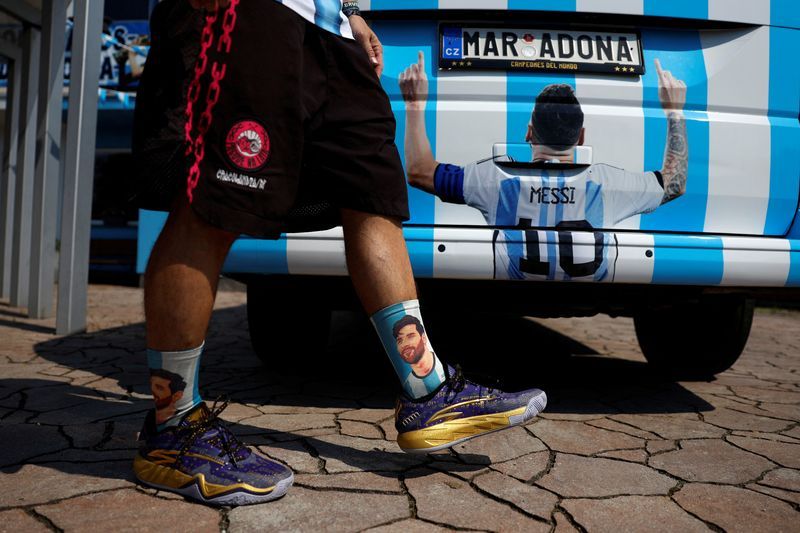
Urbanec's commitment to the Argentine cause extends far beyond his home's exterior. The surrounding property features an all-weather football pitch enclosed by placards celebrating players associated with Boca Juniors, the club where Maradona once achieved legendary status. Even his personal vehicle reflects this passion—a van painted in the same sky-blue and white colours bears images of both Maradona holding the World Cup and a contemporary portrait of Messi, emblazoned with the declaration "In Messi we trust" and a custom registration plate reading "MARADONA". The breadth and depth of such displays offer insights into how global football iconography transcends geography and cultural boundaries, resonating powerfully with supporters across Europe.
The roots of Urbanec's passion trace back to childhood memories of watching Argentina's 1978 World Cup triumph alongside his father. He recalls being captivated by the long-haired style of players like Mario Kempes, whose performances during that tournament left an indelible impression on the young Czech boy. That moment crystallised into a lifelong commitment that has shaped his sporting interests and, quite literally, his domestic landscape. At 51 years old, Urbanec has spent more than four decades nurturing this connection to Argentine football, transforming youthful admiration into an identity that permeates every aspect of his public and private life.
The depth of his attachment manifests in deeply personal decisions. When his second son was born seven years ago, Urbanec named him Lionel after Messi, convinced even then that the then-emerging Argentine talent possessed something extraordinary. This naming choice represents more than a parent's affection; it reflects the extent to which Argentine football figures have embedded themselves within Urbanec's family structure and his vision for the future. For Urbanec, Messi represented not merely a footballer but a symbol of excellence and inspiration worthy of passing to the next generation.
Urbanec's conviction in Argentina's footballing abilities remains absolute and unwavering. Speaking with the certainty of someone whose faith has been tested and reinforced across multiple decades, he expresses complete confidence in the national team's capacity to achieve further victories on the world stage. His assessment of the current squad emphasizes their technical superiority, describing La Selección as "absolutely amazing" and asserting without hesitation that they will triumph again. Beyond the statistics and match analyses that dominate football discourse, Urbanec grounds his optimism in an aesthetic appreciation—his belief that Argentina plays "the most beautiful football" reflects how sporting loyalty often transcends mere results to encompass emotional and artistic dimensions.
The broader implications of Urbanec's passionate fandom offer fascinating perspectives on how international sporting cultures permeate communities far removed from their origins. In the Czech Republic, a nation with its own rich football traditions and achievements, the presence of such devoted followers of distant teams speaks to football's unique capacity to forge transnational connections. Southeast Asian readers may find resonance in this phenomenon, as similar patterns of passionate support for European and South American clubs flourish across Malaysia, Indonesia, and neighbouring countries, often rooted in memorable tournaments watched during formative years.
Urbanec's story also illuminates how individual fans become ambassadors for their chosen teams and nations within their local communities. The prominence of his house in Bukovka means that every resident and visitor encounters a constant, colourful reminder of Argentine football's presence and appeal. This grassroots cultural influence operates beneath the radar of official marketing campaigns and sponsorship arrangements, yet profoundly shapes how football's global narrative spreads across diverse populations. For many in Central Europe, individuals like Urbanec serve as bridges connecting them to the passion, drama, and technical excellence associated with South American football.
The recent timing of Urbanec's reflections coincides with significant international competition, positioning his optimism within the contemporary football calendar. As Argentina prepared to face Cape Verde in knockout-stage competition on July 3, supporters like Urbanec embodied the hope and certainty that sustains fans through tournament campaigns. His belief transcends the pragmatic calculations of odds and head-to-head records, instead resting upon the accumulated faith built through decades of watching his chosen team perform on sport's grandest stages.
What emerges from Urbanec's extraordinary devotion is a portrait of how sporting passion operates as a form of personal identity and community expression. His home functions simultaneously as private residence and public statement, a physical manifestation of emotional commitments that connect him to millions of fellow supporters across the globe. In the digital age, where social media allows instant connection with distant communities, individuals like Urbanec represent an older, more tangible form of fandom—one rooted in physical transformation of personal space and steadfast commitment independent of trending hashtags or viral moments. His house stands as a permanent, painted declaration that Argentina's football legacy has touched hearts and inspired devotion in the most unexpected corners of Europe.

