As Argentina and England prepare for their World Cup semi-final encounter in Atlanta on Wednesday, tensions extending far beyond the pitch have surfaced—prompting the April 2 War Veterans Federation to issue an unusual appeal asking fans to separate sporting passion from longstanding territorial claims. The federation's statement, released on Monday in Kansas City, represents a carefully calibrated message from those with direct experience of military conflict between the two nations, seeking to maintain the distinction between celebrating national pride through football and leveraging the global stage for political purposes.
The historical backdrop to this appeal runs deep. Argentina and Britain fought a brutal 74-day conflict in 1982 over the South Atlantic islands known as the Falklands by the British and the Malvinas by Argentines. The human cost was devastating: 649 Argentine soldiers lost their lives, alongside 255 British combatants. For Argentina, the war remains a defining national trauma, and the territorial dispute continues to animate political discourse decades later. The memory of those who died remains a powerful force in Argentine national identity, but the veterans' federation has determined that commemorating their sacrifice need not require weaponising a football match.
In their formal statement, the federation articulated a nuanced position that acknowledges competing priorities. They described the upcoming encounter as "not an armed rematch nor historical compensation," emphasising that honouring fallen soldiers and pursuing legitimate territorial claims through proper channels need not be conflated with the sporting arena. This distinction carries particular weight when expressed by those who fought in the actual conflict, as their words carry moral authority that transcends typical diplomatic posturing. The federation stressed that sovereignty disputes should be pursued through established international mechanisms—diplomatic negotiation, appeals to historical truth, and formal claims lodged at the United Nations—rather than being inserted into cultural moments like major sporting events.
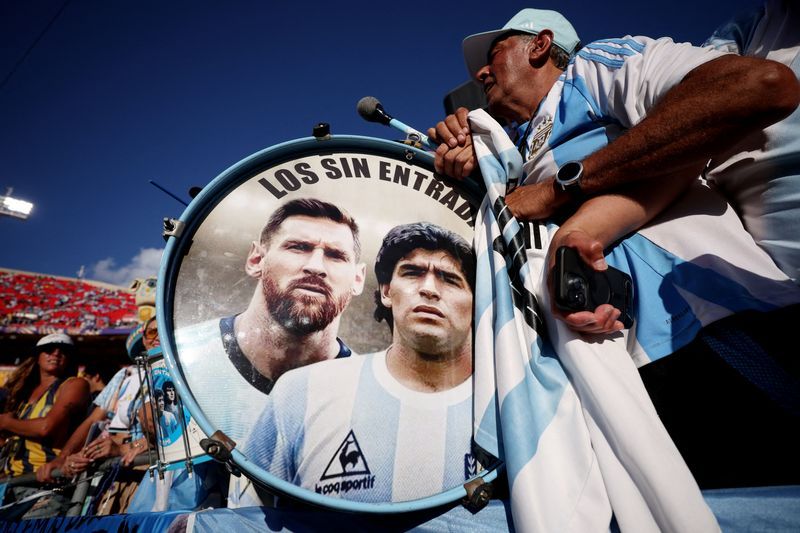
The appeal arrives at a moment when Argentine fans and players have been prominently invoking the Malvinas through chants and public commentary during the tournament. These displays reference not only the territorial claim but also national football heroes such as Diego Maradona and current captain Lionel Messi, whose quest to capture a second World Cup title has galvanised supporters. The emotional intensity surrounding this World Cup run is understandably high, with Messi's potential final opportunity to achieve this crowning achievement providing powerful motivation. Yet the veterans' federation has determined that channelling this passion constructively means keeping the focus squarely on the sport itself.
Notably, Argentina's official representatives have largely heeded calls for restraint. Manager Lionel Scaloni has signalled that the match will be decided purely on footballing merit, with nothing beyond sporting stakes in play. The messaging from the Argentine side suggests institutional discipline in keeping geopolitical matters separate from competition preparation. This reflects a broader international understanding that World Cup semi-finals are moments for celebrating athletic excellence rather than revisiting unresolved disputes, however legitimate those disputes may be in other contexts.
England's camp has similarly sought to frame the encounter as a straightforward football competition. Goalkeeper Jordan Pickford told reporters that the semi-final amounts to "just a game of football," emphasising that two proud nations would let their performances on the pitch do the communicating. This mirroring of messages from both sides suggests a shared interest in maintaining the boundary between sport and statecraft, at least publicly. For global audiences and football's governing bodies, this restraint provides reassurance that the match will be contested within appropriate parameters.
The rivalry between Argentina and England carries profound historical weight within international football itself, independent of Cold War tensions or territorial disputes. The teams have met memorably during World Cup competitions, most notably in the 1986 quarter-final where Maradona's extraordinary individual brilliance—including the infamous "Hand of God" goal—secured Argentina's progression. That match entered folklore not because of political circumstances but because of sporting drama and individual genius. The federation's implicit argument is that this tradition of memorable football encounters should be preserved and expanded, with Wednesday's semi-final adding another chapter to their competitive history through football excellence rather than nationalist sentiment.
For Malaysian readers and Southeast Asian observers, the Argentine situation offers instructive parallels regarding how nations with unresolved territorial disputes might approach major international events. The region has witnessed its own tensions over maritime boundaries and island claims, and the veterans' federation's appeal suggests a model whereby historical grievances and legitimate sovereignty positions need not preclude respectful sporting competition. The message that diplomatic channels remain the proper venue for territorial claims, while international sporting events should prioritise excellence and fair play, resonates beyond Argentina's specific circumstances.
The federation's carefully worded statement also carries implications for how national memory and contemporary sporting moments intersect. By explicitly stating that "memory remains intact" even as supporters focus on football, the veterans acknowledge that honouring sacrifice and pursuing national interests through appropriate mechanisms are entirely compatible with setting aside political messaging during athletic competition. This nuanced position rejects the false dichotomy that patriotism requires weaponising every international platform. Instead, it suggests that true respect for those who sacrificed in actual conflict involves demonstrating the maturity to contest sporting battles on their merits rather than recycling geopolitical disputes.
As the semi-final approaches, the federation's intervention appears to have established parameters for how this encounter should be framed. Both teams' leadership has adopted similarly circumscribed rhetoric, suggesting that the match will proceed as a celebrated piece of sporting theatre rather than a proxy for unresolved international tensions. The football will indeed speak loudly enough without requiring political amplification, and Argentina's veterans have made clear that they prefer it that way.

