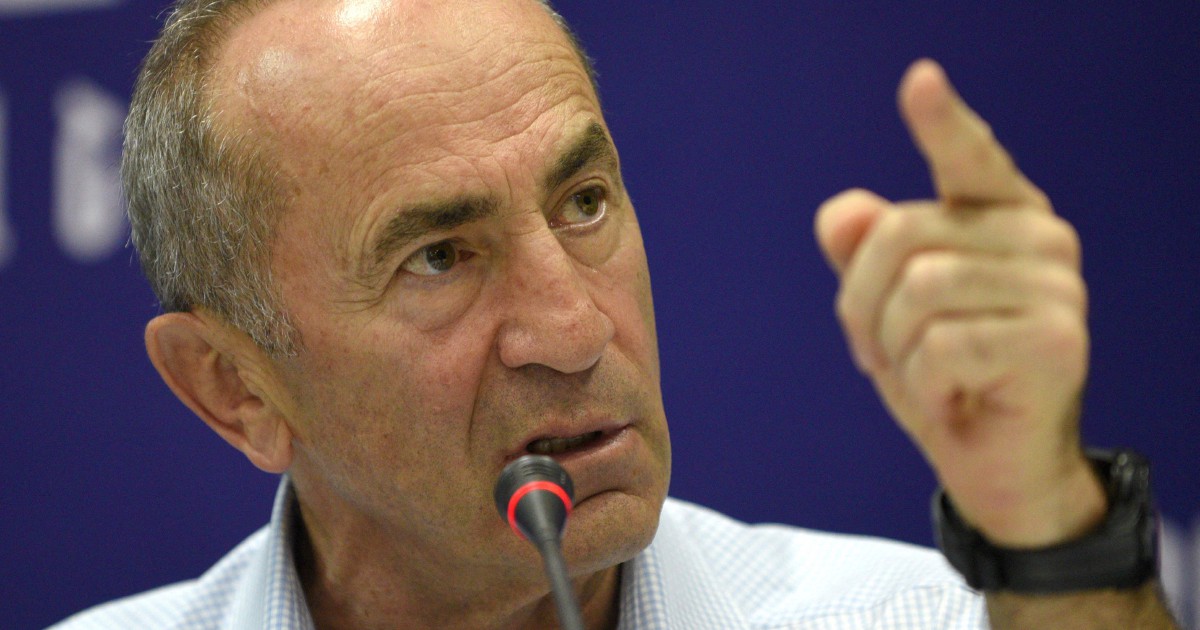
Armenia's prosecution authority has moved against one of the country's most prominent political figures, detaining former president Robert Kocharyan on corruption-related charges and marking a significant escalation in the authorities' anti-corruption campaign. The detention on Tuesday comes as Kocharyan, who now operates as an influential opposition voice, faced formal accusations spanning multiple offences allegedly perpetrated during his presidential tenure.
The action signals intensifying scrutiny of Armenia's senior political establishment and reflects broader tensions within the country's governance structures. Kocharyan, who led the nation during a particularly turbulent period in its post-Soviet history, has remained a substantial force in Armenian public life despite stepping down from the presidency. His prominence in opposition politics—particularly given Armenia's volatile regional dynamics and recent conflicts—adds considerable weight to the prosecution's decision to formally charge such a high-profile figure.
Corruption investigations targeting former state leaders in post-Soviet republics often carry political dimensions, and the Armenian case sits within this broader pattern. The specific allegations relate to conduct during Kocharyan's presidential years, when the country faced multiple crises including armed conflict and internal political instability. The timing and execution of such prosecutions frequently intersect with contemporary political rivalries and governance transitions.
For Malaysian and Southeast Asian observers, the Armenian case illustrates universal challenges facing post-conflict and transitional democracies attempting to balance accountability with political stability. Many countries in this region have grappled with similar questions about how aggressively to pursue former leaders on corruption charges without destabilising the present political order or appearing to weaponise the justice system.
The detention of a former head of state on corruption charges represents a decisive institutional response, whether viewed as strengthening rule of law or as politically motivated action depending on one's perspective. In regional contexts, such moves can reshape political landscapes significantly, deterring future malfeasance or conversely, entrenching opposition to current administrations.
Armenian civil society and international observers will likely scrutinise the prosecution's evidence and procedures carefully, as the case tests the country's commitment to transparent judicial processes. The charges being brought against Kocharyan—described as multiple corruption-related offences—suggest prosecutors believe they have built a substantial case, though the specifics of each allegation remain subject to legal proceedings.
The detention also illuminates ongoing struggles within Armenia regarding institutional independence and the separation of powers. Whether prosecutorial decisions reflect autonomous institutional judgement or respond to political direction from the executive remains a critical question that observers both domestically and internationally will assess as the case progresses.
Kocharyan's position as an opposition figure adds complexity to perceptions of this prosecution. Opposition leaders in various democracies have faced legal challenges that supporters characterise as politically motivated, while prosecutors and governments argue they merely reflect evidence-based decisions. The Armenian case will likely generate similar competing narratives among domestic constituencies and international commentators.
The broader implications for Armenia's institutional development are substantial. Successfully prosecuting high-level corruption cases can strengthen public confidence in the justice system and reinforce norms against elite misconduct. Conversely, if proceedings appear arbitrary or unfair, they may undermine institutional legitimacy and deepen polarisation between political factions.
For regional stability, internal Armenian political developments carry importance given the country's geopolitical position and ongoing tensions with neighbouring Azerbaijan. Domestic political distraction through major prosecutions of former leaders could potentially affect Armenia's capacity to address pressing external security concerns and international relations in a coherent manner.
The formal charging of Kocharyan follows investigative work that presumably accumulated substantial documentation of alleged offences. Prosecutorial decisions to formally charge sitting or former leaders typically require confidence in evidentiary foundations, though standards for evidence and proof vary across jurisdictions and systems.
The coming months will determine whether Armenia's courts conduct thorough, transparent hearings that satisfy both domestic and international standards for fair proceedings. The case's trajectory will meaningfully influence perceptions of Armenian governance quality and judicial independence, factors that contribute to the country's international reputation and domestic political cohesion.

