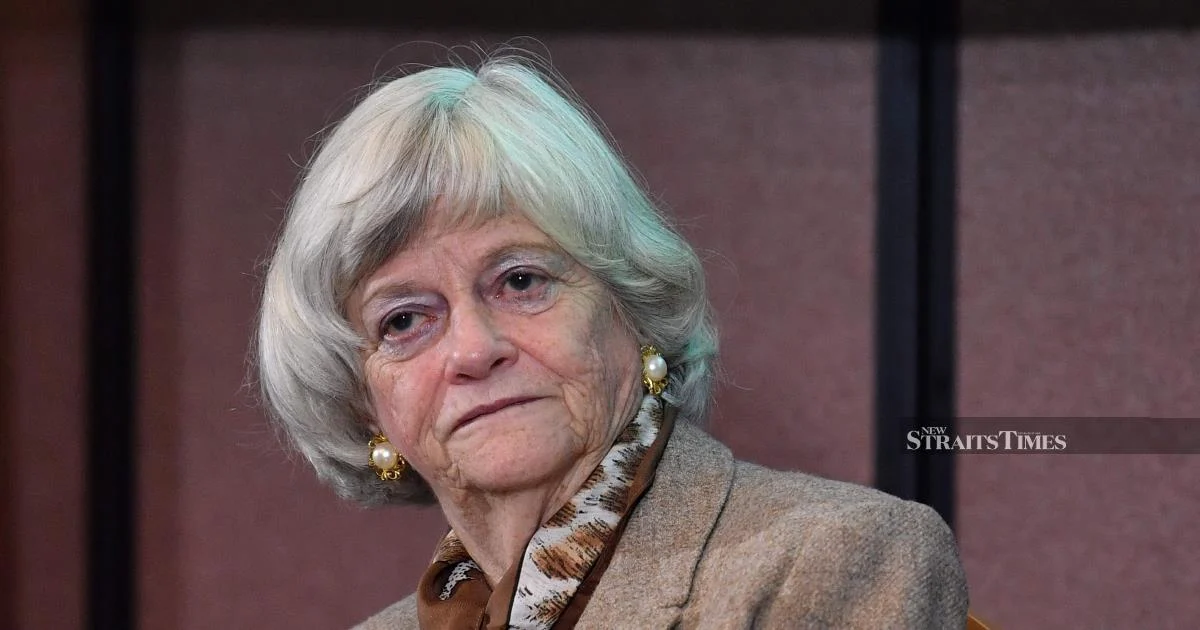
Ann Widdecombe, the 78-year-old former British government minister and leading figure with Reform UK, has been found dead, prompting police to arrest a man on suspicion of murder. The discovery, announced on Friday, marks a significant moment in British politics, given Widdecombe's decades-long prominence across multiple political platforms and her substantial public profile both domestically and internationally.
Widdecombe's body was discovered bearing serious injuries that immediately triggered a criminal investigation. The circumstances surrounding her death moved rapidly into the murder investigation phase, reflecting the gravity of what officers encountered at the scene. While formal details remain limited at this early stage, authorities have prioritised swift action in bringing the suspect into custody.
The arrest represents a significant development in what has become a high-profile case. The suspect, whose identity has not yet been disclosed by police, is now in custody facing serious allegations. Investigators are working to establish the precise circumstances that led to Widdecombe's death and to gather evidence that will inform the subsequent stages of the investigation and potential prosecution.
Widdecombe's political career spanned several decades, making her a familiar figure to generations of British voters and observers of Westminster politics. Her high visibility and long association with government and parliamentary debate meant that news of her death would inevitably attract significant public and media attention. Her involvement with Reform UK, the party associated with Brexit advocacy and more recently broader populist political positions, represented a significant chapter in her professional life.
For Malaysian and Southeast Asian readers, Widdecombe's prominence reflects the role that individual politicians can play in shaping national discourse. Her career trajectory—from government minister to media personality to political activist with a newer party—illustrates patterns of political reinvention and the ways that seasoned political figures attempt to remain influential across changing political landscapes. This case also underscores how sudden, violent death can shock established political systems, regardless of a nation's stability or democratic maturity.
The investigation into her death will likely attract intense scrutiny from British media and the public, particularly given her recognizable status and the violent nature of the circumstances. Police will be working to establish a clear timeline of events, identify any witnesses who may have observed suspicious activity, and gather forensic evidence from the scene. The motive, the relationship between the arrested person and Widdecombe, and other investigative details will emerge as the case progresses through the justice system.
For Reform UK and its supporters, Widdecombe's death represents a profound loss of a prominent advocate. She had become increasingly visible as a public personality commenting on British politics, media, and social issues. Her sudden removal from public life through such violent circumstances will inevitably prompt reflection within her party and among her political allies about their future direction and representation.
The speed with which authorities moved to make an arrest suggests that initial investigative work was relatively swift, or that there were circumstances at or near the scene that quickly identified a suspect. This differs markedly from cases where investigations remain open for extended periods before any arrest. The efficiency of the response reflects modern policing capabilities and the resources dedicated to cases involving prominent figures.
Britain's political establishment will be processing this development amid ongoing discussions about political polarization, security, and the broader health of democratic discourse. Deaths involving public figures, particularly through violent means, often prompt wider conversations about the state of civil society and the pressures facing those in public life. Widdecombe's death will likely trigger such discussions, particularly given her sometimes contentious and provocative public statements over the years.
As the investigation continues, more details will emerge regarding the circumstances, the evidence against the arrested individual, and the broader context of what occurred. The courts will ultimately determine guilt or innocence, but the immediate shock of her death—and the rapid police response—has already placed this case among the most significant recent incidents involving British political figures. For international observers, including those in Malaysia and Southeast Asia, the case serves as a reminder that political violence and sudden tragedy can strike even in established democracies with strong institutional frameworks.
The coming weeks will see further developments as police conduct interviews, gather evidence, and prosecutors determine what charges to bring. Media coverage will intensify as more information becomes available, and political circles will continue to process what this loss means for British public life and the future of the parties and causes Widdecombe championed throughout her long career.

