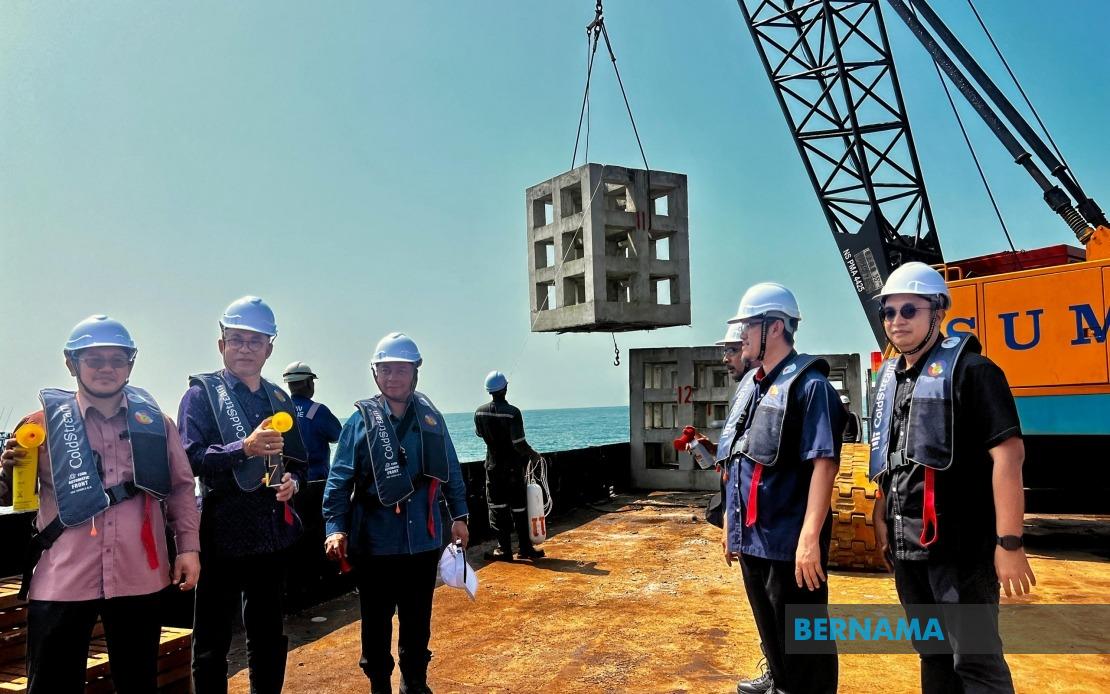
Malaysia's coastal fishing communities face mounting pressure from industrial-scale operations, but Kelantan is taking steps to protect artisanal fishermen through an innovative marine conservation strategy. The state has deployed 30 artificial reef structures off the Tok Bali Jetty, positioned approximately 4.6 nautical miles from shore, with the dual purpose of creating protected fishing grounds for small-scale operators and establishing spawning habitats for commercially important fish species. The initiative, funded through a royal contribution from Sultan Muhammad V, represents a meaningful investment in preserving the livelihoods of thousands of coastal families who depend on inshore fishing.
According to Kelantan Fisheries Department director Ismail Ibrahim, the artificial reef structures serve as both ecological nurseries and physical barriers against encroachment by large trawlers and industrial fishing vessels. The submerged structures are deliberately designed to entangle fishing gear, making these waters inhospitable for mechanised operations with heavy equipment. This tactical approach addresses a persistent problem throughout Southeast Asia: the gradual displacement of traditional fishermen from productive near-shore zones where they have historically worked. By rendering certain coastal areas economically inefficient for large-scale fishing operations, the reefs effectively preserve these spaces for communities that rely on sustainable, artisanal methods and depend on daily catches for household income.
The ecological rationale underpinning the deployment strategy is equally significant. Fish populations require dedicated breeding and juvenile growth zones where they are protected from intensive harvesting pressure. When mature fish congregate around the reef structures to spawn and young fish develop in the shelter of the artificial habitats, the surrounding fishing grounds become more productive. This creates a virtuous cycle where increased fish availability translates directly into higher daily catches for coastal fishermen, thereby strengthening household food security and supporting rural incomes across the state. The department projects that measurable improvements in fish landings should become apparent within six months, although the timeline depends on local oceanographic conditions and how quickly natural marine ecosystems colonise the new structures.
Kelantan's commitment to reef deployment has evolved substantially over the past two decades. Since 2007, the Fisheries Department has installed approximately 400 artificial reef units across four distinct locations throughout state waters, with an additional 72 structures scheduled for deployment in phases during the current year. This cumulative effort demonstrates sustained investment in marine resource management, distinguishing Kelantan from other Malaysian states where such programmes receive inconsistent funding or political attention. The incremental expansion strategy allows the department to monitor outcomes systematically and adjust future deployments based on empirical evidence regarding which designs and locations prove most effective for both fish conservation and smallholder protection.
Maintaining the effectiveness of artificial reef systems requires ongoing operational commitment beyond the initial installation phase. The Kelantan Fisheries Department undertakes regular monitoring missions to inspect reef conditions and conducts cleaning operations to remove ropes, discarded fishing nets, and other anthropogenic debris that accumulate on the structures. These maintenance activities are essential because entangled gear and accumulated waste can compromise the reef's ecological function and create hazards for small fishing vessels navigating the area. By treating reef stewardship as an integral operational responsibility rather than a one-time deployment exercise, the department ensures that these investments continue delivering benefits across multiple seasons and years.
The Kelantan initiative holds broader significance for fisheries management across the region. Southeast Asia's fishing communities face intensifying competition from mechanised vessels with sophisticated fish-finding technology, creating asymmetric competitive pressures that disadvantage small operators using traditional methods. Artificial reefs represent a relatively cost-effective policy instrument for redressing this imbalance, particularly when funding sources—such as royal patronage or state environmental budgets—can be mobilised without direct burden on fishing communities themselves. The model also demonstrates that conservation and livelihood protection need not be contradictory objectives; properly designed reef programmes simultaneously enhance fish stocks, protect fishing grounds, and support community resilience.
Ismail Ibrahim's statement regarding expansion plans underscores official recognition that the current reef network, while substantial, requires further development to adequately protect Kelantan's fishing communities. The department has signalled intentions to increase deployment density across state waters, suggesting that budgetary constraints rather than technical or political obstacles have historically limited expansion. This opens potential avenues for external support, whether through federal fisheries programmes, environmental funding mechanisms, or continued royal patronage, that could accelerate the timeline for establishing comprehensive protection across vulnerable fishing zones.
From a food security perspective, supporting artisanal fisheries in states like Kelantan contributes meaningfully to Malaysia's broader objective of enhancing domestic protein self-sufficiency. Coastal fishing communities supply significant volumes of affordable, nutritious seafood to domestic markets, particularly to lower-income households that depend on fish as their primary animal protein source. When industrial operations progressively displace smallholder fishermen, the social cost extends beyond individual livelihood losses to encompass broader food system vulnerabilities and reduced economic resilience in rural maritime communities. Reef-based protection mechanisms help stabilise these production systems and preserve the social fabric of fishing-dependent coastal settlements.
The technical specifications of the deployed structures merit consideration for their practical effectiveness. Positioned less than five nautical miles from the coastline, the reefs are situated within the traditional fishing range of small vessels that typically operate inshore, making them directly accessible to target communities. Simultaneously, this proximity to shore places them beyond the economically optimal operating range for larger industrial vessels that incur substantial fuel costs and require deeper waters to justify operation. This geographic positioning thus achieves the protection objective through market logic rather than through enforcement mechanisms alone, creating natural incentives that discourage incursion without requiring continuous surveillance or confrontational policing of marine boundaries.
Looking forward, the success of Kelantan's artificial reef programme may influence fisheries policy discussions across other Malaysian states and Southeast Asian nations. As coastal pressures intensify and awareness grows regarding the social and ecological costs of unregulated industrial fishing expansion, reef-based strategies offer a pragmatic, evidence-based approach to reconciling conservation with livelihood protection. The Kelantan model demonstrates that significant environmental and social outcomes can be achieved through sustained, appropriately funded commitment to marine stewardship, validating investments in the long-term sustainability of traditional fishing systems that continue supporting millions of people throughout the region.

