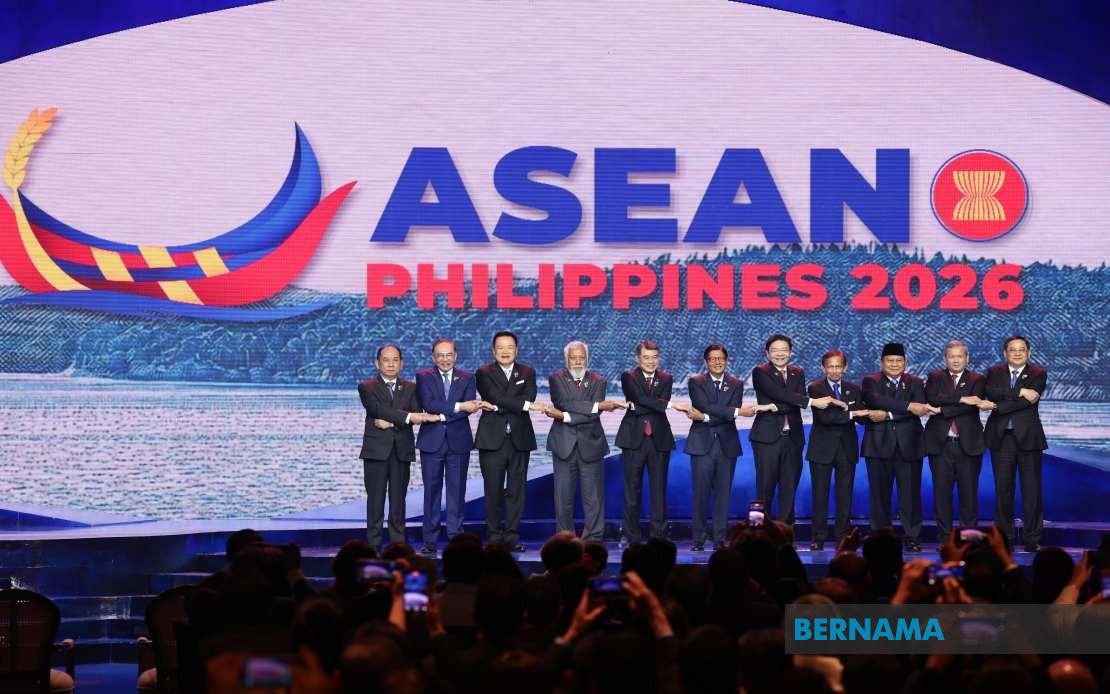
The Association of Southeast Asia Nations marked its 59th anniversary on August 8, arriving at a defining inflection point in its institutional history. Having spent nearly six decades establishing itself as a consequential regional actor, ASEAN now confronts a fundamentally different set of imperatives. The bloc's challenge is no longer the foundational task of asserting its existence and diplomatic standing on the international stage. Instead, member states face the more intricate challenge of deepening internal cohesion and functional integration while navigating an increasingly contested geopolitical landscape where major powers vie for influence and regional stability grows fragile.
The anniversary arrives amid considerable turbulence. The escalating conflict between the United States and Iran, alongside broader instability in West Asia, has created immediate vulnerabilities for Southeast Asia. Energy security concerns have become acute, and global supply chains face persistent disruption that reverberates through regional economies heavily dependent on international trade. These external shocks underscore a central reality: ASEAN's 700 million people require more than symbolic unity. They need a bloc capable of delivering tangible prosperity and security through effective collective action and coordinated policy responses.
Professor Phar Kim Beng, Director of the International Islamic University Malaysia's Institute of International and ASEAN Studies and a former ASEAN Secretariat official, identifies the core challenge with precision. ASEAN's future depends fundamentally on two complementary elements: external recognition from major powers that the bloc deserves centrality in regional affairs, and equally important, the member states' capacity to reinforce that centrality through their own unified action. External validation matters only insofar as it accompanies substantive internal reinforcement. The ASEAN Community Vision 2045 provides an ambitious roadmap, yet realising it demands far more intensive cooperation than the bloc has historically demonstrated. Professor Phar emphasises that member states must actively position themselves as central actors and invest in making ASEAN the vibrant single economic community it aspires to represent.
The practical requirements are demanding and multifaceted. Enhanced labour mobility across borders remains inadequately developed, limiting opportunities for Southeast Asian workers and fragmenting the regional labour market. Digital connectivity lags well behind comparable standards in developed economies, undermining efforts to create a seamless digital space for commerce and innovation. Government-to-government cooperation, while improving, still reflects insufficient coordination in policy frameworks and regulatory standards. These deficiencies prevent ASEAN from achieving the integration levels necessary to compete effectively in global markets and to function as a unified voice in international negotiations.
Dr Rahul Mishra, Associate Professor at Jawaharlal Nehru University's Centre for Indo-Pacific Studies, offers a complementary assessment that extends the analysis further. While ASEAN has demonstrated considerable normative appeal in managing both internal disagreements and external pressures, these diplomatic successes have not translated adequately into practical cooperation and functional integration. The gap between dialogue and implementation remains substantial and threatens ASEAN's strategic interests. The intensifying competition between Washington and Beijing, combined with the rapidly deteriorating situation in the South China Sea, creates pressures that ASEAN cannot manage through diplomatic language alone. The bloc requires concrete mechanisms for dispute resolution, robust frameworks for managing great power relations, and coordinated positions on security matters.
ASEAN has moved to broaden its international engagement portfolio, recently elevating Turkiye to the status of full dialogue partner, bringing the total count to 12. Simultaneously, the Treaty of Amity and Cooperation in Southeast Asia has expanded its High Contracting Parties from 58 to 62, with Sweden, Poland, Romania, and Lithuania joining last month as ASEAN marks the treaty's 50th anniversary. These developments reflect growing international recognition of ASEAN's diplomatic space. However, Dr Mishra stresses that such external relationships create obligations that ASEAN must meet through demonstrated capacity and coherent action. Dialogue alone, without substantive operational cooperation and binding commitments, risks eroding ASEAN's credibility and strategic value to its partners.
The organisation must demonstrate resolve in addressing pressing regional challenges that extend beyond traditional state-to-state diplomacy. The Myanmar crisis persists as a source of regional instability and humanitarian concern that demands more coordinated and determined responses than ASEAN has thus far mustered. Equally alarming is the proliferation of sophisticated cyber scams and digital criminal operations emanating from within Southeast Asia, exploiting weak regulatory frameworks and cross-border enforcement challenges. These phenomena directly undermine investor confidence, damage the region's reputation, and expose millions of people to fraud and exploitation. Unless ASEAN develops more coordinated, time-bound, and operationally effective mechanisms to combat these challenges, its capacity to influence regional security dynamics will deteriorate.
The composition of ASEAN has evolved considerably since its founding on August 8, 1967, when Indonesia, Malaysia, the Philippines, Singapore, and Thailand established the original framework. Brunei joined in 1984, followed by Vietnam in 1995 and Laos and Myanmar in 1997. Cambodia's accession came in 1999, expanding the bloc to ten members. Timor-Leste's admission as the eleventh member during the 47th ASEAN Summit in October last year represented another milestone, though one that simultaneously increased the diversity of developmental levels and political systems the bloc must accommodate. This expansion has enriched ASEAN with broader representation and geographic reach, but it has also multiplied the coordination challenges and required greater flexibility in accommodating differing priorities and governance models.
The theme selected for this year's commemoration, "Navigating Our Future Together," carries particular resonance given current circumstances. This theme will carry forward to ASEAN 2026, when the Philippines assumes the chair and responsibility for setting the bloc's operational agenda. The language of navigation suggests both charting a course through uncertain waters and recognising mutual interdependence among all vessels in the convoy. Effective navigation requires not merely maps and compasses, but the crew's commitment to maintaining course and supporting one another through turbulence.
ASEAN's path forward depends on translating this navigational metaphor into institutional reality. Member states must move decisively beyond the realm of dialogue forums and expressions of intent, where ASEAN has historically excelled, into the far more challenging domain of binding commitments and coordinated implementation. This requires harmonising regulatory frameworks, establishing effective dispute resolution mechanisms, and developing enforcement capacity that respects sovereignty while enabling collective action. Physical infrastructure, from ports and highways to telecommunications networks, requires substantial investment and cross-border coordination that has often lagged aspirational timelines.
The geopolitical environment offers both urgency and opportunity. The very competition between major powers that threatens regional stability creates incentive for Southeast Asian nations to strengthen their collective voice and demonstrate their capacity for independent action. A fragmented ASEAN risks becoming a contested space where external powers impose their preferences. A unified ASEAN, by contrast, can shape regional outcomes and secure its interests more effectively. This is not a theoretical argument but a practical assessment grounded in contemporary international relations. Yet realising this potential demands that member states accept constraints on unilateral action in service of collective gain, a psychological and political adjustment that remains incomplete across much of the bloc.
The journey toward Vision 2045 will test whether ASEAN possesses not merely the institutional architecture and diplomatic protocols it has accumulated over nearly six decades, but the political will to deepen integration substantially. The coming years will clarify whether ASEAN can match its demonstrated diplomatic skill with the harder work of functional cooperation, economic coordination, and security collaboration. External partners will watch carefully, calibrating their own commitments based on evidence of ASEAN's internal cohesion and capacity for unified action. For Southeast Asia's 700 million people, the outcome will determine whether ASEAN becomes the engine of prosperity and security they require, or remains primarily a forum for dialogue among nations pursuing divergent interests. The fifty-ninth anniversary provides occasion to acknowledge past achievements while confronting this unfinished agenda with appropriate seriousness.

