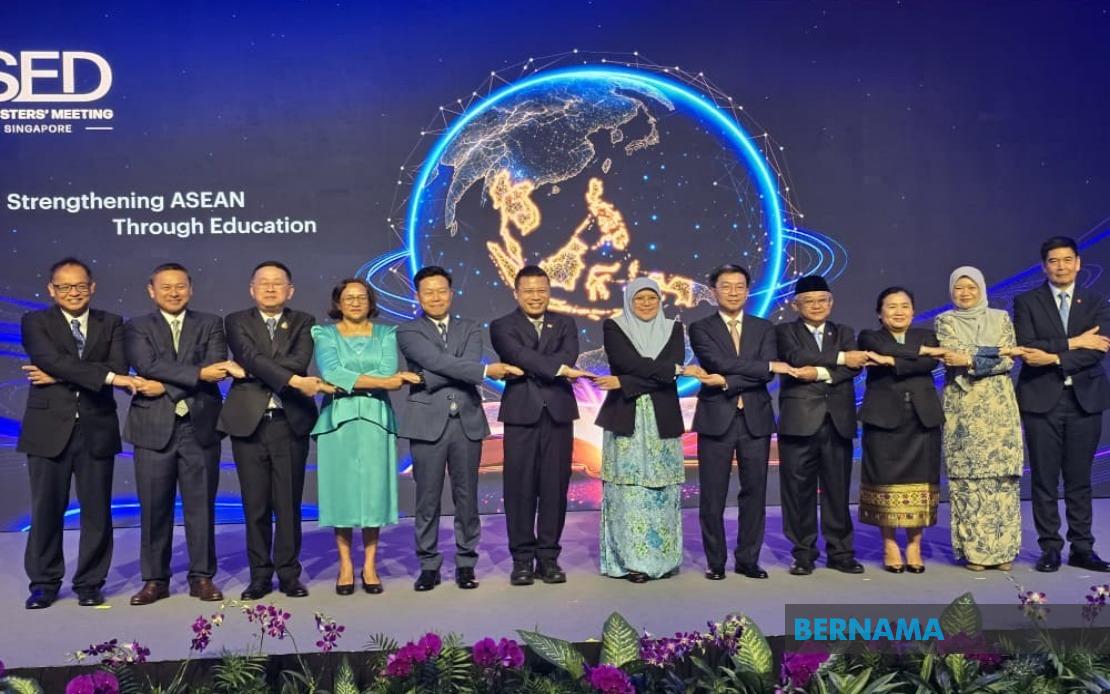
Regional education leaders gathered in Singapore this week to unveil an ambitious blueprint that will steer education policy across Southeast Asia for the next five years. The ASEAN Five-Year Work Plan on Education 2026-2030 represents a watershed moment for the ten-nation bloc, establishing shared educational priorities that acknowledge both the rapid pace of technological change and the pressing need to develop well-rounded citizens capable of navigating an uncertain global landscape. The initiative, formally launched at the 14th ASEAN Education Ministers Meeting, signals a collective commitment to building education systems that are not merely responsive to contemporary challenges but genuinely transformative in their scope and ambition.
At the heart of this regional strategy lies a fundamental recognition that education must serve dual purposes: cultivating individuals with the resilience and character to thrive as global citizens whilst simultaneously equipping them with the specialized skills demanded by modern labour markets. This dual focus reflects an understanding that technical competency alone cannot sustain competitive advantage in an increasingly complex world. Instead, the framework positions character development, values education, and social cohesion as equally vital to economic competitiveness. For Malaysia and other ASEAN members, this holistic approach offers a counterweight to purely vocational training models, acknowledging that sustainable development requires engaged, thoughtful citizens alongside skilled workers.
Singapore's Education Minister Desmond Lee emphasised that the work plan emerges from the region's collective commitment to remain responsive to global shifts and technological disruption. This framing carries particular significance for Southeast Asia, where rapid digitalisation and artificial intelligence adoption are reshaping entire economic sectors. The plan deliberately positions ASEAN not as passive observers of these transformations but as active participants shaping how educational institutions adapt. By establishing a coordinated regional approach, member states gain leverage in addressing challenges that no single nation can manage effectively—whether that involves developing AI literacy curricula, establishing common competency standards, or sharing best practices in technology integration.
Three pillars emerged as central to the strategic vision: artificial intelligence in education, STEM disciplines, and holistic human development. The emphasis on AI reflects a sober recognition that machine learning and automation will fundamentally alter employment patterns across the region. Rather than viewing AI as a threat to traditional education models, ASEAN ministers appear to be positioning the technology as a tool for enhancing learning outcomes and personalising instruction. This pragmatic stance differs markedly from some developed economies where AI in education remains contentious; Southeast Asia's educational leadership appears determined to harness technological capabilities while maintaining focus on human-centred learning objectives.
The STEM focus addresses a longstanding regional gap. Across ASEAN, participation rates in science, technology, engineering, and mathematics fields remain uneven, with significant disparities in access and achievement between urban and rural areas, between socioeconomic classes, and between genders. A coordinated regional push toward STEM education, supported by shared resources and expertise exchange, could help address these disparities more effectively than isolated national efforts. For Malaysia, where STEM education has been a policy priority, this regional collaboration offers opportunities to participate in research networks and access comparative data on implementation effectiveness.
Equitable access emerges as a recurring theme throughout the strategic framework. The commitment to ensuring quality education reaches all students, regardless of geography or circumstance, acknowledges that educational divides threaten social cohesion across the region. Southeast Asia contains some of the world's most unequal societies in terms of educational opportunity. By establishing equity as a core principle at the regional level, ASEAN sends a signal that member governments should prioritise extending educational access beyond privileged urban populations. This emphasis has direct implications for Malaysia's ongoing efforts to improve educational outcomes in less developed states and underserved rural communities.
Student well-being represents another significant departure from traditional, purely academic-focused education models. The explicit attention to mental health, social-emotional learning, and overall wellness reflects global evidence about the interconnections between student welfare and academic achievement. In a region where mental health challenges among young people have been rising, this framework element could encourage Malaysian schools and those across ASEAN to allocate resources toward counselling services, peer support programmes, and curriculum elements addressing emotional intelligence alongside traditional subjects.
Singapore's leadership during the 2026-2027 ASEAN education sector chairmanship will centre on advancing values education through a coordinated research network. The Singapore Centre for Character and Citizenship Education will coordinate efforts to develop common approaches to teaching shared values while respecting national particularities. This initiative recognises that values education remains highly culturally contextual—what constitutes appropriate civic education in one nation may differ from another—yet ASEAN societies share underlying commitments to social harmony, mutual respect, and inclusive citizenship. The platform for sharing implementation approaches allows member states to learn from one another's experiences without imposing standardised curricula, preserving national sovereignty whilst building regional coherence.
For Malaysia, this regional framework offers both opportunities and considerations. The Five-Year Work Plan aligns with Malaysian educational priorities including digital transformation, workforce development for emerging sectors, and inclusive access to quality learning. Malaysian Education Minister Fadhlina Sidek's presence at the launching signals active engagement with regional agenda-setting. However, implementation will require sustained domestic investment and political will. The plan succeeds only insofar as individual ASEAN nations commit resources and political capital to achieving its objectives.
The timing of this blueprint proves particularly significant given global geopolitical uncertainties and economic pressures facing the region. By establishing education as a unifying regional priority, ASEAN demonstrates that member states can find common ground on substantive issues affecting their citizens' futures. In an era of fragmenting multilateralism and rising tensions, education cooperation represents a relatively non-contentious domain where collaborative benefits are mutual and tangible. Students in Malaysia, Thailand, Vietnam, and other ASEAN nations will potentially benefit from curriculum innovations, teaching methodologies, and professional development opportunities shared across borders.
The Five-Year Work Plan also reflects a maturing recognition within ASEAN that regional challenges increasingly require regional solutions. No single nation can independently prepare its youth for artificial intelligence disruption, climate change, or complex global supply chains. By coordinating education strategies, ASEAN nations amplify their influence in global education discourse and position the region as a thought leader rather than a passive recipient of external educational models. This rebalancing of educational agency has profound implications for how ASEAN societies understand their role in the twenty-first century global order.

