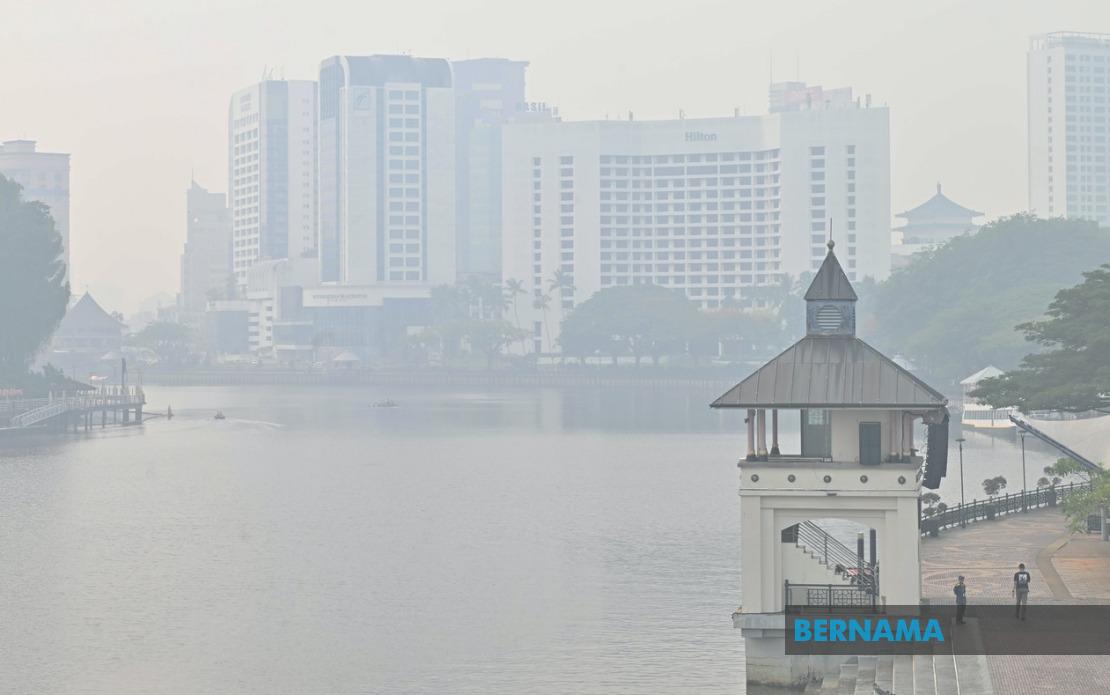
The recurring transboundary haze that blankets Southeast Asia each year has moved beyond inconvenience to become a regional crisis demanding comprehensive institutional reform. Social activist Tan Sri Lee Lam Thye has called on ASEAN leaders to fundamentally reassess the bloc's approach to smoke pollution, arguing that the current framework—anchored on an agreement now more than two decades old—has demonstrably failed to stem the problem. Rather than accepting haze as an inevitable seasonal ritual, he contends, the region must shift from reactive crisis management to preventative governance backed by measurable accountability.
The ASEAN Agreement on Transboundary Haze Pollution, signed in Kuala Lumpur on June 10, 2002 and operationalised the following year, represents the bloc's primary legal instrument for addressing cross-border smoke. Yet despite over twenty years of implementation, the agreement has proven inadequate to the scale of the challenge. Each dry season brings renewed episodes of hazardous air quality across multiple countries, particularly affecting Malaysia, Singapore, Indonesia and Brunei. The persistence of this pattern suggests that incremental improvements within the existing framework are insufficient; what is required instead is a fundamental restructuring of ASEAN's collective capacity to prevent fires and enforce compliance.
Lee's diagnosis treats haze not as a simple meteorological phenomenon but as a governance failure with profound implications for public health and regional stability. While the ASEAN Specialised Meteorological Centre has warned that strengthening El Niño conditions and below-normal rainfall could intensify hotspot activity and smoke dispersion in southern ASEAN, Lee cautions against allowing natural climate variability to mask institutional shortcomings. El Niño creates conditions favourable to fire, certainly, but human activities—illegal land clearing, agricultural burning, and inadequate forest management—convert dry weather into transnational crisis. This distinction matters because it locates responsibility within human agency and policy choices rather than naturalising the problem as inevitable.
Central to Lee's proposal is the establishment of concrete, time-bound targets to reduce fires and eliminate persistent pollution sources. The existing agreement contains general commitments to prevention and cooperation, but lacks specific numerical goals, implementation deadlines, or independent verification mechanisms. A reformed framework should specify precise objectives—such as reducing hotspot numbers by defined percentages within specified timeframes—and establish transparent monitoring to track progress. This approach mirrors successful multilateral environmental agreements elsewhere and would create political pressure on governments to deliver measurable results rather than issuing periodic assurances.
Accountability represents another critical deficiency. Currently, enforcement remains largely within the domain of individual nations, with limited mechanisms for regional consequences when countries fail to prevent fires originating within their borders. Lee advocates for strengthened accountability directed at both corporate and individual actors responsible for open burning and illegal land clearance. This requires establishing protocols for cross-border investigation, evidence-sharing between national authorities, and defined remedies when fires demonstrably cause transnational harm. Such arrangements would shift incentives, making it riskier and costlier for actors to ignore fire prevention obligations.
The proposal for a permanent regional haze response mechanism would represent institutional innovation within ASEAN. Rather than ad-hoc coordination during acute episodes, this structure would enable real-time satellite monitoring with rapid dissemination of hotspot information to all member states. Joint firefighting capabilities could be pre-positioned and trained in readiness, with clearly delineated responsibilities activated when haze reaches specified severity thresholds. Such institutionalisation moves beyond goodwill cooperation to create binding operational commitments that persist regardless of political attention or budgetary pressures.
Prevention-focused initiatives should complement enforcement. Joint early-warning systems timed to the dry season would allow ASEAN to mobilise resources proactively rather than reactively. Enhanced coordination on peatland and forest management—areas where fires carry particularly severe consequences—would address root causes of recurrent burning. Transparency in information-sharing about hotspot locations, fire sources, and enforcement actions would enable peer scrutiny and reduce opportunities for non-compliance to proceed unnoticed. Malaysia and other substantially affected nations possess strong incentive to champion these measures, as the health and economic costs of repeated haze episodes mount.
For Malaysia specifically, elevating haze diplomacy carries both opportunity and risk. Opportunity exists to position the country as a leader on regional environmental governance and public health protection—issues with genuine popular resonance. However, raising the matter firmly at senior ASEAN forums requires careful framing. Lee correctly notes that reform need not entail blame or interference in internal affairs; rather, it constitutes legitimate advocacy for collective mechanisms that protect all member states' citizens. This framing allows Malaysia to champion stronger action while respecting principles of non-interference that remain central to ASEAN's operating culture.
The broader Southeast Asian context amplifies urgency. Air pollution ranks among the region's most pressing environmental challenges, with transboundary haze contributing substantially to respiratory illness, school closures, economic disruption and premature mortality. Urban populations in Malaysia, Singapore and southern Thailand experience acutely degraded air quality during peak haze episodes. Children and elderly persons face particular health risks. The economic costs—including healthcare expenses, reduced productivity, tourism losses and agricultural damage—accumulate across borders, making this inherently a shared regional problem requiring coordinated solutions.
Critical to any reform effort is recognition that ASEAN's decision-making by consensus and emphasis on national sovereignty create genuine structural constraints. Overcoming these requires demonstrating that stronger regional frameworks protect rather than threaten national interests. Countries concerned about enforcement mechanisms must be assured that these will apply equitably and transparently. Building this consensus will require sustained diplomatic engagement, particularly from Malaysia as a leading ASEAN economy and a nation acutely affected by transboundary haze. Lee's intervention enters a crucial moment, as growing public health awareness and climate pressures make regional audiences increasingly receptive to arguments for institutional innovation.
The question ultimately confronting ASEAN is whether the bloc can evolve beyond declaratory commitments toward binding, enforceable action on shared environmental challenges. The current agreement represents an earlier generation's best effort, but has not proven adequate to the magnitude of the problem. Adopting time-bound targets, meaningful accountability mechanisms, permanent response structures and prevention-focused initiatives would signal genuine regional commitment. Such reforms would not eliminate haze entirely—climate variability and tropical geography ensure episodes will recur—but they could substantially reduce frequency and severity while ensuring that when haze occurs, the region responds with institutional competence rather than predictable chaos. For Malaysia and Southeast Asia's citizens, this distinction between managed challenges and recurring crises could prove consequential to long-term health and prosperity.

