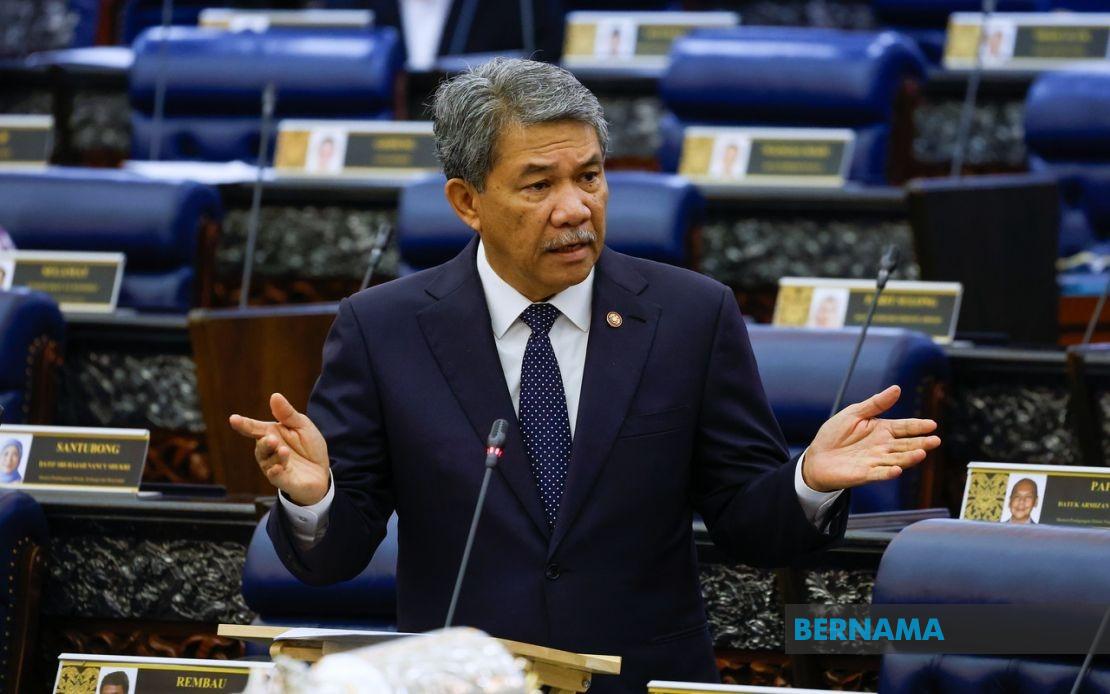
Malaysia's Foreign Minister Datuk Seri Mohamad Hasan has signalled that ASEAN is actively reimagining its strategy towards Myanmar's protracted conflict, acknowledging that despite modest improvements on the ground, the military-led nation has failed to deliver on commitments made under the Five-Point Consensus. Speaking in the Dewan Rakyat on June 25, Mohamad outlined the regional bloc's intention to refresh its approach while maintaining the 5PC as the foundational framework guiding peace efforts, a carefully calibrated message reflecting ASEAN's delicate balancing act between pressure and pragmatism.
The Five-Point Consensus, adopted by ASEAN leaders in 2021, comprises cessation of violence, humanitarian assistance, dialogue among all parties, mediation support from ASEAN, and provision of humanitarian aid. Yet Myanmar's military government has repeatedly sidestepped these objectives, continuing armed operations against opposition forces and ethnic militias despite occasional truces. The frustration within ASEAN capitals is palpable, yet the bloc's tendency toward consensus decision-making and non-interference doctrine has constrained its leverage. Mohamad's announcement represents an attempt to recalibrate without abandoning ASEAN's foundational principles.
At the 48th ASEAN Summit held in Cebu, Philippines on May 8, regional heads of state directed their foreign ministers to undertake informal consultations with Myanmar authorities to gauge progress and chart revised pathways forward. This decision reflects growing recognition that the current framework, while conceptually sound, has struggled in application. The shift towards "informal engagements" signals ASEAN's preference for back-channel diplomacy over public pressure, a tactic that has characterised the bloc's Myanmar policy since the February 2021 coup.
Mohamad elaborated that any modifications to the 5PC would require approval from ASEAN heads of state, underscoring the consensus-based constraints that have historically limited ASEAN's capacity to enforce compliance. This stipulation, while institutionally necessary, also reveals ASEAN's structural vulnerability: member states with strategic interests in Myanmar—particularly China and Thailand—can block significant shifts in policy. The emphasis on collective decision-making thus becomes both a binding principle and a limiting factor.
Malaysia has specifically advocated for extending Myanmar's six-month ceasefire, which was scheduled to expire at the end of July, into a second phase aimed at establishing more durable peace mechanisms. This proposal reflects an incrementalist approach, attempting to preserve temporary stability while building foundations for deeper engagement. The ceasefire, though partial and frequently violated, has at least prevented the systematic escalation witnessed during earlier periods. Malaysia's call for extension seeks to lock in whatever fragile gains exist.
Beyond ceasefire extension, Mohamad has pressed Myanmar to furnish a comprehensive roadmap detailing the continuation of peace negotiations and specifically demanded inclusive dialogue encompassing all stakeholders. This demand acknowledges a critical gap: Myanmar's military authorities have largely excluded opposition groups, civil society organisations, and ethnic armed organisations from meaningful negotiations. Without inclusive participation, any agreements reached remain susceptible to renewed conflict. The roadmap demand thus attempts to broaden the negotiating space institutionally.
A central concern animating ASEAN's recalibrated approach is the prospect of Myanmar becoming further marginalised within the regional architecture, creating vacuums that external powers might exploit. Mohamad explicitly warned against allowing Myanmar to drift beyond ASEAN's orbit, cautioning that disconnection would invite third-party interference undermining regional stability. This formulation reflects ASEAN's geopolitical anxiety: the bloc fears that by isolating Myanmar, it cedes influence to actors operating outside regional frameworks, particularly China, which maintains close ties with Myanmar's military leadership and invests heavily in Myanmar's strategic infrastructure.
This concern carries substantial weight given the broader Asian strategic landscape. Myanmar's geographic centrality, straddling Southeast Asia and South Asia, makes it a crucial node in supply chains, infrastructure development, and regional power balancing. Chinese investments in Myanmar, including the China-Myanmar Economic Corridor and the strategically significant Kyaukpyu port, give Beijing substantial leverage. If ASEAN marginalises Myanmar, Beijing's influence expands proportionally, potentially shifting the region's strategic equilibrium.
Malaysia's commitment to engage with all protagonists—the military government, the shadow National Unity Government, the People's Defence Force, and various ethnic armed organisations—reflects a strategy of comprehensive dialogue rather than selective conditionality. By maintaining communication channels with competing actors, Malaysia positions itself as a neutral intermediary capable of facilitating negotiations. This approach, while resource-intensive and occasionally frustrating to democracy advocates, aligns with ASEAN's traditional preference for dialogue over confrontation.
The challenge confronting ASEAN's recalibrated approach centres on credibility. Myanmar's leadership, confident in Chinese backing and unimpressed by ASEAN's historical unwillingness to impose concrete sanctions, may discount foreign ministers' informal engagements as inconsequential. Unless ASEAN develops mechanisms to make compliance materially advantageous or non-compliance costly, exhortations regarding roadmaps and inclusive dialogue risk becoming performative exercises. The bloc's dilemma remains acute: exerting sufficient pressure to influence outcomes while preserving the consensus and engagement principles underpinning the organisation.
For Malaysia specifically, leading these diplomatic efforts enhances its profile as a responsible regional actor committed to peace, while also positioning it to influence Myanmar's trajectory during a critical transitional period. Whether ASEAN's revised approach yields substantive progress depends largely on Myanmar's military calculus—whether the junta perceives greater advantage in negotiated settlement than military consolidation. Current indicators suggest scepticism, but the Malaysian-led effort to develop fresh frameworks represents the bloc's latest attempt to resolve a conflict that threatens regional stability.

