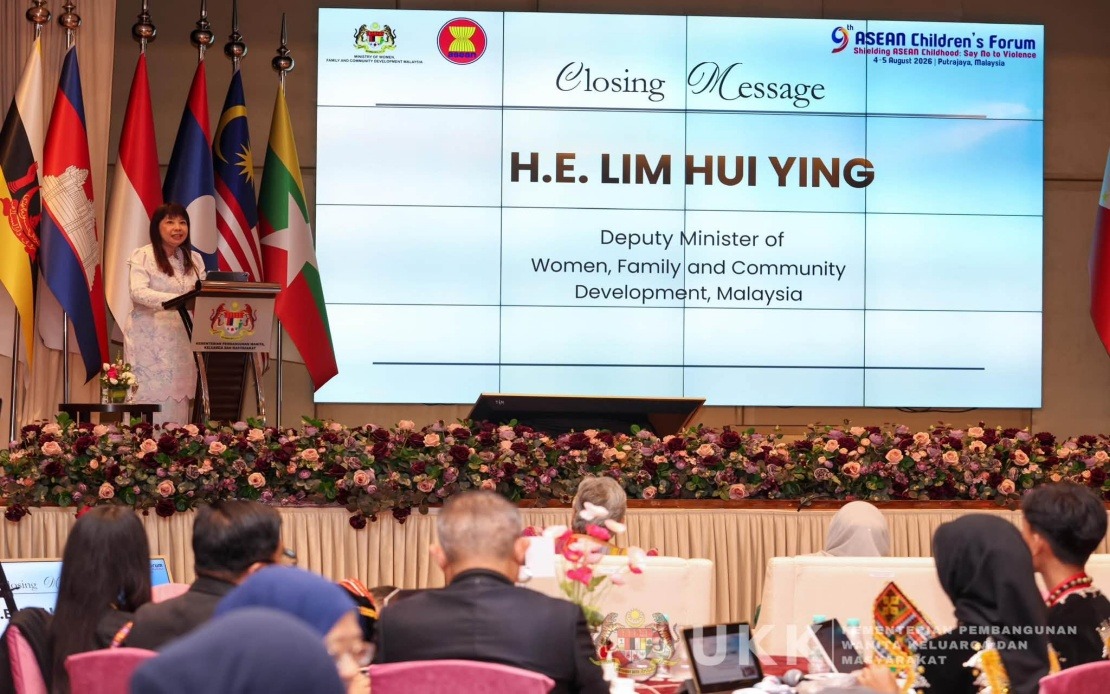
Regional policymakers face mounting pressure to act on child safety following a major forum in Putrajaya where young people across ASEAN laid out a comprehensive agenda for protecting minors from violence. The 9th ASEAN Children's Forum concluded with participants presenting concrete recommendations to governments, sectoral bodies, and strategic partners, signalling that the region's children are taking an active role in shaping their own protection frameworks. Deputy Women, Family and Community Development Minister Lim Hui Ying emphasised that these proposals deserve serious consideration at both national and regional policy levels, reflecting the authentic voices and lived experiences of the forum's participants.
The forum brought together child delegates from all ASEAN member states in a hybrid format designed to centre young people's perspectives on violence prevention. Rather than adults speaking on behalf of children, this gathering allowed minors to articulate their own concerns and solutions regarding physical, emotional, psychological, and sexual violence in their daily lives. This bottom-up approach represents a significant shift in how regional institutions address child welfare, moving away from paternalistic frameworks towards genuine youth participation in governance processes.
Among the most significant recommendations emerging from the forum was a call to strengthen existing child protection legislation across ASEAN. Participants recognised that laws in many member states remain outdated or insufficiently enforced, leaving gaps through which abusers slip. The emphasis on legislative enhancement reflects growing awareness that symbolic policies without teeth accomplish little, and that ASEAN nations must invest in legal frameworks with meaningful penalties and enforcement mechanisms. This demand carries particular weight given Southeast Asia's documented challenges with child trafficking, exploitation, and abuse.
Expanding child-friendly reporting channels emerged as another priority, addressing a critical barrier to intervention. Many abused children remain silent due to fear, shame, or lack of knowledge about where to report incidents. The forum's participants advocated for multiple, accessible avenues through which young people can report abuse, whether through schools, community centres, online platforms, or dedicated hotlines. Such systems must be designed with children's safety and dignity in mind, ensuring that the process of reporting does not become another ordeal. This recommendation also acknowledges that children often trust peers more than authorities, suggesting that some reporting mechanisms should be peer-connected or supervised by counsellors rather than police.
The enforcement of anti-bullying policies in schools received particular emphasis from forum participants, reflecting the prevalence of bullying in educational settings across the region. Beyond simply having policies on paper, schools must implement clear consequences, provide training for staff, and create reporting mechanisms that do not expose students to retaliation. The recommendations underscore that bullying, whether physical or cybernetic, causes profound psychological harm that can escalate to more severe violence if left unchecked. Several ASEAN nations have recently strengthened such policies, but implementation remains inconsistent and often inadequate.
Online safety emerged as a critical concern, highlighting how digital spaces present new venues for abuse and exploitation. As internet penetration deepens across Southeast Asia, young people increasingly encounter cyberbullying, grooming, sextortion, and exposure to harmful content. The forum's recommendations implicitly call for digital literacy programmes, parental monitoring tools, and platform accountability measures that protect children without unnecessarily restricting their online expression. This balancing act proves challenging, as overly restrictive approaches can push children toward less regulated spaces.
The forum also underscored the need for psychosocial support services tailored to children who have experienced violence. Many survivors in ASEAN lack access to counselling, trauma therapy, or long-term mental health care, leaving them vulnerable to compounding psychological damage. Recommendations called for expanding trained personnel, establishing child-centred counselling spaces, and integrating mental health support within schools and community health systems. This represents a recognition that child protection extends beyond prevention to encompassing comprehensive healing and rehabilitation.
Implicitly woven through the recommendations is an acknowledgement that child safety depends on mobilising entire ecosystems. Parents must understand their protective responsibilities; teachers require training in identifying and responding to abuse; private sector actors—including technology companies and retailers—must implement safeguarding standards; civil society organisations can fill implementation gaps; media can raise awareness without sensationalising; and peers can foster cultures of mutual respect. No single institution can address child violence alone, demanding instead coordinated, multi-stakeholder approaches at national and regional levels.
The forum's focus on four key settings—home, school, online, and community—reflects where children actually experience both safety and danger. Homes, statistically the most common sites of child abuse, require interventions that support family strengthening while enabling reporting without family destruction. Schools represent spaces where young people spend significant time and where trained adults can identify abuse. Online environments demand both technical safeguards and digital citizenship education. Communities provide neighbourhood-level accountability and support systems. By mapping protection recommendations across these domains, participants provided policymakers with a practical roadmap rather than abstract ideals.
For Malaysia specifically, these recommendations align with ongoing efforts to strengthen the Child Act and expand reporting mechanisms, though implementation gaps persist. The emphasis on child-friendly channels and anti-bullying enforcement suggests that current systems may still appear intimidating or inaccessible to young victims. Regional coordination through ASEAN offers opportunities for peer learning, technology sharing, and harmonised standards that could elevate protection across borders—particularly important given human trafficking networks that exploit children across member states.
The call for governments and partners to translate recommendations into concrete action represents the forum's most crucial demand. Rhetoric and commitments mean little without resource allocation, legislative drafting, institutional reform, and sustained monitoring. The coming months will test whether ASEAN governments treat these child-generated recommendations as genuine policy blueprints or symbolic gestures toward youth empowerment. For the region's 160 million children, the distinction carries profound implications for their safety, dignity, and futures.

