Anxiety over renewed conflict in the Middle East reverberated across Asian financial markets on Monday, triggering a sharp retreat in regional currencies while equity indices posted steep losses. The uptick in geopolitical tensions sent crude oil prices climbing 4% higher, rekindling concerns about inflationary pressures that could prompt central banks worldwide to maintain or raise interest rates. The U.S. dollar, buoyed by these risk-off dynamics, strengthened against a basket of major currencies, putting fresh downward pressure on emerging Asian economies that rely on export competitiveness.
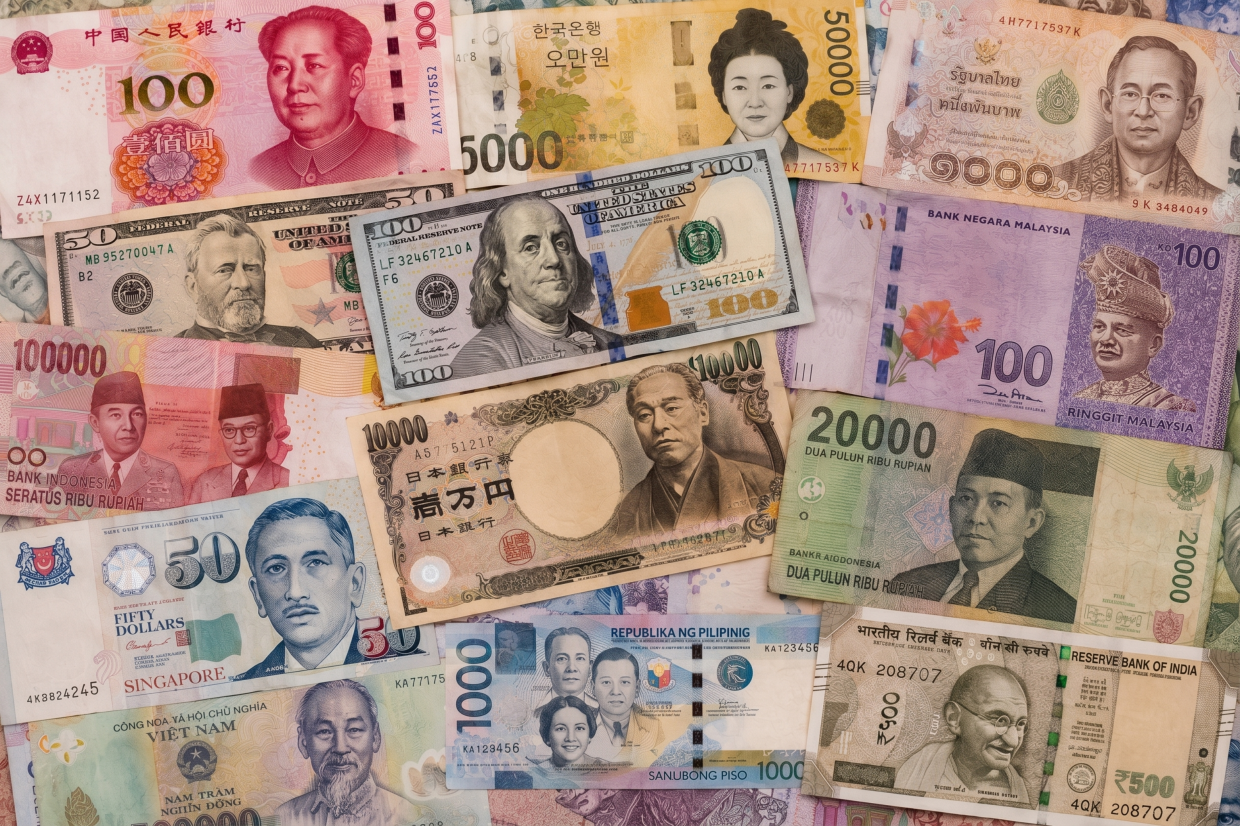
The damage to regional currency valuations proved substantial. Indonesia's rupiah weakened to 18,140 per U.S. dollar, marking its most depreciated level in more than a month and signalling investor caution toward frontier emerging markets. South Korea's won slid to 1,507.9 against the greenback, while Malaysia's ringgit retreated to 4.0780, extending the broader pattern of weakness across the region. These currency movements reflect a classic flight-to-safety trade, where investors rotate capital toward the perceived stability of U.S. Treasury assets and away from developing economies viewed as more vulnerable to external shocks.
South Korea's equity market bore the heaviest blow, with the KOSPI index plummeting 7.96% to its lowest level in ten weeks, triggering automatic circuit breakers designed to halt panic selling. The decline was led by a devastating 13% nosedive in SK Hynix, the world's dominant supplier of artificial intelligence memory chips, as investors cashed in profits following the semiconductor manufacturer's successful U.S. listing debut on Friday. The sharp correction underscores growing investor hesitation about the sustainability of extraordinary earnings growth driven by insatiable demand from AI hyperscalers for advanced high-bandwidth memory components.
Beyond the profit-taking mechanics, deeper concerns are weighing on chipmaking equities across the region. Market participants increasingly question whether the extraordinary earnings trajectory fuelled by data centre demand can persist indefinitely, especially as major AI companies adopt more disciplined capital expenditure strategies. Additionally, highly leveraged single-stock exchange-traded funds have amplified volatility, creating whipsaw movements that magnify both gains and losses. Despite Monday's sharp decline, the KOSPI maintains impressive momentum year-to-date, having gained roughly 63% even as the index has surrendered approximately 25% of its gains since reaching record highs on June 22.
Malaysia's financial markets presented a more nuanced picture, with stock indices jumping to three-week highs even as the ringgit faced depreciation pressure. However, this apparent resilience masks underlying political vulnerabilities that could undermine investor confidence in coming months. Prime Minister Anwar Ibrahim's ruling coalition suffered a crushing electoral defeat in a Johor state election held on Saturday, with a key coalition partner recording a decisive loss that has sparked speculation about the government's longevity and prompted widespread discussion of a potential early general election call.
This domestic political uncertainty carries meaningful implications for Malaysia's attractiveness to both foreign and domestic investors. Goldman Sachs analysts cautioned in a research note that persistent questions about federal coalition stability and potential disruptions to the government's coherent economic policy agenda could erode some of the "policy-stability premium" that has previously supported Malaysian asset valuations. The investment bank emphasised that while Malaysia's underlying macroeconomic fundamentals remain solid, any perception of political dysfunction could trigger capital outflows and further currency depreciation.
However, Goldman Sachs analysts also noted that central bank measures implemented in June to encourage foreign exchange inflows should provide a useful buffer against excessive ringgit volatility, even if political risk remains elevated. Bank Negara Malaysia's proactive stance on currency management reflects policymakers' awareness that unchecked depreciation could fuel imported inflation and undermine purchasing power. This defensive posture suggests that authorities intend to prevent the ringgit from spiralling lower despite external headwinds and domestic political complications.
Performance across the broader region remained decidedly mixed on the day. Philippine equities edged modestly higher, while Indonesian shares posted a modest 0.5% gain, suggesting that investors have not entirely abandoned emerging Asian assets despite Monday's risk-off sentiment. Taiwanese stocks, however, inched lower alongside the regional trend. Singapore's blue-chip Straits Times Index declined as much as 0.7%, snapping an impressive streak of seven consecutive record close sessions and signalling that even the region's most stable financial hub is not immune to global risk appetite fluctuations.
The week ahead promises several major data releases and policy decisions that will shape investment positioning across Asia. Singapore is scheduled to publish advance second-quarter economic growth figures, while the United States will release crucial inflation data that could influence expectations about Federal Reserve policy trajectory. The Bank of Korea is expected to announce its latest interest rate decision, a decision that carries importance for regional currency dynamics. Malaysia will also publish inflation and advance economic output figures that will provide fresh insight into the country's growth momentum and price pressures.
These data releases arrive at a delicate moment when investors are reassessing their exposure to a region facing the simultaneous pressures of external geopolitical risk, inflation concerns, and in Malaysia's case, domestic political instability. The interaction between these forces will likely determine whether Monday's selloff represents a temporary dislocation or the start of a more extended period of regional asset weakness. Malaysian investors and policymakers face the additional challenge of managing currency volatility and capital flow pressures while simultaneously navigating political uncertainty that threatens to derail the administration's economic reform agenda.

