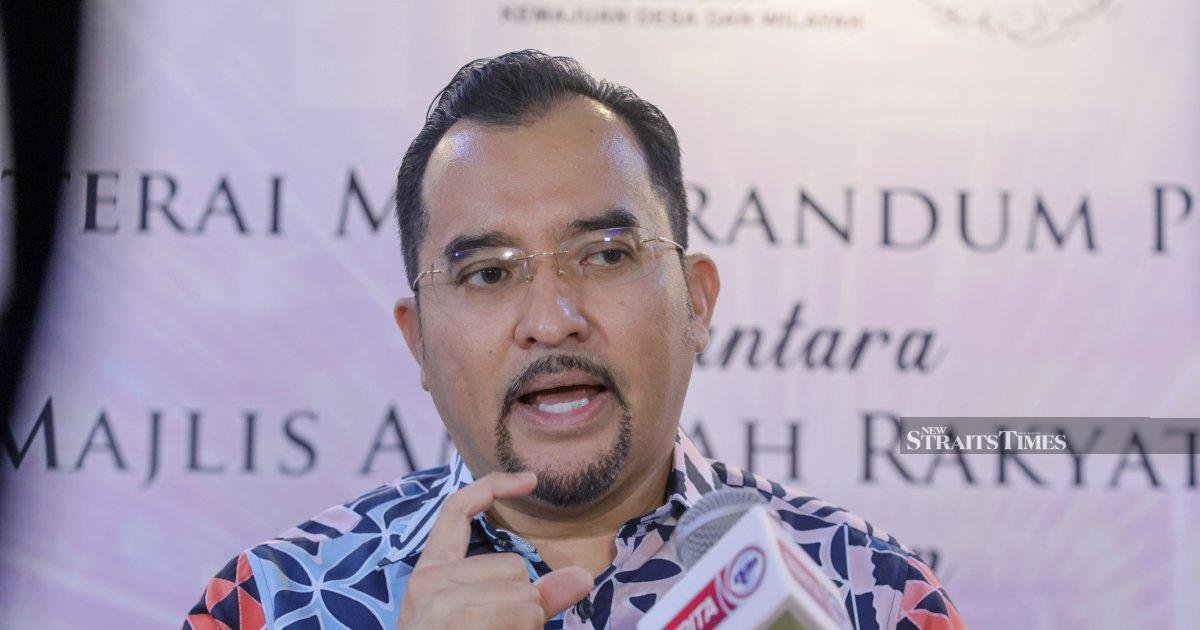
Umno secretary-general Datuk Dr Asyraf Wajdi Dusuki has moved to distance himself from transactions involving Tabung Haji, asserting that he neither exercised authority over nor participated in financial dealings by the pilgrimage fund during his previous posting as deputy minister in the Prime Minister's Department.
The statement comes amid renewed scrutiny of Tabung Haji's asset management and investment decisions, matters that have periodically drawn public and parliamentary attention over the past several years. Questions about governance and fiduciary responsibility at the fund—which manages savings for millions of Malaysian pilgrims preparing for the Hajj—have consistently ranked among the more contentious issues affecting confidence in the institution's leadership and operational practices.
Tabung Haji's investment portfolio has proven a recurring flashpoint in Malaysian political discourse. The fund, tasked with preserving and growing monies entrusted by ordinary Malaysians for one of Islam's five pillars, occupies a unique position bridging religious duty and financial stewardship. When controversies emerge concerning specific transactions or asset placements, they invariably draw attention from lawmakers, media scrutiny, and public concern about whether the institution adequately safeguards depositor interests.
Ashyraf's position within Umno's organizational hierarchy—as secretary-general of the party that has dominated Malaysia's political landscape for decades—amplifies the significance of any statement he makes regarding past administrative decisions. His current role places him at the apex of party machinery and internal decision-making processes, making his public distancing from contested transactions a matter of political as well as administrative consequence.
The deputy minister portfolio in the Prime Minister's Department traditionally carries responsibility for coordinating government initiatives and occasionally overseeing specific institutional portfolios. However, Asyraf's assertion suggests a more circumscribed remit during his tenure, one that did not extend to direct involvement in Tabung Haji's investment decisions or transaction approvals. Such delineations of responsibility become particularly important when financial institutions face questions about resource allocation and governance structures.
The Al-Rawda transaction referenced in the original matter remains shrouded in technical and procedural details that most Malaysians may not fully grasp. Nevertheless, transactions of material significance at entities like Tabung Haji carry implications extending beyond accounting records. They touch upon questions of institutional autonomy, ministerial oversight, parliamentary accountability, and the broader regulatory framework governing religiously-affiliated financial organizations in Malaysia.
For investors and pilgrims who maintain accounts with Tabung Haji, clarity regarding who authorized what decisions and through what processes serves crucial purposes. It establishes whether proper governance structures functioned as intended, whether conflicts of interest emerged unchecked, and whether the fund's operational independence was respected or compromised. These considerations shape confidence in the institution's stewardship of accumulated savings.
The broader context of Malaysian institutional governance adds texture to Asyraf's denial. Questions about ministerial involvement in particular transactions at government-linked companies and institutions have surfaced repeatedly in recent parliamentary sessions and media investigations. Clarifying lines of authority and responsibility—who decided what, and when—has become an increasingly expected practice when financial irregularities or questionable decisions surface.
Ashyraf's statement may represent an attempt to establish clear separation between his ministerial functions and subsequent institutional decisions, particularly as Tabung Haji underwent various organizational and operational adjustments over successive periods. Whether parliament, relevant oversight bodies, or the public find his assertions sufficiently detailed and convincing may determine whether the matter generates further scrutiny or eventually recedes from active discussion.
The stance adopted by the Umno secretary-general reflects broader tensions within Malaysian governance between political actors, institutional leadership, and accountability mechanisms. As pilgrims' savings grow and Tabung Haji's investment footprint expands across domestic and international markets, stakeholder expectations regarding transparency and governance clarity have correspondingly intensified. Asyraf's clarification, whether conclusive or provisional, will likely influence subsequent assessments of institutional decision-making during his tenure.

