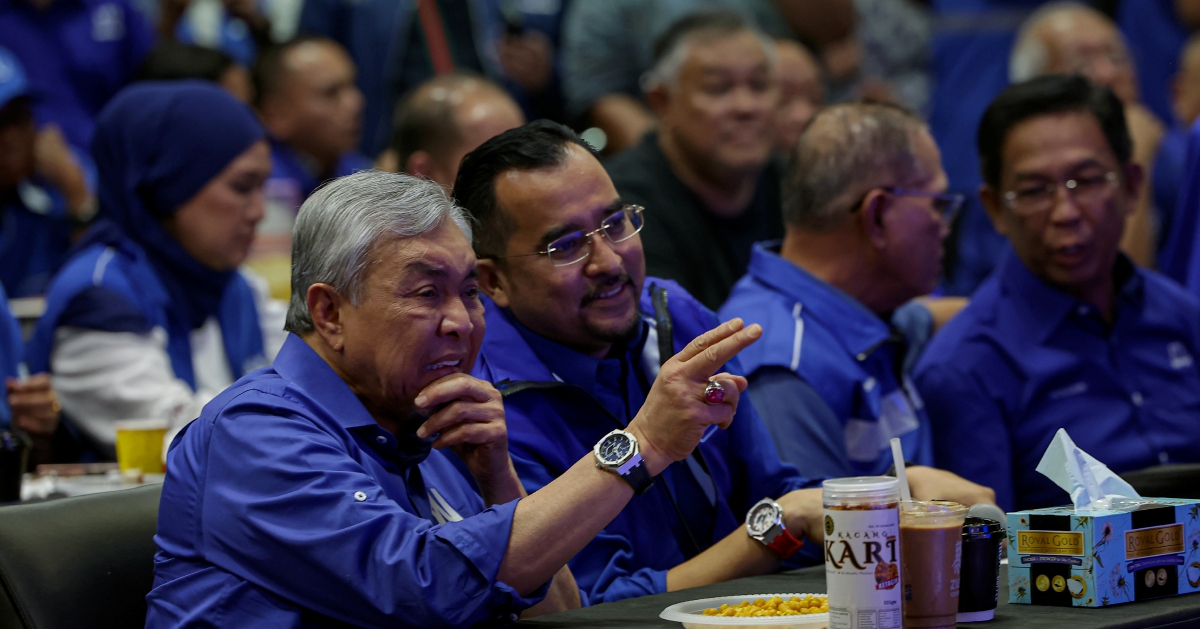
In a cautionary message delivered after Barisan Nasional's successful campaign in the Negri Sembilan state election, Umno secretary-general Datuk Dr Asyraf Wajdi Dusuki has urged the coalition's members and supporters to adopt a posture of humility rather than triumphalism. The warning reflects broader concerns within Malaysia's largest Malay-Muslim political party about maintaining public support and avoiding the pitfalls that have damaged its standing in previous electoral cycles.
Datuk Dr Asyraf's counsel addresses a recurring pattern in Malaysian politics where governing coalitions, buoyed by fresh mandates, have allowed their conduct and messaging to become increasingly detached from voter expectations and public sentiment. By explicitly referencing "past mistakes," he appears to be invoking memories of periods when Barisan Nasional's dominance bred internal complacency and external perception of entitlement that ultimately eroded voter confidence. This historical reckoning is particularly relevant given the coalition's resurrection in the 2022 general election after its stunning 2018 defeat.
The timing of Datuk Dr Asyraf's remarks carries significance for Umno's ongoing political recovery. Since the controversial 2018 election loss under Najib Razak, the party has worked systematically to rebuild its image and reconnect with rural Malay-majority constituencies. The Negri Sembilan victory, achieved under the leadership of Datuk Seri Ahmad Zahid Hamidi, represents a tangible demonstration of that rehabilitation strategy working at the state level. However, the party's leadership clearly recognises that electoral momentum can evaporate rapidly if voter sentiment turns negative due to perceived hubris or policy failures.
The appeal for restraint extends beyond mere civility or media strategy. Datuk Dr Asyraf's intervention suggests that Umno's senior echelon understands the fragility of its current political position. The party remains central to Malaysian governance, yet it operates within a coalition that includes partners with competing interests and faces opposition forces that have proven capable of mobilising urban and younger voters. Maintaining party discipline and preventing overly aggressive political rhetoric from emerging immediately after an election victory becomes a tool for consolidating gains rather than squandering them through missteps.
For Malaysian voters and observers, Datuk Dr Asyraf's message also conveys an implicit acknowledgment that the Negri Sembilan result, while favourable to Barisan Nasional, does not represent a complete return to the overwhelming dominance the coalition once enjoyed. The coalition must win elections through continued appeal to voter interests and competent governance rather than through the assumption of an unassailable political position. This framing invites comparison with how Umno operated in the 1980s and 1990s, when electoral victories appeared permanent and party leaders grew distanced from grassroots concerns.
The secretary-general's caution also extends implicitly to internal party management. Umno's internal divisions have historically surfaced most acutely following electoral victories, when various party factions believe their influence or reward deserves recognition. By preemptively calling for unity and humility, Datuk Dr Asyraf seeks to prevent the post-election period from becoming consumed by internal jostling over ministerial positions, business opportunities, or factional prominence. Such internal strife, if visible to the electorate, invariably damages a party's public image and provides ammunition to political opponents.
From a regional perspective, Umno's approach reflects broader trends across Southeast Asian democracy, where formerly dominant parties have reassessed their strategies after experiencing electoral setbacks. Similar patterns have emerged in Indonesia, Thailand, and the Philippines, where established political forces have recognised that maintaining public trust requires demonstrating responsiveness to voter concerns rather than relying on entrenched institutional advantages. Datuk Dr Asyraf's remarks suggest that Umno is absorbing these lessons from its own recent history.
The practical implications of this message for state governance in Negri Sembilan remain to be seen. Voters and opposition critics will scrutinise how the state government allocates resources, responds to public grievances, and conducts itself during its term. If Barisan Nasional's administration proves efficient and responsive to local needs, the electoral trust demonstrated in the state election can potentially be converted into gains at future general elections. Conversely, if the government appears neglectful or dismissive of public concerns, voter patience will evaporate swiftly.
Datuk Dr Asyraf's intervention also carries implications for Barisan Nasional's broader coalition strategy. The message serves to align Umno's conduct with coalition expectations, signalling that the party will not use Negri Sembilan as a platform for asserting dominance over coalition partners or advancing sectarian interests. This assurance, while unstated, matters for maintaining the stability of a coalition that depends on cooperation among parties with distinct bases and objectives.
Looking forward, the challenge for Umno and Barisan Nasional will lie in translating cautionary rhetoric into sustained political discipline. Malaysian election cycles are frequent and competitive, creating constant pressure for parties to declare victory forcefully and mobilise supporters aggressively. Datuk Dr Asyraf's call for humility will require reinforcement through concrete actions and consistent messaging if it is to influence party behaviour across multiple levels of the organisation. Whether this message resonates beyond the senior leadership remains an open question that will clarify itself through the coalition's actions in subsequent months.

