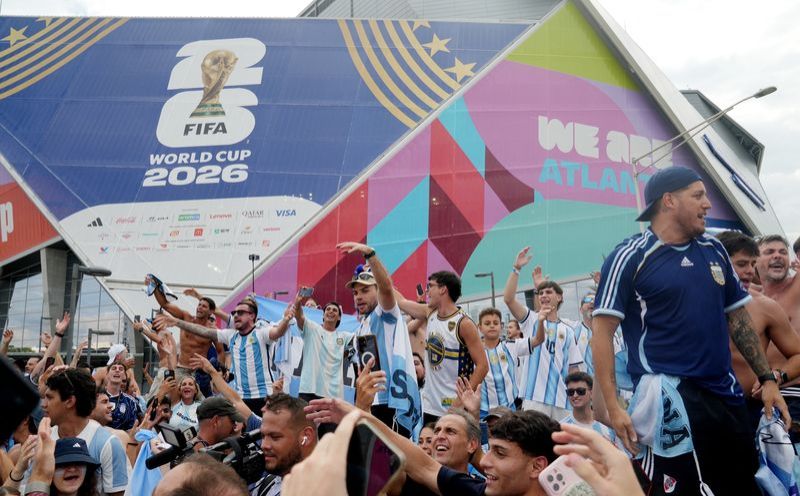
Atlanta's month-long stint as a World Cup host city left an indelible mark on the American metropolis, delivering unforgettable moments that ranged from Cape Verde's historic tournament debut to Argentina's dramatic path toward the final. The matches held at the city's stadium created a cultural shift that temporarily redirected Atlanta's identity from its reputation as the epicentre of hip-hop music toward the universal language of international football. Supporters from around the world descended upon the Georgia capital, transforming its streets and venues into a vibrant, multicultural celebration that resonated with both longtime residents and first-time visitors.
The prospect of hosting World Cup football matches came to Atlanta relatively late in the planning process. When Dan Corso, president of the local host committee, first received an email invitation on July 7, 2017, inviting the city to pursue hosting rights, the decision to commit came swiftly. Corso and his team recognised the opportunity immediately and moved forward with characteristic American efficiency, understanding that securing a World Cup venue would elevate the city's international standing and reinforce its sporting credentials.
Atlanta's pre-existing strength in American soccer proved instrumental in making the city an attractive candidate. Atlanta United, the Major League Soccer franchise that commenced operations in 2017, had already established itself as a powerhouse within the league by the time World Cup selection took place. The team's early success, culminating in a championship victory in 2018, demonstrated that the city possessed both the infrastructure and the passionate fan base necessary to support elite-level soccer. Arthur Blank, who owns both Atlanta United and the NFL's Falcons, further strengthened the city's soccer credentials by donating fifty million dollars toward the construction of the U.S. Soccer National Training Center on the outskirts of Atlanta, signalling substantial institutional commitment to the sport's development.
Atlanta United's consistent ability to lead Major League Soccer in attendance figures year after year proved particularly persuasive during FIFA's evaluation process. This statistic indicated not merely casual interest but genuine grassroots enthusiasm for football across Atlanta's diverse demographic. When combined with the presence of the U.S. Soccer Federation's headquarters within the city, these factors created a compelling narrative that ultimately convinced FIFA to award Atlanta as a World Cup host venue. Corso acknowledged that the convergence of these elements—a thriving professional team, strong fan engagement, and institutional soccer infrastructure—resonated strongly with international decision-makers.
The city's broader experience hosting marquee sporting events also worked in its favour. Atlanta had successfully staged the 1996 Olympic Games, demonstrating organisational competence at the global level. The Super Bowl would return to Atlanta's stadium in 2028, marking the fourth occasion the city had hosted America's premier sporting championship. This track record established Atlanta as a reliable steward of major international competitions, capable of managing the logistical complexities and security requirements that accompany such events. Thirty years had elapsed since a world-class sporting spectacle of World Cup magnitude had been held in the city, making this tournament particularly significant for local pride and engagement.
The tournament's actual execution exceeded expectations in terms of public participation. More than half a million people attended the Fan Fest experience across nineteen days, indicating extraordinary enthusiasm across the broader Atlanta metropolitan area. The volunteer response further reflected community buy-in, with more than two thousand residents from Atlanta and Georgia stepping forward to support the event in various capacities. This grassroots involvement transformed the World Cup from a distant international spectacle into a locally owned experience, creating a sense of collective pride and connection across the city.
The eight matches held at Atlanta's stadium drew a cumulative attendance of 544,516 spectators, including three knockout-round encounters. The semi-final clash between Argentina and England provided a particularly memorable moment, with Argentina's dramatic comeback victory delivering the sort of emotional intensity that transforms sporting events into permanent historical markers within a city's collective memory. These matches generated experiences that would permanently alter how participants perceived both Atlanta and international football, creating lasting impressions for visitors and enriching local residents' understanding of global sporting culture.
Beyond immediate tournament excitement, Atlanta sought to establish enduring legacies from its World Cup experience. The host committee collaborated with MARTA, the local public transportation authority, and the Soccer in the Streets programme to create a new mini-pitch facility designed to expand access to football among Atlanta's youth population. This initiative directly aligned with the global development mission of football governing bodies, extending the World Cup's impact beyond professional players and wealthy fans toward underserved communities. By providing free access to organised soccer instruction, the programme embodied the sport's aspiration to transcend socioeconomic barriers and cultivate talent across diverse populations.
Atlanta's leadership articulated explicit ambitions to leverage the World Cup momentum toward additional football milestones. A women's National Women's Soccer League franchise is scheduled to commence operations in 2028, signalling institutional commitment to professional women's football at the highest level. Simultaneously, Atlanta is actively pursuing hosting rights for the women's World Cup in 2031, positioning itself as a potential venue for the tournament's most prominent international competition. These aspirations reflect confidence that the city has successfully established itself as a premier soccer destination within North America, capable of supporting multiple tiers of professional and amateur football development.
Corsso emphasised the broader cultural significance of the World Cup experience, noting that participants would carry forward memories and renewed appreciation for Atlanta's essential characteristics as a global city. For many visitors encountering Atlanta for the first time, the World Cup served as an introduction to the metropolis's defining qualities of diversity, cultural dynamism, and organisational sophistication. The tournament created opportunities for discovery, allowing international guests to experience Atlanta beyond their preconceived expectations. Whether for first-time visitors or returning residents, the World Cup experience generated connection points that transcended football itself, enriching participants' understanding of Atlanta as a distinctly American yet thoroughly international cultural centre.

