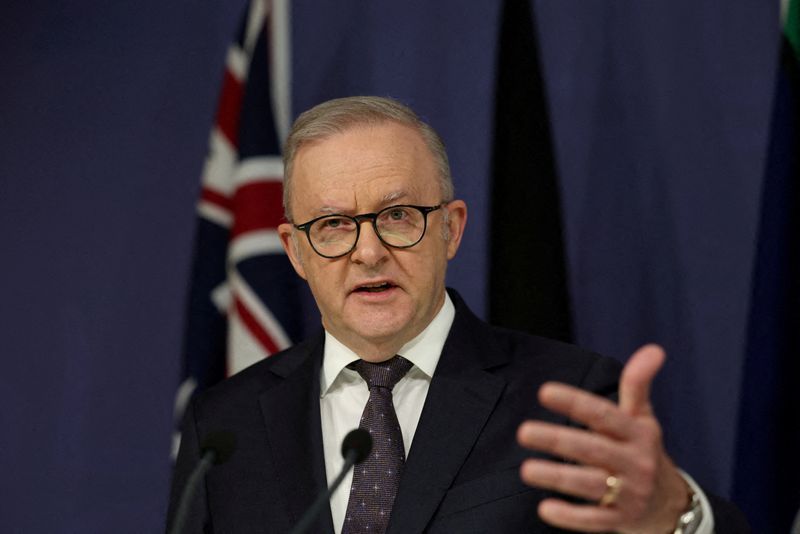
Australia is moving to centralise the governance of artificial intelligence by establishing a dedicated Office of AI within the Prime Minister and Cabinet's Department, marking what officials describe as a first-of-its-kind approach to coordinating the technology's development at the highest levels of government. Prime Minister Anthony Albanese is expected to unveil the initiative during a major address in Sydney on Wednesday, signalling the government's determination to craft a cohesive national strategy for an industry that increasingly touches every sector of the economy.
The creation of this office reflects a fundamental shift in how Canberra approaches technological governance. Rather than addressing AI challenges through disparate responses across individual agencies and economic sectors, the government will now implement a unified framework that ensures consistency in standards-setting and regulatory oversight. Albanese is expected to draw parallels with Australia's historical approach to managing transformative technologies, citing the government's coordinated response to civil aviation in the 1920s and genetic engineering in the 1990s as precedents for the necessity of centralised oversight in managing emerging innovations with society-wide implications.
This institutional consolidation aims to create a more attractive environment for artificial intelligence investment by providing international companies with clarity about regulatory requirements and a simplified approval process. The government believes that investors currently face uncertainty when navigating separate regulatory frameworks across different sectors and states, potentially driving venture capital and corporate research facilities to competing jurisdictions such as Singapore, the United Kingdom, or North America. By establishing a single point of coordination within the Prime Minister's department, Australia intends to signal institutional stability and reduce the compliance burden for businesses developing and deploying AI technologies.
The announcement arrives amid Australia's broader push to position itself as a leading hub for artificial intelligence research, development, and the critical data centre infrastructure that underpins these operations. The government has invested substantially in attracting technology companies and research institutions, viewing AI as central to Australia's economic competitiveness and innovation ecosystem in coming decades. However, this economic ambition must contend with mounting public concern about the technology's societal impacts, which has created political pressure for more stringent safeguards than currently exist.
For Malaysian and Southeast Asian observers, Australia's approach holds particular significance as a regional precedent. The model of centralised coordination within the executive branch could influence how governments across Southeast Asia structure their own AI governance frameworks. Malaysia, Singapore, and Indonesia have each begun formulating artificial intelligence strategies, and Australia's institutional approach offers a template that combines investment promotion with regulatory coherence. The establishment of a dedicated office signals that AI governance cannot be treated as an afterthought or distributed across multiple agencies without strategic coherence.
Currently, Australia lacks comprehensive artificial intelligence-specific legislation, relying instead on a patchwork of existing privacy laws, consumer protection statutes, and a voluntary industry ethics framework. This regulatory vacuum has allowed AI deployment to accelerate unchecked in many sectors while leaving workers, consumers, and the environment vulnerable to potential harms. The voluntary ethics framework has proven insufficient to address growing concerns about algorithmic decision-making in finance, healthcare, recruitment, and public administration, where errors or biases can cause significant harm to individuals and communities.
The concerns driving this governance initiative are substantial and growing more acute as AI capabilities expand. Policymakers and the public increasingly worry that widespread AI adoption will displace workers across multiple sectors without adequate transition support or retraining programmes. The energy demands of training large language models and operating data centres have become an environmental concern, particularly in water-stressed regions of Australia where these facilities require vast quantities for cooling. Additionally, questions about intellectual property protection, national security, bias in algorithmic systems, and the concentration of AI capabilities among a small number of global corporations have moved from academic discussions into mainstream political debate.
The tension between Australia's ambitions to become an AI investment destination and the need to protect workers, consumers, and the environment from potential harms has become increasingly visible in public discourse. Some industry advocates argue that overly prescriptive regulation will stifle innovation and drive businesses to more permissive jurisdictions, while worker advocates and environmental groups contend that current arrangements offer insufficient protection. The Office of AI will presumably navigate this political and policy tension by developing standards that are sufficiently rigorous to address legitimate concerns while avoiding the kind of comprehensive bans or restrictions that some countries have contemplated.
The timing of this announcement reflects mounting pressure from multiple quarters for the government to demonstrate decisive action on artificial intelligence governance. Unions have called for stronger protections for workers facing displacement, civil society organisations have raised concerns about surveillance and privacy implications, and tech companies have sought regulatory clarity. By announcing a coordinated government approach, Albanese is attempting to show that Australia can manage AI's risks while maintaining its attractiveness to international investment—a delicate political balance that will test the capacity of the proposed Office of AI to deliver coherent policy.
How effectively this office functions will depend significantly on its mandate, resources, and political authority within the government structure. Placement within the Prime Minister and Cabinet's Department suggests it will have significant institutional weight and access to executive decision-making. However, successful coordination across multiple ministries and agencies requires not just institutional architecture but sustained political commitment and adequate funding. The office must also navigate competing interests from different sectors—telecommunications companies, finance, healthcare, education, and manufacturing all have distinct interests in how AI is regulated and deployed.
For the broader region, Australia's institutional innovation in AI governance provides both a model to study and an example of the intense political pressures surrounding artificial intelligence policymaking. As countries across Southeast Asia develop their own artificial intelligence strategies, they will likely observe how Australia's centralised approach performs in practice. The success or failure of the Office of AI in balancing investment promotion with effective regulation could significantly influence how neighbouring countries structure their own governance frameworks for what many consider the defining technology of the coming decades.

