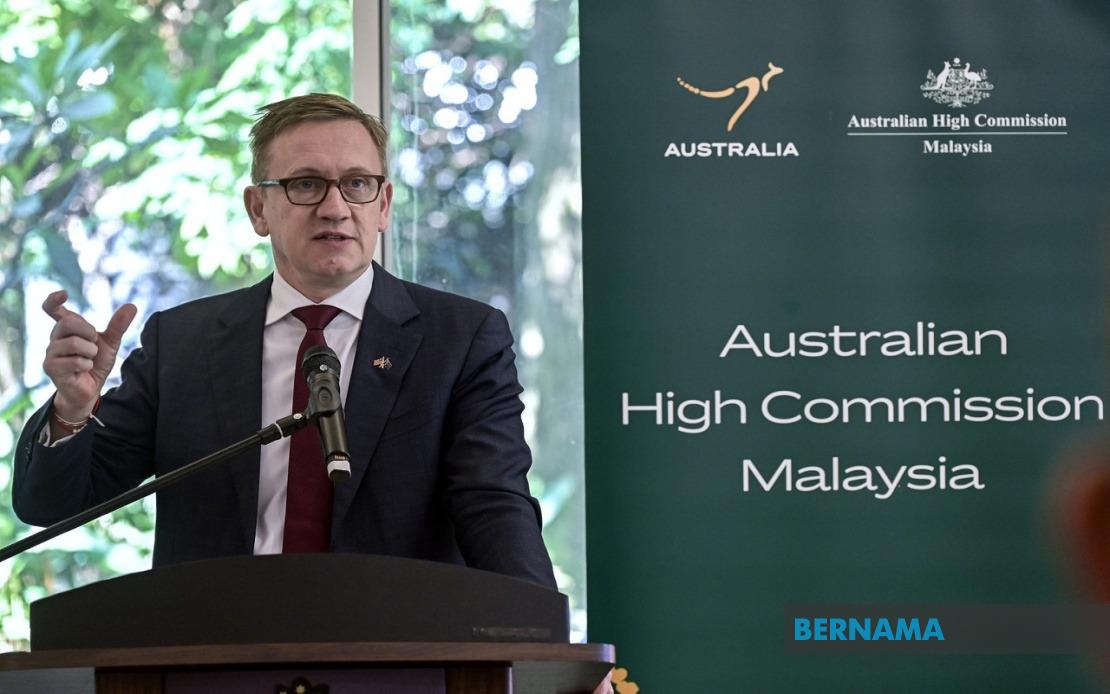
Australia's High Commission in Malaysia has unveiled the Australia Awards-Malaysia Semester Programme, a fresh scholarship initiative designed to give Malaysian undergraduates and postgraduates the opportunity to spend up to two semesters studying at Australian universities without financial barriers. The pilot scheme, which commenced in July, represents a deliberate expansion of Australia's educational outreach in Southeast Asia and reflects Canberra's strategic interest in deepening connections with Malaysia beyond traditional trade and diplomatic channels.
Assistant Minister for International Education Julian Hill, who formally launched the programme in Kuala Lumpur, characterised the initiative as evidence of Australia's enduring commitment to strengthening human links between the two nations. Hill emphasised that more than half a million Malaysians have previously studied in Australia, many returning home as unofficial ambassadors who carry Australian influences and perspectives throughout their careers and personal lives. He framed these returning scholars as living bridges between the two countries, suggesting that educational exchange produces intangible but valuable diplomatic benefits extending far beyond immediate economic measurements.
The programme offers comprehensive financial support encompassing international airfare, accommodation arrangements, living allowances, visa processing, travel insurance and associated expenses. This all-encompassing approach removes one of the primary obstacles preventing talented but financially constrained students from accessing international education, addressing a persistent equity concern within the Malaysian education system where family economic circumstances often determine access to premium global learning opportunities. By covering the full cost of participation, Australia signals its willingness to invest substantially in cultivating the next generation of Malaysia-Australia relationships.
Currently, three Malaysian branch campuses participate in the pilot scheme: Curtin University Malaysia, Monash University Malaysia and the University of Wollongong Malaysia. However, the Australian High Commission has invited Swinburne University of Technology Sarawak Campus to join the programme, suggesting expansion beyond the initial trio. The inaugural cohort comprises 16 Malaysian students who departed for the July intake, providing a modest but manageable scale for programme administrators to refine procedures and gather evidence of effectiveness before potential enlargement.
Hill's remarks positioned the initiative within Australia's broader Southeast Asian engagement strategy, articulating education as foundational to bilateral relationships that encompass trade, economic cooperation and collaborative problem-solving. He explicitly acknowledged that educational exchange must operate bidirectionally, expressing Australia's hope that more Australian students would reciprocate by studying at Australian branch campuses operating in Malaysia through complementary schemes like the New Colombo Plan. This reciprocal framing attempts to counter potential perceptions that educational initiatives primarily serve Australian interests, instead emphasising mutual benefit and shared learning objectives.
The scholarship programme reflects recognition that Australian universities operating in Malaysia function as more than mere teaching institutions delivering curricula to local students. Hill characterised these campuses as research centres capable of generating original knowledge and facilitating academic collaboration addressing shared regional and global challenges. He identified medical science, clean energy, mining and agriculture as specific domains where Australian and Malaysian researchers might partner, suggesting that educational linkages could catalyse research partnerships addressing practical problems both nations face.
For Malaysian policymakers and education administrators, the programme carries several implications. It provides Malaysian students with international educational credentials and cross-cultural experiences that increasingly constitute valuable attributes in competitive global employment markets, particularly within multinational corporations and international organisations. The scheme also positions Australia competitively within Malaysia's international education landscape, where students traditionally consider destinations including the United Kingdom, United States and China alongside Australian options.
The Australian government has committed funding through a four-year cycle, contingent on budget appropriations and political continuity in Canberra. Hill expressed hope that successful pilot implementation would eventually transition the initiative into a permanent long-term programme, though he stopped short of guaranteeing indefinite funding commitments. This cautious optimism reflects standard government practice of evaluating pilot schemes before committing to sustained resource allocation, meaning the programme's ultimate sustainability remains contingent on demonstrated outcomes and continued political support.
From a Southeast Asian perspective, the scholarship represents Australia's strategic positioning within a region where educational soft power increasingly influences diplomatic and economic relationships. China has substantially expanded scholarship provisions and university partnerships throughout Southeast Asia, while various Western nations including Australia have attempted to maintain educational presence and influence. Malaysia, possessing substantial student populations with capacity to study abroad and serving as a regional education hub with multiple international university campuses, represents a strategically important market where Australia seeks to maintain relevance and deepen institutional connections.
The programme also addresses equity considerations within international education access. By eliminating financial barriers for Malaysian students at local Australian campuses, the scheme ensures that economic circumstances do not entirely determine who experiences international education, potentially identifying talented individuals who might otherwise remain undiscovered within Malaysia's education system. This democratisation of access aligns with contemporary international development priorities emphasising human capital development and talent identification across socioeconomic backgrounds.
The presence of MARA Chairman Dr Asyraf Wajdi Dusuki at the launch ceremony signals Malaysian government institutional support for the initiative, suggesting alignment between Australian educational objectives and Malaysian policy priorities regarding student mobility and international partnerships. MARA's involvement indicates the scheme has received official blessing within Malaysia's education bureaucracy, potentially facilitating administrative cooperation and student recruitment.
For Malaysian students considering international study, the programme presents a distinctive opportunity combining Australian university credentials with reduced financial burden compared to relocating entirely to Australia. Participation allows students to complete foundational studies in Malaysia's familiar environment before transitioning temporarily to Australian campuses, potentially easing cultural adjustment and reducing overall dislocation. This staged international education approach may appeal particularly to students whose family circumstances favour remaining in Malaysia initially while accessing international educational experiences on a temporary basis.
As the inaugural cohort progresses through their Australian semester, programme outcomes will likely attract scrutiny from Malaysian education institutions, government agencies and prospective students evaluating whether the investment justifies the disruption of established study patterns. Success metrics extending beyond immediate academic performance—including employment outcomes, research productivity, and self-reported cultural learning and professional network development—will ultimately determine whether Australia achieves its broader objective of embedding educational exchange within long-term Malaysia-Australia strategic partnership development.

