Australia's transport regulator has initiated a comprehensive investigation following three potentially catastrophic runway incidents at Sydney Airport over the span of just fourteen days, underscoring serious questions about operational safety protocols at one of the Asia-Pacific region's busiest aviation hubs. The Australian Transport Safety Bureau confirmed the probe on Friday, August 14, as details emerged of close-call situations involving major carriers including Virgin Australia, Qantas, Jetstar, and Qatar Airways, each pointing to breakdowns in coordination between air traffic control and flight crews during critical phases of airport operations.
The most recent incident occurred on the morning of August 9, when a Virgin Australia Boeing 737 was granted clearance to begin its take-off roll down the runway. As the aircraft accelerated, flight crew spotted a Qantas aircraft actively crossing the same runway directly in their path. The Virgin Australia pilots executed an emergency stop, bringing their fully-loaded aircraft to a halt approximately one kilometre away from the Qantas plane, which had itself been authorized to taxi across the landing strip. The severity of this encounter becomes apparent when considering the speeds and distances involved: a Boeing 737 travelling at take-off velocity represents an enormous kinetic energy that could only be halted through immediate crew intervention and maximum braking force.
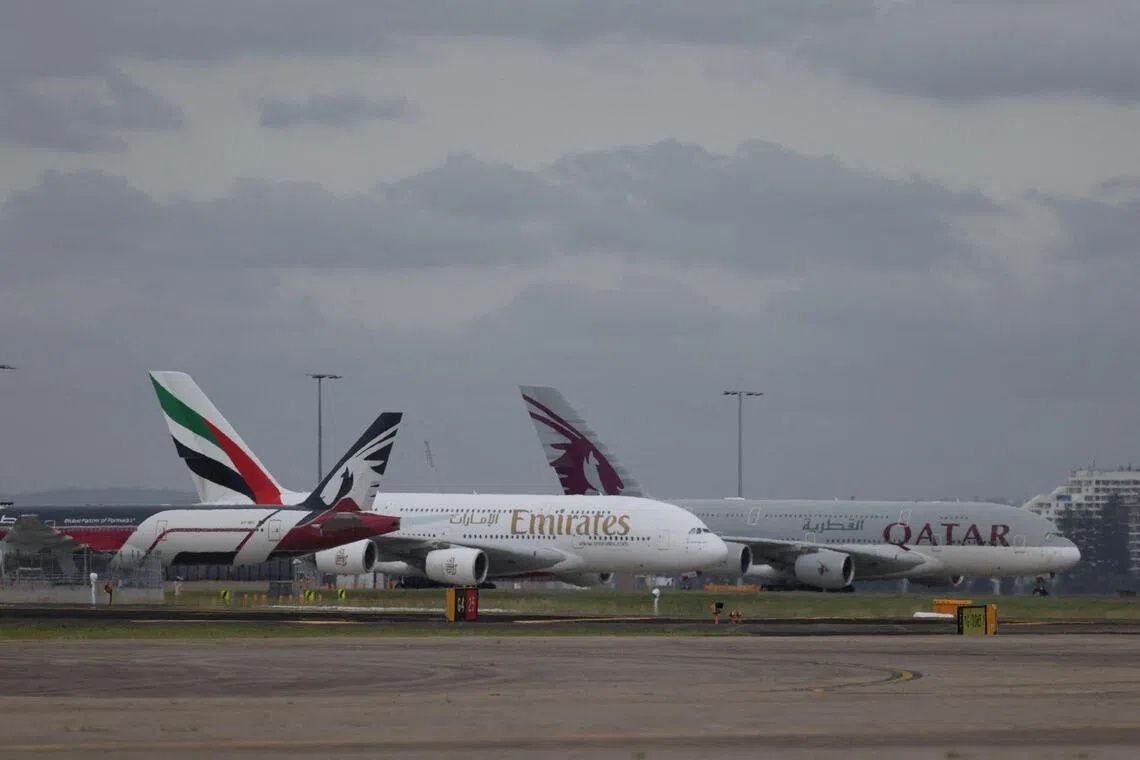
The same day witnessed a second alarming episode when a Jetstar pilot was forced to apply emergency brakes to prevent a collision with a Qatar Airways aircraft. These back-to-back incidents on August 9 represent an extraordinary concentration of safety lapses, suggesting systemic rather than isolated problems. The pattern became even more concerning when investigators confirmed that two Qantas aircraft had narrowly avoided collision on July 27 after both had received independent clearance to take off, indicating that the underlying issues may have persisted for weeks prior to official acknowledgement.
Angus Mitchell, the Transport Safety Bureau's Chief Commissioner, acknowledged the seriousness of these occurrences while attempting to reassure the flying public that a thorough examination would follow. He emphasized that investigators would examine not only the immediate causes but also broader organizational and systemic factors that may have contributed to the dangerous sequences. This multilayered approach recognizes that aviation safety failures rarely stem from single errors but rather from combinations of factors including staffing levels, fatigue, training gaps, equipment reliability, and procedural adherence.
The investigation will necessarily scrutinize workload conditions within Sydney's air traffic control tower during the critical periods in question. Mitchell revealed that a supervisory or training exercise was underway on August 9, raising the possibility that reduced operational capacity or attention to real-world traffic management may have occurred during this event. Such training activities, while essential for maintaining controller competency, must be carefully managed to avoid compromising live operational safety—a balance that appears not to have been adequately maintained on this occasion.
Aircraft movements at Sydney Airport have expanded substantially in recent years as airlines rebuild international and domestic networks following pandemic-related restrictions. This surge in operations comes at a time when the aviation sector is simultaneously managing a significant shortage of qualified air traffic controllers. Mitchell acknowledged that Australia is in a demanding recruitment and training cycle, seeking to qualify sufficient controllers to manage the increased traffic volumes. The timing creates inherent tensions: heightened demand occurs precisely when the system is least stable due to staffing expansion.
The delayed reporting of these incidents has also drawn scrutiny from safety advocates and media observers. Questions about why several days elapsed before senior management was informed, and before public disclosure occurred, suggest possible gaps in incident escalation procedures. Transparency in aviation safety reporting is crucial for maintaining public confidence and enabling systemic improvements. Any hesitation in reporting or investigating such events can undermine the safety culture that aviation depends upon, particularly in a region where air traffic continues to grow at robust rates.
Prime Minister Anthony Albanese weighed in on the matter by calling for a comprehensive investigation, signalling political attention to the issue and the expectation that findings will result in meaningful corrective action. This level of scrutiny from the highest levels of government reflects community concern about aviation safety and the implicit social contract that commercial aviation maintains exceptionally high standards in protecting passenger and crew lives.
The implications for the Asia-Pacific region extend beyond Sydney's immediate context. As regional air traffic intensifies across Southeast Asia and Australia-Pacific routes continue expanding, the safety systems and training protocols demonstrated at major hubs become reference points for the entire region's aviation infrastructure. Malaysia, Singapore, Thailand, and other countries with growing aviation sectors monitor developments at peer airports, learning lessons that inform their own operational standards. A successful resolution to Sydney's challenges will reinforce safety culture across the region, whilst any failure to address root causes could prompt concerning questions about systemic vulnerabilities that may exist elsewhere.
The incidents also highlight the critical importance of continuous investment in air traffic control modernization and staffing. As aircraft operations become denser and more complex, the margin for error shrinks accordingly. Controllers must manage not only increased volume but also aircraft with different performance characteristics, mixed airline procedures, and varied crew proficiency levels. Adequate staffing, comprehensive training, effective supervision, and reliable technology form an interdependent system where weakness in any component can cascade into dangerous situations.

