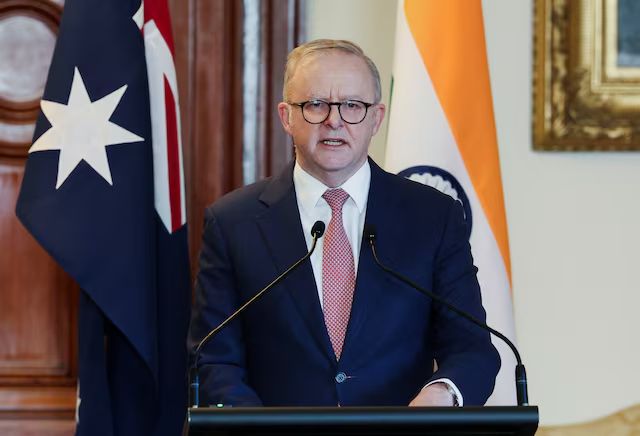
Prime Minister Anthony Albanese has signalled Australia's determination to challenge the United States' newly imposed tariff regime through sustained diplomatic engagement with President Donald Trump. Speaking on Sunday, Albanese confirmed that Canberra intends to pursue the matter across all channels of the Australia-U.S. relationship, emphasizing that discussions on the trade barriers have already commenced.
The Trump administration implemented tariffs on Friday affecting 60 trading partners, with the levies justified on grounds that these nations have insufficiently addressed the manufacture and distribution of goods produced through forced labour practices. The move coincided with the expiration of a temporary 10% global tariff that had previously been in effect. Australia finds itself among nations subject to a 12.5% tariff rate, alongside 37 other countries, whilst a further 17 nations face a 10% rate and five are subject to mixed tariff schedules.
The Albanese government has rejected the characterization of Australia as complicit in forced labour supply chains, arguing instead that the nation maintains robust legislative and enforcement frameworks governing modern slavery. The Prime Minister emphasized that Australia is actively strengthening its protections through comprehensive supply chain scrutiny and the application of substantial financial penalties to non-compliant businesses. This defensive posture reflects Canberra's confidence in its labour standards record and signals determination to contest the tariff categorization.
For Malaysian observers, the dispute carries significant implications for the broader Southeast Asian trading environment. Australia's willingness to challenge Trump's tariff architecture represents one of the few developed nations openly resisting the administration's protectionist approach, a stance that may embolden other regional trading partners facing similar pressures. The outcome of Australia's negotiations could establish important precedents for how middle-sized developed economies can effectively contest unilateral trade restrictions.
Albanese's invocation of "free and fair trade" principles reflects a broader strategic positioning that extends beyond immediate tariff relief. By framing Australia's response around labour standards compliance rather than simply economic harm, the government appeals to values that resonate within Trump's rhetorical framework whilst simultaneously defending national interests. This approach differs markedly from protectionist counter-measures, instead seeking to demonstrate that Australian supply chains already meet or exceed international standards.
The timing of this diplomatic engagement carries weight, particularly given that Albanese's Labor government secured a landslide election victory last year and had previously prioritized tariff discussions with Trump as a key agenda item. This continuity suggests that trade relationship management remains central to Australia's US strategic engagement, reflecting the economic and security significance of bilateral commerce to both nations.
The forced labour allegation itself warrants scrutiny, as it represents a shift in the Trump administration's tariff justification framework. Rather than relying solely on national security arguments that characterized previous trade actions, the administration has adopted labour standards enforcement as rationale. For Australia and other developed trading partners with strong labour regulations, this creates both a challenge and an opportunity—the challenge being to prove compliance, the opportunity being to elevate the conversation beyond simple protectionism toward legitimate standards harmonization.
Regional economies including those in Southeast Asia should monitor the Australia-US tariff dispute carefully, as it may foreshadow similar targeting of other trading partners. Nations exporting to America should anticipate potential tariff actions justified on forced labour grounds and ensure their own supply chain transparency is documented and defensible. The dispute also suggests that traditional trade relationships between developed nations cannot be assumed immune from Trump administration tariff actions.
Albanese's commitment to raise the issue "at every level" indicates an escalation strategy that will likely involve not just executive discussions but also congressional engagement and potentially industry-level dialogues. This multi-pronged approach reflects lessons learned from previous trade disputes where single-channel negotiations proved insufficient. The Australian government appears determined to demonstrate that its modern slavery provisions, which have been strengthened over successive legislative iterations, adequately address the underlying concerns motivating the tariffs.
Looking forward, the resolution of this dispute will substantially influence not only Australia's trade relationship with the United States but also signal how developed nations can effectively counter protectionist tariff actions. A successful Australian negotiation could provide a template for other countries seeking tariff relief, whilst failure might embolden further tariff expansions justified under labour standards frameworks. For Malaysian policymakers and businesses, the outcome carries implications for how trade disputes may be adjudicated under a Trump administration and what leverage various arguments—whether economic, regulatory, or standards-based—might carry in negotiations.

