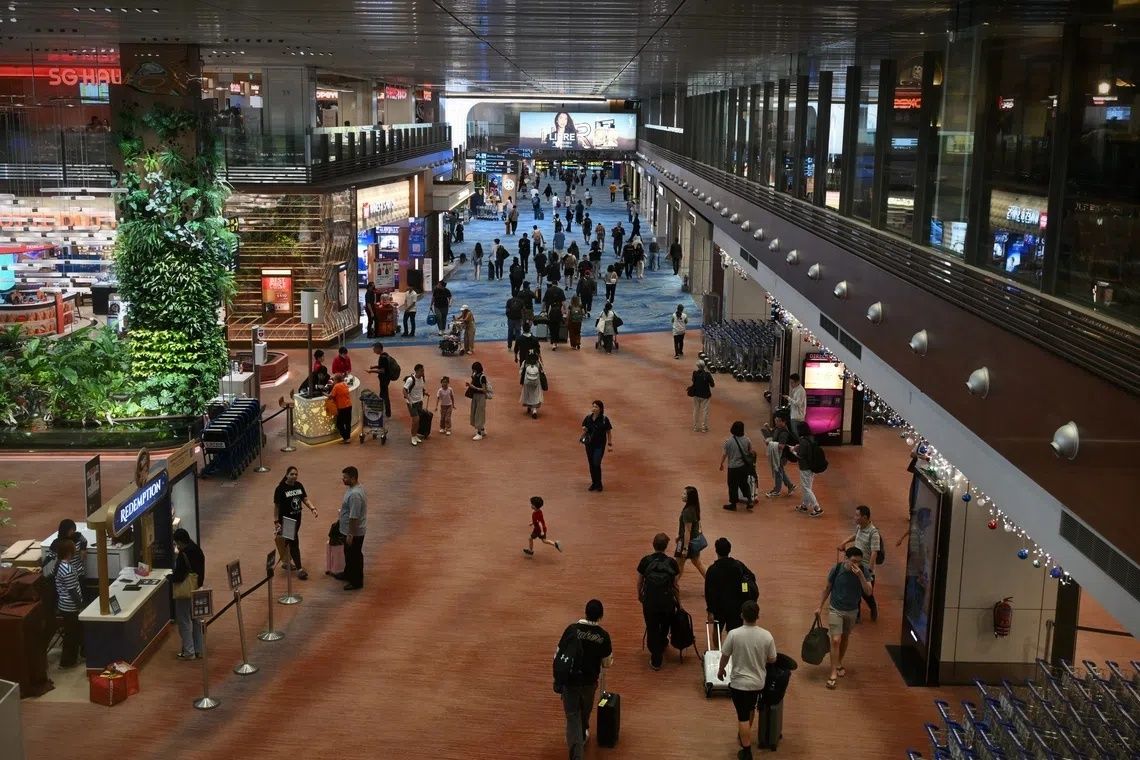
Singapore's Changi Airport has become the focal point of a retail crime investigation that highlights the vulnerability of high-value merchandise in transit zones, with authorities apprehending two international passengers accused of stealing fragrances worth over $1,100 combined. The 37-year-old Australian man and the 50-year-old American face court appearances on August 17 following their arrests, marking the conclusion of separate but similarly executed thefts that unfolded months apart and demonstrate how modern surveillance systems can eventually bridge geographical and temporal gaps in criminal investigations.
The Australian suspect's case reveals the lengthy timeline and international nature of airport security challenges. Police first received a report on November 19, 2025, at approximately 6:45 p.m., when staff at a perfume retailer in Changi Airport Terminal 2's transit area discovered two fragrance boxes missing from display shelving. Closed-circuit television analysis traced the disappearance to 4:50 p.m. that same afternoon, capturing footage of the man placing perfumes valued at approximately $430 into his possession before departing the store without payment. The suspect's ability to leave the country before authorities identified him created an eight-month window during which he remained at large, illustrating how international travel can complicate law enforcement efforts. However, his eventual return to Singapore proved his undoing—airport police successfully apprehended him on August 4 when he transited through Changi, demonstrating that even considerable delays do not guarantee criminals will evade accountability.
The American traveller's apprehension unfolded with considerably greater speed and complexity. Police received notification of theft on August 5 at approximately 1:25 a.m., after staff at a duty-free outlet in Terminal 1's transit zone reported a missing perfume box. Video surveillance showed the man removing the merchandise—valued at over $310—around 12:40 a.m. before exiting without completing a transaction. Unlike his Australian counterpart, this suspect faced immediate intervention, with airport police officers detaining him before he could board his departing flight. Further examination of security footage subsequently revealed a more extensive pattern of theft, uncovering additional stolen items from two neighbouring retailers: another perfume box valued at approximately $170 and a premium fragrance tester priced above $230. The cumulative value of items taken by the American suspect exceeded $717, with authorities recovering all three stolen products before the traveller could depart.
The legal framework governing these offences carries substantial penalties that underscore Singapore's commitment to protecting retail operations within its transportation hub. The charge of theft in dwelling—defined as larceny committed within any building or residential structure—carries maximum sentences of seven years imprisonment, financial penalties, or combinations thereof. This classification reflects Singapore's approach to safeguarding commercial spaces and sending forceful messages to would-be offenders that such crimes, regardless of the merchandise category or location, attract serious criminal liability. The potential custodial sentences available to the courts far exceed typical penalties for shoplifting in many comparable jurisdictions, reflecting the island nation's zero-tolerance approach to retail crime.
Airport duty-free environments present particular temptations and challenges for security operations, as high-value fragrances concentrate substantial monetary worth within accessible display spaces frequented by large numbers of transiting passengers. The transit zones of Changi Airport's terminals serve international travellers passing through Singapore en route to other destinations, creating a complex security environment where individuals may perceive themselves as insulated from consequences by their temporary presence and imminent departure. The two incidents occurred in this specific context, with both offenders apparently calculating that the combination of transient status and crowded retail environments would shield them from detection or accountability. The reality proved otherwise, as sophisticated surveillance infrastructure and dedicated airport police units successfully identified and apprehended both men.
Assistant Commissioner of Police M. Malathi issued a statement on August 16 emphasizing the authorities' stringent approach to shop theft and underscoring the technological advantages now deployed across Singapore's retail landscape. Malathi noted that advances in closed-circuit television technology and its comprehensive adoption by retailers throughout commercial districts have substantially improved law enforcement's capacity to detect, investigate, and prosecute merchandise theft cases. His remarks carried particular significance for the Australian case, wherein the suspect's initial escape and months-long absence from Singapore created apparent geographical insulation from consequences. Malathi's statement explicitly addressed this scenario, warning that even offenders who temporarily evade detection will ultimately face identification and arrest through persistent investigative efforts. The message aimed at both deterring potential criminals and reassuring retailers of systematic accountability mechanisms.
The implications of these cases extend beyond the two individuals involved, signalling to the international travelling public that Changi Airport operates under comprehensive surveillance protocols and robust enforcement mechanisms. Frequent transit hubs across Southeast Asia face escalating retail crime challenges as passenger volumes increase and merchandise values grow, yet many jurisdictions struggle with resource constraints and jurisdictional complications that impede investigations. Singapore's success in apprehending the Australian suspect despite an eight-month interval demonstrates investigative sophistication and commitment that distinguishes it from regional peers. For Malaysian travellers and those transiting through Changi, the cases underscore that observed behaviour in airport retail environments may be logged, archived, and later used in prosecutions regardless of time elapsed or subsequent international travel.
The airport police unit's ongoing collaboration with retail stakeholders represents an institutional approach to prevention that balances security concerns with operational efficiency. Such partnerships enable retailers to implement coordinated loss-prevention strategies while providing law enforcement with real-time intelligence regarding suspicious activities and merchandise losses. Changi Airport's position as one of Asia's premier transportation nodes—handling millions of passengers annually and serving as a crucial gateway for regional commerce—makes it strategically important for maintaining public confidence in airport security and retail integrity. The cooperation framework extends beyond reactive investigation to encompass proactive deterrence, with visible enforcement operations and publicized prosecutions intended to discourage would-be offenders from targeting airport retailers.
These prosecutions arrive amid broader discussions across Southeast Asia regarding retail security, supply chain protection, and the role of technological solutions in crime prevention. The perfume theft cases, though individually modest in monetary terms, contribute to cumulative losses that affect retail operations' profitability and pricing structures. For Malaysian stakeholders in travel retail, duty-free operations, and airport management, the Singapore cases offer instructive examples of how systematic surveillance integration, multi-agency coordination, and consistent legal accountability can significantly reduce merchant losses and enhance customer confidence in airport shopping environments. The willingness of authorities to pursue prosecutions across considerable temporal and geographical distances—evident in the Australian suspect's capture—establishes precedents that may influence the behaviour of international travellers considering similar acquisitive crimes.

