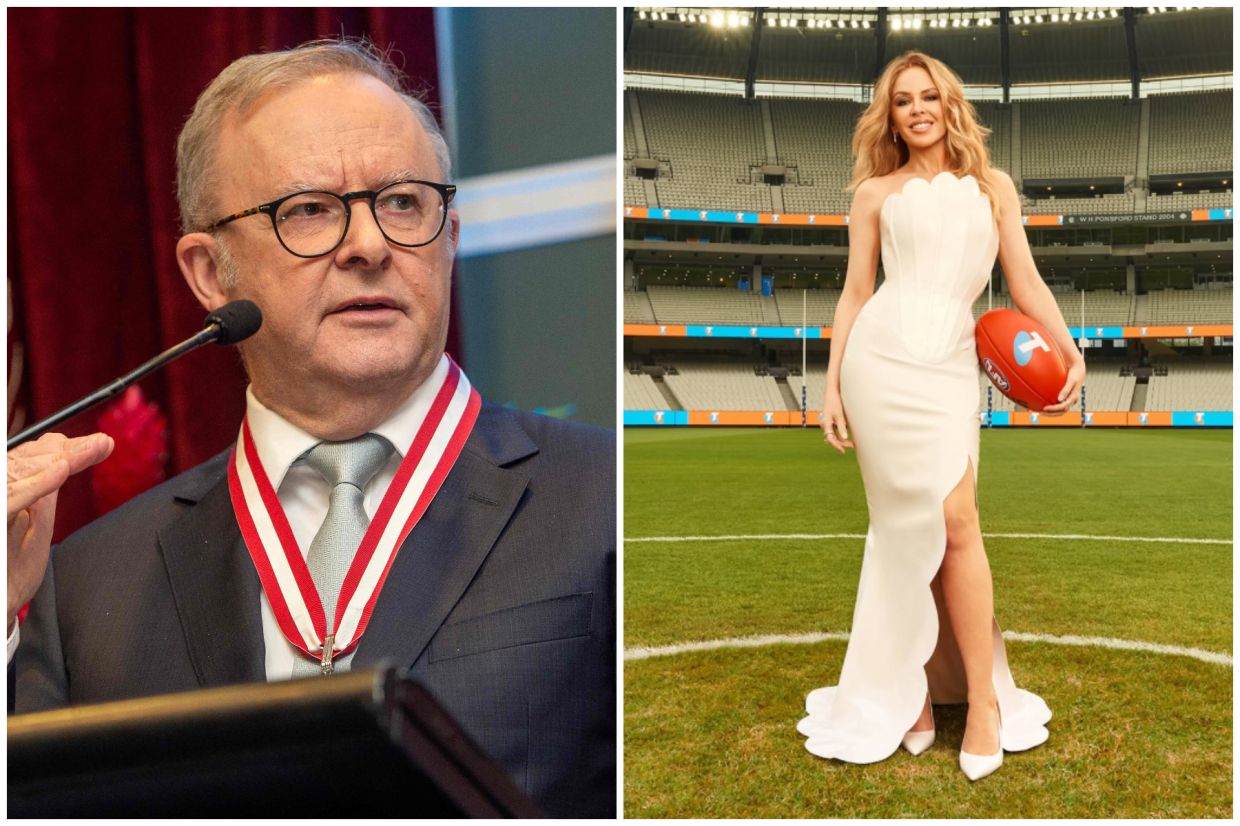
Australian Prime Minister Anthony Albanese has issued an unequivocal apology after making suggestive remarks about pop star Kylie Minogue during a recent podcast interview, a lapse in judgment that drew swift condemnation from political colleagues and the broader public.
The incident occurred when Albanese appeared on a local comedy programme, where podcast host Nikki Osborne posed a popular parlour game question asking him to nominate which Australian entertainer he would "shag, marry, date". Initially attempting to deflect the question, the Prime Minister ultimately responded by naming Minogue, stating "Oh, Kylie, clearly". When pressed further by Osborne about whether he would marry, sleep with, and date the internationally renowned performer simultaneously, Albanese replied casually: "All of the above".
The exchange, which occurred on what is understood to be a light-hearted comedy platform, rapidly escalated into a significant political controversy as the comments circulated beyond the podcast's original audience. The remarks triggered immediate backlash from across the political spectrum, with observers characterising the comments as inappropriate and unbecoming of a sitting head of government. At least one Australian lawmaker publicly described the Prime Minister's conduct as a "disrespectful" failure of judgment, signalling that colleagues viewed the incident as crossing an important line regarding professional standards and dignity.
Albanese's decision to apologise came after the mounting pressure became apparent. The formal statement, released through his official office rather than made in parliament or at a press conference, represented an attempt to contain the damage and move beyond the controversy swiftly. In his apology, the Prime Minister made clear his regret, stating unambiguously that he was sorry for the comments, though he did not elaborate extensively on his reasoning or offer additional context.
The incident reflects broader tensions within modern politics regarding the intersection of informal media appearances and public accountability. Podcast platforms and comedy shows occupy an increasingly important space in the media landscape, offering political figures opportunities to project a more relatable, human persona to voters. However, as Albanese's experience demonstrates, comments made in these ostensibly casual environments can rapidly become matters of serious political consequence, particularly when they involve commentary on women or public figures.
Kylie Minogue herself, who remains one of Australia's most internationally successful entertainment exports, has not made a public statement regarding the Prime Minister's remarks or his subsequent apology. The singer, often affectionately referred to as the "Princess of Pop", achieved her initial breakthrough through the Australian soap opera "Neighbours" before establishing a global music career spanning multiple decades. Her cultural significance in Australia and abroad makes any comments about her particularly resonant with the public.
The controversy also raises questions about the standards expected of prime ministers when appearing on entertainment media. While many political leaders have sought to humanise themselves through informal media appearances, the episode highlights the tension between being personable and maintaining the dignity associated with high office. The line between appropriate candour and inappropriate conduct remains contested, particularly in an era where audio and video content can be instantly shared and scrutinised across social media platforms.
For Malaysian observers, the incident offers perspective on how democratic accountability functions across Commonwealth nations. Australia's swift media response and political reaction to perceived lapses in prime ministerial conduct reflects the rigorous scrutiny that public figures face in established democracies. The willingness of political colleagues to voice criticism and the expectation that public apologies address such concerns demonstrate mechanisms of parliamentary and public oversight that operate alongside formal institutional checks.
The broader implications of this incident extend to considerations about workplace conduct, respect, and the evolving standards governing public discourse. While podcast appearances represent relatively informal settings, the Prime Minister's position carries expectations that transcend the medium through which comments are made. The expectation that political leaders maintain a baseline standard of respect when discussing other individuals, particularly women, reflects contemporary values around dignity and professionalism that increasingly shape political culture.
Albanese's apology appears designed to draw a line under the controversy and prevent it from dominating the political agenda. However, the incident may have longer-term effects on how the Prime Minister is perceived by voters and colleagues, potentially affecting his authority and standing. For other political figures contemplating similar media appearances, the episode provides a cautionary reminder that comments made in supposedly private or informal settings can rapidly become matters of intense public scrutiny and political consequence.

