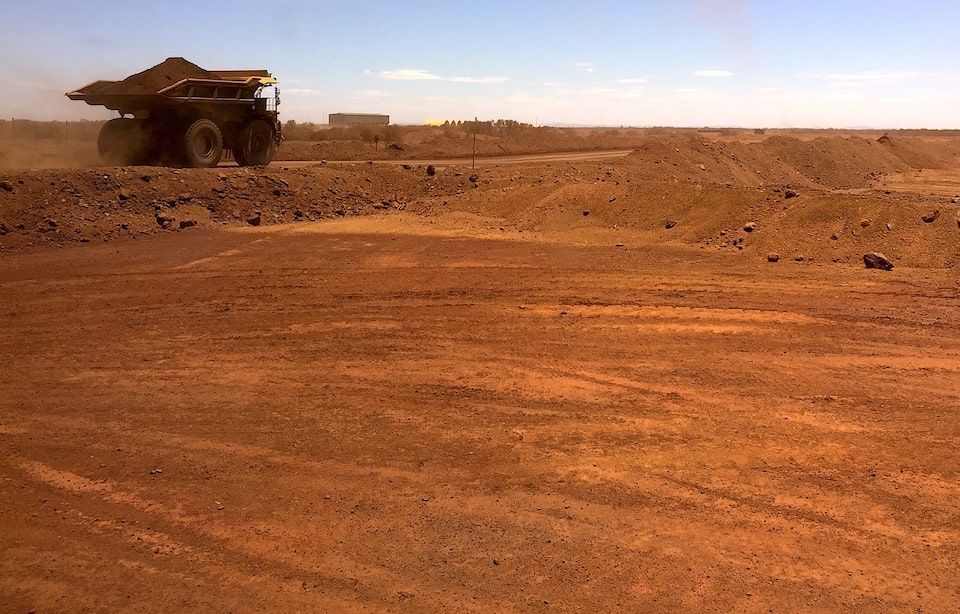
Scientists at Edith Cowan University have identified a significant natural hydrogen source hidden within Western Australia's iron ore deposits, offering potential pathways toward harnessing this clean energy resource at scale. The discovery centres on magnetite, an iron oxide mineral abundant beneath WA's distinctive red soil, which researchers have demonstrated can generate hydrogen gas through reactions with superheated groundwater in deep subsurface environments.
The finding represents an important step toward understanding how hydrogen occurs naturally underground and what geological and chemical conditions allow its continuous generation. For a region built on mining and facing mounting pressure to transition toward lower-emission energy systems, this development carries considerable economic and environmental implications. Western Australia's mining sector, which dominates the state's economy and contributes substantially to national export revenues, could potentially leverage existing infrastructure and expertise to pursue this emerging resource.
Researchers from the university's School of Engineering conducted controlled experiments to validate their hypothesis. They exposed magnetite samples to water heated to 200 degrees Celsius while subjecting them to high-pressure conditions mimicking the extreme environment found kilometres below the Earth's surface. Over a 60-day testing period, the team systematically observed and measured hydrogen generation, establishing concrete evidence that the process functions under these replicated deep-earth conditions.
The research further demonstrated that hydrogen production can be substantially enhanced through targeted injection of solutions into the banded iron formations that characterise much of WA's subsurface geology. This finding proves significant because Western Australia contains some of the planet's most extensive banded iron formations, geological structures deposited billions of years ago that now represent untapped hydrogen reservoirs. The sheer scale of these formations suggests potential production capacity far exceeding current energy demands.
A crucial insight from the study concerns the mechanisms controlling hydrogen yield. The research revealed that hydrogen production depends not solely on magnetite concentration but critically on water's ability to continuously access fresh mineral surfaces within the rock formation. This access occurs through naturally occurring fractures, microscopic pores, and permeable pathways that allow groundwater circulation. Understanding this requirement opens possibilities for enhancing production through targeted fracturing or stimulation techniques already familiar to the petroleum and geothermal industries.
The findings, published in the International Journal of Hydrogen Energy, contribute to growing international interest in natural hydrogen as an energy source. Unlike hydrogen produced through industrial processes powered by fossil fuels, naturally occurring hydrogen represents a genuinely clean energy option requiring no processing emissions. However, the economic viability of extracting and utilising this natural hydrogen at commercial scale remains an open question requiring further investigation and pilot projects.
For Southeast Asia and the broader Indo-Pacific region, this Australian research carries strategic significance. Hydrogen increasingly features in global energy transition strategies, with major economies establishing hydrogen economies and investing heavily in production infrastructure. Natural hydrogen, if economically viable to extract, could reshape regional energy dynamics by providing abundant clean fuel without the emissions associated with conventional hydrogen production methods or the intermittency challenges of renewable electricity generation.
Western Australia's position as a global energy supplier suggests the state could eventually export natural hydrogen or hydrogen-derived products to regional markets, particularly in East Asia where energy demand continues rising. This would complement existing liquefied natural gas exports and position the region as a comprehensive clean energy supplier. Such development could attract further investment into Australian energy infrastructure and research capabilities.
The research also highlights the interconnected nature of modern energy transitions. A resource historically overlooked or dismissed as mere geological background now potentially represents valuable energy capital. This pattern reflects how technological understanding and changing energy economics can fundamentally alter resource valuations and development priorities. Western Australia's substantial magnetite deposits, some previously considered waste rocks in mining operations, could transform into strategic assets.
However, significant challenges remain before natural hydrogen becomes a major energy source. Researchers must conduct further studies to understand optimal extraction methodologies, assess environmental impacts of large-scale extraction, evaluate economic competitiveness against other hydrogen sources, and develop suitable infrastructure for collection, transport, and utilisation. The 60-day laboratory timeframe, while demonstrating proof of concept, differs substantially from sustained field extraction scenarios.
The discovery also raises questions about geological sustainability. While the experiments demonstrated hydrogen generation under simulated deep conditions, long-term field extraction could alter subsurface pressure systems, fracture networks, and water chemistry in unpredictable ways. Environmental monitoring frameworks would require development before commercial-scale operations commence. These challenges explain why moving from laboratory validation to commercial deployment typically requires years of additional research and pilot testing.
International collaboration will likely accelerate progress toward commercialisation. Edith Cowan University's findings attract interest from hydrogen researchers worldwide, creating opportunities for partnerships with international institutions and energy companies seeking to develop natural hydrogen resources. Such collaboration could bring additional funding, expertise, and technological innovation to Australian projects.
Ultimately, this discovery represents an encouraging development for regions seeking diverse clean energy pathways. Rather than relying exclusively on renewable electricity or carbon capture technologies, natural hydrogen offers another option worth serious investigation. For Western Australia and Australia more broadly, understanding and potentially developing this resource could provide competitive advantages in the global energy transition while supporting long-term economic prosperity and climate objectives.

