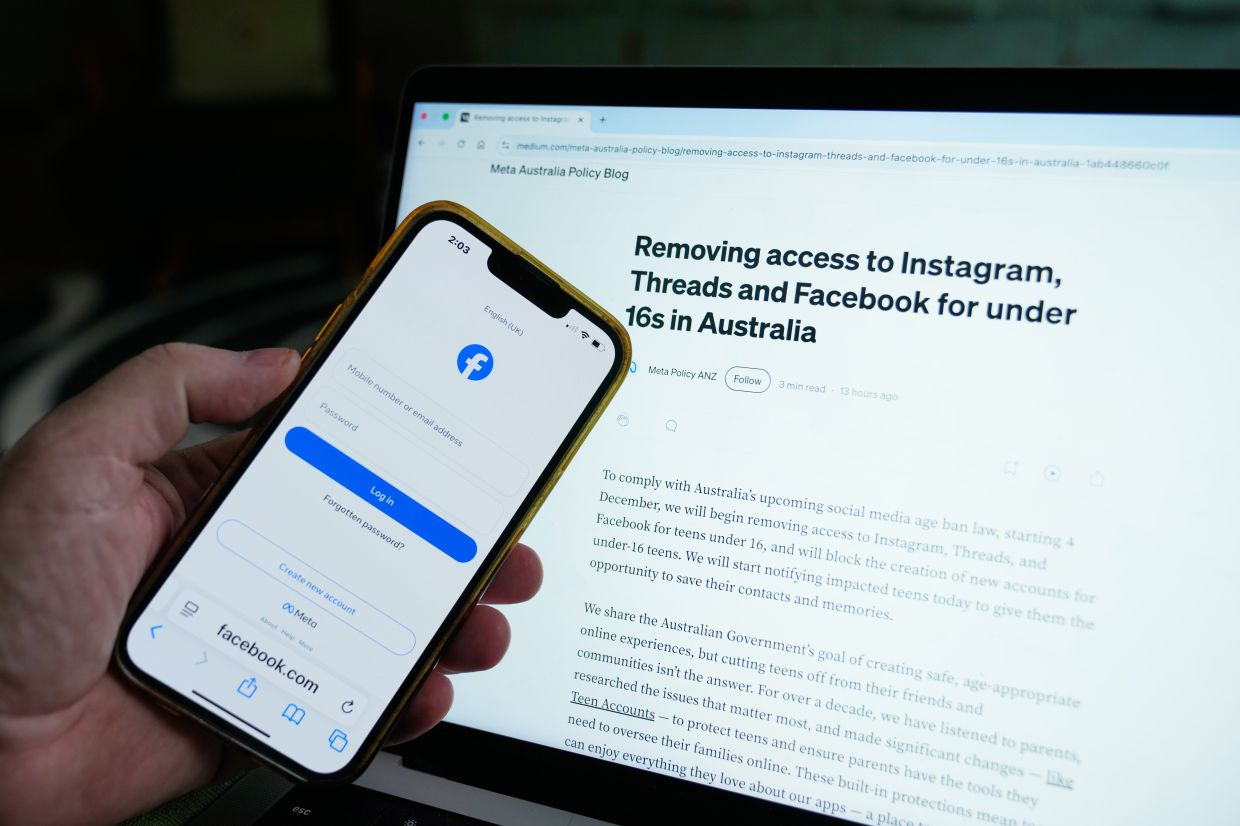
Prime Minister Anthony Albanese has condemned parliamentary delays to critical amendments that would significantly expand the enforcement toolkit available to Australia's online safety regulator in its battle against major social media platforms flouting the nation's ban on children under 16 accessing sites like Facebook, Instagram, and YouTube. The proposed legislative amendments, introduced to Parliament to bolster the powers of eSafety Commissioner Julie Inman Grant, faced a major setback when the opposition Liberal Party and the Australian Greens jointly referred them to an eight-week Senate inquiry on July 2, effectively stalling their passage and preventing the commissioner from accessing enhanced investigative and penalty mechanisms for months to come.
The amendments represent a calibrated escalation of regulatory authority, granting Inman Grant the power to demand not just information from platforms but also physical documents and materials pertaining to their compliance efforts. Currently, the commissioner can only request information voluntarily, a limitation that has become increasingly apparent as platforms have resisted transparency measures and continued to host underage users despite the ban's implementation three months prior. This distinction between requesting and demanding information carries substantial operational weight, as it would transform the commissioner's inquiries from advisory requests into binding obligations backed by legal consequence.
Albanese's frustration reflects a fundamental concern about regulatory timing and enforcement effectiveness. The Prime Minister emphasized that immediate passage would have established an enforcement baseline from which fines could be calculated and issued, whereas the Senate delay creates a window during which platforms could delete evidence, restrict access to documents, or alter their compliance records without fear of retroactive penalties. He articulated this concern to the Australian Broadcasting Corporation, warning that the postponement essentially grants the major technology companies a grace period to manage their legal exposure and destroy potentially incriminating material related to their handling of the under-16 user question.
The proposed amendments would also double the maximum financial penalties platforms face for non-compliance, raising the ceiling from A$49.5 million to A$99 million, while enabling the commissioner to compel third parties—particularly age assurance technology vendors—to provide documentation testing platforms' claims about how children circumvent verification systems. This represents a significant expansion of investigative scope, moving beyond bilateral dialogue with platforms to include the entire ecosystem of compliance infrastructure that platforms claim to employ. The amendment would also grant the commissioner authority to examine whether age verification tools actually function as platforms assert they do, exposing potential misrepresentations about technological capacity.
The opposition's resistance to these amendments reveals deep fractures in bipartisan consensus around digital regulation, despite overwhelming parliamentary support for the original ban legislation in 2024. Liberal Party communications spokesperson Senator Sarah Henderson argued that the amendments, while well-intentioned, do not go far enough, characterizing the child social media ban as fundamentally flawed policy that was hastily drafted and poorly implemented. Henderson's framing is politically notable: she simultaneously attacks the government for insufficient enforcement while opposing the very mechanisms that would enable stronger enforcement, a positioning that allows the opposition to occupy both tough-on-tech and skepticism-of-regulation ground simultaneously.
Senator David Shoebridge of the Australian Greens, who has consistently opposed the social media ban itself on civil liberties grounds, questioned the utility of doubling penalties that have never been deployed, suggesting that higher fines represent performative rather than substantive regulatory improvement. His argument contains an uncomfortable truth: in the three months since the ban took effect, the eSafety Commissioner has not issued a single fine despite overwhelming evidence of non-compliance, raising questions about whether the problem is insufficient penalty levels or insufficient political will to deploy available enforcement powers. Shoebridge's skepticism about whether penalty magnification translates to child safety outcomes reflects broader doubts about whether the ban operates as intended or whether it simply generates theatre around the issue while platforms continue their business largely unchanged.
The scale of non-compliance has become increasingly evident through official eSafety reports. While the government initially announced that over 5 million underage accounts had been removed, deactivated, or restricted following the December implementation, subsequent analysis revealed a far more troubling picture: approximately seven in ten children who maintained accounts on restricted platforms when the ban took effect in December continued to access Facebook, Instagram, Snapchat, and TikTok months later. This suggests either that the ban's technical implementation remains porous, that children possess ready workarounds, or that platforms have not genuinely attempted compliance with seriousness, instead adopting superficial measures while maintaining their under-16 user base largely intact.
Inman Grant herself signaled escalation in April, indicating that the eSafety Commissioner was contemplating legal action against Facebook, Instagram, YouTube, and Snapchat, alleging that these platforms had not undertaken reasonable steps to exclude underage users. Her consideration of court proceedings represents a fundamental shift from regulatory negotiation to adversarial litigation, acknowledging that voluntary cooperation has failed and that judicial intervention may become necessary. The commissioner indicated satisfaction with compliance efforts from X, Kick, Reddit, Threads, and Twitch—the smaller platforms—suggesting that non-compliance concentrates among the most commercially dominant players with the greatest financial incentive to retain their younger demographic.
Communications Minister Anika Wells underscored the deteriorating compliance trajectory, noting that monthly progress reports from eSafety since March have shown no meaningful improvement, suggesting that platforms are neither accelerating compliance efforts nor responding to increased regulatory scrutiny with substantive changes. This stagnation in the face of escalating official pressure indicates either that platforms regard current penalties and enforcement mechanisms as insufficiently costly to justify compliance, or that the technical challenge of age verification genuinely exceeds the capacity of existing tools and procedures. The amendment's expanded investigative powers would help determine which explanation holds true by enabling the commissioner to examine platforms' actual compliance infrastructure rather than accepting their assertions about technological capacity and implementation effort.
The Australian experience has acquired international significance as numerous countries, including the United Kingdom and various European Union members, develop their own social media restrictions for minors and observe how Australia's regulatory framework functions in practice. The delays and compliance challenges Australia encounters will likely inform how other democracies structure their own legislation, with implications for global technology governance. If Australia's ban—implemented with overwhelming parliamentary consensus and substantial enforcement mechanisms—proves unable to effectively restrict underage access, this may push other jurisdictions toward either more stringent regulatory approaches or skepticism about whether legislative restrictions can meaningfully constrain platform behavior when commercial incentives favor their circumvention.

