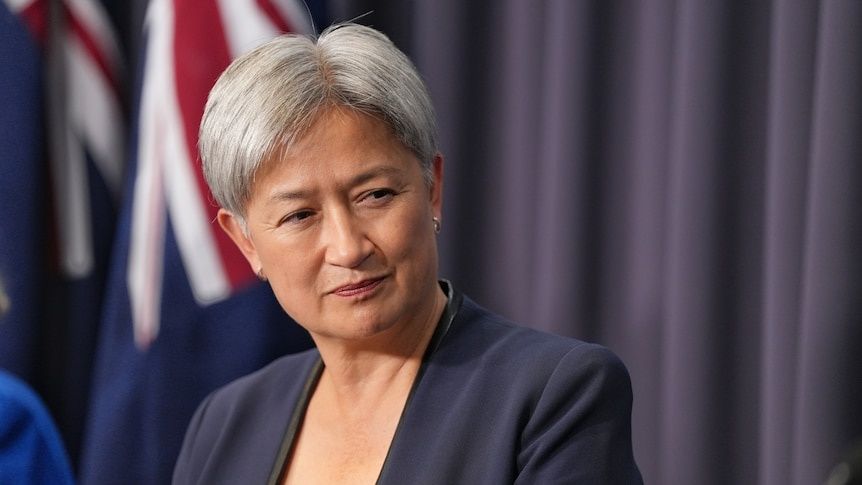
Malaysia-born Foreign Minister Penny Wong is set to deliver a robust defence of multiculturalism in Sydney on Friday, directly challenging the political ascendancy of the far-right One Nation party. As the first Asian-Australian to reach federal ministerial rank, Wong brings particular weight to her argument that cultural diversity represents not a recent departure but rather Australia's foundational identity. Her intervention signals how seriously the Albanese government regards the challenge posed by Pauline Hanson's movement, which has consolidated support to become Australia's most popular political party according to recent polling.
In her address to the Lowy Institute, Wong will articulate a vision of Australia as inherently multicultural, drawing on demographic reality to support her case. Census data reveals that approximately half of all Australians were born overseas or have at least one parent from another country, a statistic that Wong plans to emphasise as proof that diversity is woven into the nation's fabric rather than a temporary phenomenon. This demographic argument carries particular relevance for Southeast Asian audiences, given the substantial numbers of Malaysians, Singaporeans, and other regional migrants who have settled in Australia and contributed to its economic and social life.
The foreign minister will specifically warn against what she characterises as the "melancholic fantasy of a monoculture," a rhetorical framing that goes beyond mere domestic politics. Wong intends to argue that pursuing cultural homogeneity would fundamentally damage Australia's international standing and economic resilience. This argument resonates in the context of Australia's increasingly precarious regional position, where maintaining diverse partnerships and trade relationships has become essential to managing great power competition in the Indo-Pacific. The notion that cultural nationalism could undermine Australia's strategic flexibility touches on concerns that resonate throughout the region.
One Nation's rise reflects broader anxieties about rapid demographic change and economic pressures, particularly regarding housing affordability and labour market competition. Hanson, frequently invoked in comparisons to figures like Donald Trump and France's Marine Le Pen, has explicitly championed a return to cultural monoculture and questioned Australia's commitments to international organisations. Most controversially, she has referenced the historical "White Australia" policy that explicitly restricted non-European immigration, a move that triggered significant backlash and demonstrates the explicit racial undertones of contemporary far-right rhetoric in Australian politics.
Wong's framing emphasises that divisive rhetoric, regardless of its electoral utility in the moment, ultimately weakens Australia both domestically and internationally. She plans to argue that those who exploit cultural anxieties for political gain undermine national cohesion at precisely the moment when Australia faces intensifying strategic challenges from regional competitors. This argument extends beyond the usual multicultural talking points to suggest that cultural nationalism represents a strategic liability in an era of great power competition and economic interdependence.
The geopolitical dimension of Wong's intervention deserves particular attention for Malaysian and Southeast Asian observers. Australia's ability to maintain diverse relationships, partner with countries across different regions, and project soft power depends significantly on its capacity to position itself as an inclusive, pluralistic society. If Australia were to adopt inward-looking cultural policies, it would likely damage relationships with neighbouring countries and reduce its diplomatic flexibility. Wong appears to be positioning this as a matter of national interest rather than merely progressive principle, a rhetorical shift that may help her argument gain traction beyond Labor's traditional support base.
One Nation's potential trajectory toward kingmaker status at the 2028 election has concentrated minds within the government. Current polling suggests the party could hold significant leverage in a closely divided parliament, giving its policy preferences disproportionate influence. This prospect has prompted the Albanese government to take the party's challenge more seriously, even as it attempts to address legitimate community concerns about housing, cost of living, and labour market competition without stoking anti-immigrant sentiment. Prime Minister Anthony Albanese has acknowledged these concerns while emphasising that addressing them need not involve abandoning multiculturalism or vilifying migrant communities.
The government's pending immigration policy changes represent an attempt to thread this needle. By moderating immigration levels from recent peaks while maintaining a fundamentally welcoming stance toward diversity, Albanese hopes to defuse some of One Nation's appeal among economically anxious voters. This approach suggests a recognition that while cultural nationalism resonates with some voters, a majority still values Australia's multicultural identity and international engagement. Immigration numbers have already begun declining from their peaks, providing the government with evidence that it is responding to community concerns without adopting exclusionary rhetoric.
For Malaysian readers particularly, Wong's intervention holds direct relevance. Malaysia shares Australia's experience of multicultural society, though it has taken quite different political forms. The rise of political movements in Australia that explicitly reject multiculturalism as a core value offers instructive parallels and contrasts to how Malaysia has navigated its own plural society. Both nations grapple with questions about how to balance recognition of diverse communities with efforts to build national cohesion, though their historical trajectories and constitutional frameworks differ substantially. Wong's emphasis on multiculturalism as a source of national strength rather than weakness challenges narratives that have gained currency in various parts of the region.
The framing of cultural diversity as geopolitically advantageous rather than merely a matter of social justice represents a notable evolution in how Australian political leaders discuss multiculturalism. Previous defences have often emphasised moral imperatives or social cohesion benefits. Wong's approach situates multicultural Australia as essential to the nation's capacity to operate effectively in the region and maintain strategic autonomy amid great power competition. This argument may prove more persuasive to voters concerned about Australia's place in the world than appeals to abstract principles of equality and inclusion, even though these remain important.
Looking ahead to 2028, the electoral contest will likely turn significantly on how Australians adjudicate between competing visions of national identity and interest. One Nation's rise reflects genuine anxieties that deserve serious policy responses, but Wong's argument suggests that responding to these concerns need not involve abandoning the multicultural model that has, in fact, characterised Australia throughout its entire modern history. The challenge for the government lies in demonstrating that immigration can be managed thoughtfully and responsibly while maintaining the institutional, cultural, and strategic architecture that multiculturalism has provided.

