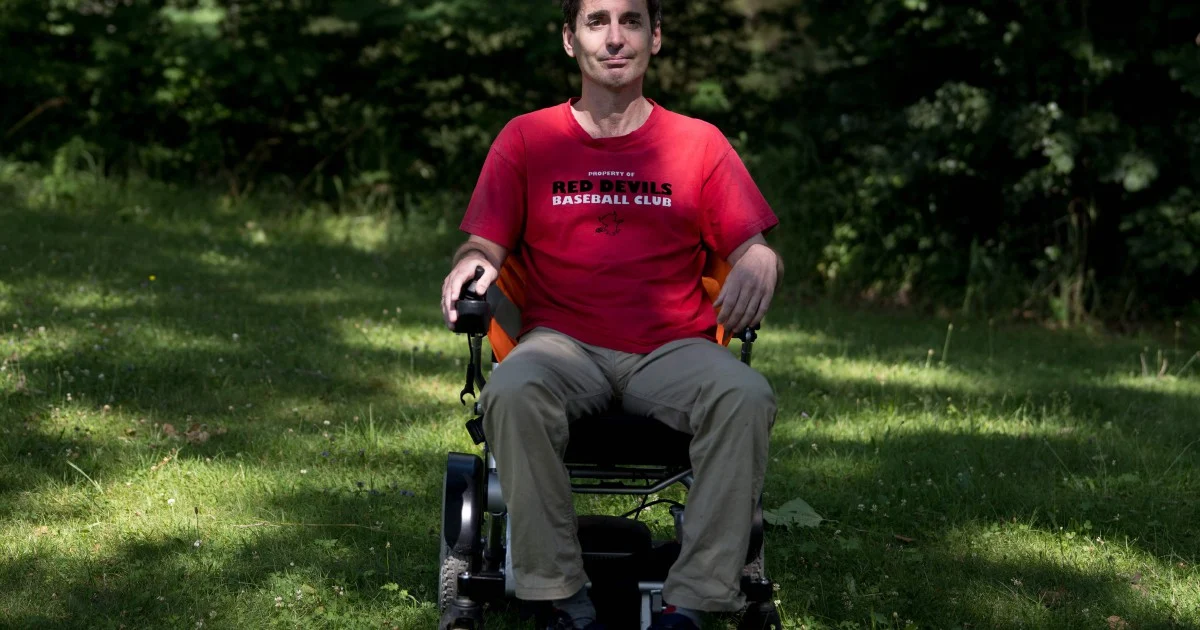
Mex Muellner, an Austrian man navigating life from a wheelchair, has decided to challenge his government's climate policies by taking the matter to court, arguing that the state's insufficient response to global warming poses a direct threat to his ability to function independently during extreme heat events. His legal action represents a mounting frustration among disabled Europeans who face disproportionate vulnerabilities when temperatures soar beyond sustainable levels.
The lawsuit underscores a dimension of climate change that often escapes mainstream policy discussions: the particular hardship experienced by people with mobility impairments. When heatwaves grip Europe, able-bodied individuals can retreat indoors, seek refuge in air-conditioned spaces, or travel freely to cooler regions. For wheelchair users like Muellner, the calculus becomes far more complicated. The physical effort required to move through oppressive heat, the risk of equipment malfunction in extreme temperatures, and the psychological burden of confinement create a compounding crisis.
Muellner's decision to pursue legal action reflects a broader strategy emerging across Europe, where climate litigation has become an increasingly common tool for citizens and advocacy groups seeking to compel governments into decisive environmental action. Rather than relying solely on political pressure or electoral cycles, litigants are turning to courts to invoke constitutional protections and human rights frameworks that many argue should extend to environmental safeguards. This shift signals a recognition that traditional political channels have proven inadequate in the face of accelerating climate risks.
The Austrian case also illuminates how climate impacts are not distributed equally across society. Marginalised and vulnerable populations—including elderly people, those with chronic illnesses, the economically disadvantaged, and individuals with disabilities—face amplified exposure to climate hazards precisely when their capacity to adapt is most constrained. Muellner's lawsuit positions disability rights alongside climate justice, arguing that these issues are inseparable from discussions about social equity and state responsibility.
Austria's climate commitments, like those across the European Union, have come under intense scrutiny in recent years. While the country has pledged to achieve climate neutrality by 2040—ahead of the EU's 2050 target—critics contend that interim measures and funding allocation remain inadequate to the scale of the challenge. For individuals already managing complex interactions with physical infrastructure, even modest increases in temperature or duration of heat exposure can render daily existence significantly harder. Muellner's case invites courts to examine whether governmental inaction on climate constitutes a violation of his right to live with dignity and participate fully in society.
The timing of his lawsuit reflects the intensifying reality of European heatwaves. Recent years have witnessed successive and increasingly severe summer heat episodes across the continent, with scientists attributing this trend overwhelmingly to human-induced climate change. For Austria, a country not typically associated with extreme heat, the disruption has been particularly disorienting—both politically and socially. Communities adapted to cooler climates are finding their infrastructure, urban planning, and social systems unprepared for sustained high temperatures.
Muellner's willingness to pursue this claim through the courts signals confidence in the potential for judicial intervention on climate matters. Recent high-profile cases across Europe, including successful litigation in Germany, France, and Switzerland, have demonstrated that courts are increasingly willing to recognise climate-related grievances as legally cognisable injuries. These precedents suggest that litigants can compel state action through judicial orders rather than waiting for electoral shifts or negotiated political compromises.
From a Southeast Asian perspective, the Austrian case carries particular resonance. The region's tropical and subtropical climates already impose severe heat stress on populations, and rising temperatures from climate change compound existing vulnerabilities. Countries across Southeast Asia have significant populations with disabilities living in environments where air conditioning remains either unaffordable or unavailable. The principle that governments bear responsibility for protecting vulnerable citizens from climate harms could establish important precedents influencing regional policy and advocacy strategies.
Muellner's case also raises questions about what adequate climate action actually entails. Beyond emissions reduction targets and international agreements, does state responsibility extend to ensuring that all citizens can maintain dignity and function during climate-altered conditions? Should governments be held accountable not merely for failing to prevent climate change, but for failing to support those most harmed by its immediate effects? These questions will likely shape how courts evaluate his claims.
The outcome of Muellner's lawsuit could establish important legal precedent extending beyond disability rights. If successful, it would affirm that governments have enforceable obligations not only to mitigate climate change but to ensure that their citizens—particularly the most vulnerable—do not suffer disproportionate harm from climate impacts that state action could have prevented or ameliorated. For a wheelchair user sweating through increasingly intense heatwaves, court action represents both a desperate measure and a calculated bet that judicial systems might accomplish what political systems have not.

