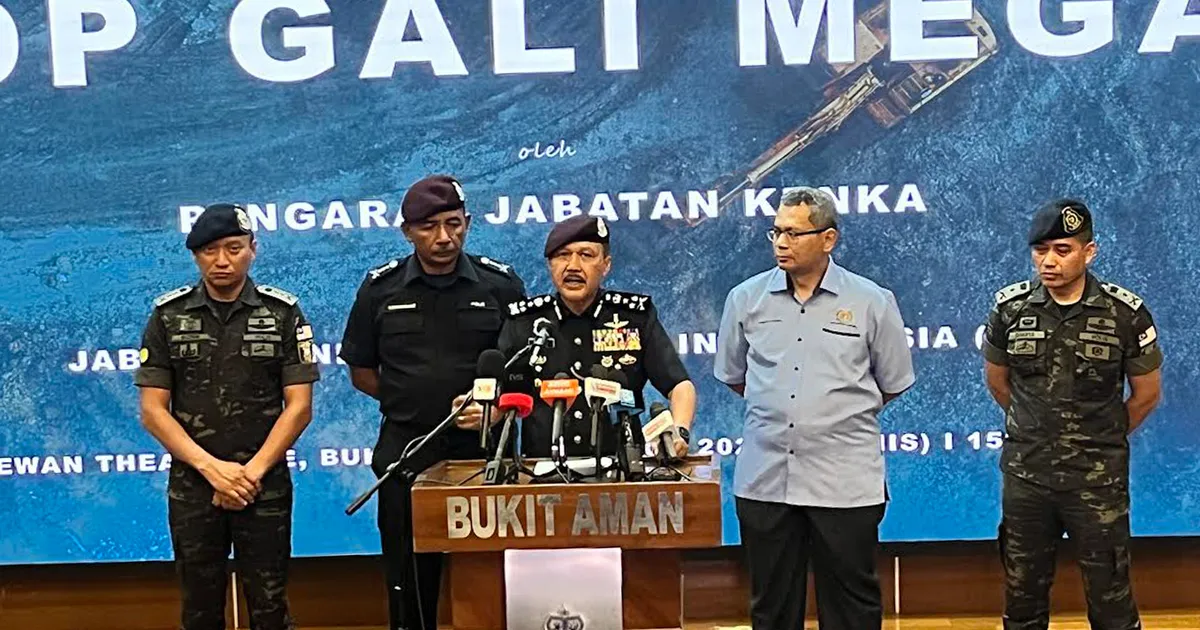
Malaysian authorities have dismantled a significant portion of the nation's illegal mining infrastructure, arresting 99 individuals and securing RM119 million in seized assets during an intensive five-day enforcement operation conducted from August 19 to 23. The scale of the crackdown underscores the government's escalating determination to combat resource theft and environmental degradation stemming from unregulated extraction activities that have plagued rural and forested regions across the country.
The operation yielded substantial tangible results beyond the arrest figures. Enforcement teams recovered approximately 33,000 tonnes of illicitly extracted natural resources, encompassing coal, quarry stone, earth, and sand materials with a combined market value of RM21 million. This recovery represents a significant disruption to the supply chains that feed Malaysia's underground extraction economy, where stolen minerals and aggregates flow into construction projects, manufacturing facilities, and export markets with minimal regulatory oversight.
The concentrated nature of the operation—compressed into a five-day window rather than scattered efforts—suggests a coordinated multi-agency approach that pooled intelligence, personnel, and equipment from various enforcement bodies. Such synchronised actions typically involve collaboration between federal and state-level authorities, environmental agencies, customs divisions, and local enforcement units. The simultaneity of raids across different regions maximises the element of surprise and prevents operators from receiving advance warning to relocate equipment or inventory to alternative sites.
Illegal mining represents a persistent challenge for Malaysian policymakers, particularly in states with significant mineral deposits and remote terrain. The activity generates substantial unrecorded revenue for criminal networks while simultaneously causing environmental deterioration through habitat destruction, water contamination, and soil erosion. For Southeast Asian readers, Malaysia's experience mirrors challenges facing neighbouring nations where porous borders and weak regulatory capacity in border regions facilitate cross-border resource trafficking and illicit extraction.
The RM119 million asset seizure encompasses not merely the extracted materials but likely includes equipment, vehicles, machinery, and financial holdings associated with the illegal operations. Capturing such associated assets strikes deeper at organisational infrastructure than confiscating raw materials alone, as replacement of heavy extraction equipment represents a significant capital expenditure that disrupts operational continuity. This approach targets the economic viability of illegal mining networks rather than treating enforcement as a temporary inconvenience to be absorbed as a business cost.
From a regional perspective, Malaysia's resources theft problem connects to broader patterns of environmental crime and illicit commodity trade flowing through Southeast Asia. The association between mining operations and organised crime—ranging from labour trafficking to money laundering—means that enforcement efforts yield benefits extending beyond immediate natural resource protection. Intelligence gathered during such operations frequently provides leads on related criminal enterprises, allowing authorities to address interconnected illicit networks rather than isolated offences.
The financial scale involved warrants attention from anti-corruption and asset recovery specialists. The presence of RM119 million in identified assets suggests sophisticated operations with substantial capitalisation, likely involving layers of nominal ownership, shell companies, and political patronage networks that obscure ultimate beneficial ownership. Prosecuting the individuals arrested during such operations becomes meaningless without simultaneously dismantling the financial and political structures that enabled the operations to flourish.
For Malaysian construction and manufacturing sectors that depend on aggregates and minerals, the enforcement action carries mixed implications. While eliminating unfair competition from unregulated suppliers operating without compliance costs theoretically benefits legitimate operators, any disruption to supply chains feeds inflationary pressure in construction materials. The August operation may temporarily reduce supply of certain quarried materials, affecting project timelines and cost structures across the industry during months following the crackdown.
The sustainability of enforcement outcomes depends critically on whether the arrests translate into successful prosecutions and substantial penalties. Historical patterns in environmental crime enforcement across Malaysia and the region demonstrate that arrest figures frequently exceed conviction numbers, with many cases languishing in overburdened courts or encountering evidentiary challenges. Sustaining the political will and resource allocation necessary for following through on prosecutions determines whether the August operation represents a turning point in combating illegal mining or merely a temporary disruption in fundamentally unchanged criminal operations.
Moving forward, addressing structural vulnerabilities that enable illegal mining requires attention to land governance, regulatory capacity in remote areas, and corruption among enforcement personnel who may receive inducements from mining operators. The August crackdown provides a momentum point for implementing systemic reforms that reduce opportunities for illegal extraction, yet enforced action alone cannot address demand-side factors that create market incentives for illicitly obtained minerals to undercut legitimate producers.
The operation also carries implications for Malaysia's environmental credentials at international forums, where resource management practices face increasing scrutiny from trading partners and investors concerned with sustainability. Demonstrating capacity to enforce environmental protections and combat resource theft enhances Malaysia's standing in negotiations around green trade arrangements and climate-related partnerships, particularly given the growing linkage between environmental enforcement and broader governance frameworks in regional trade discussions.

