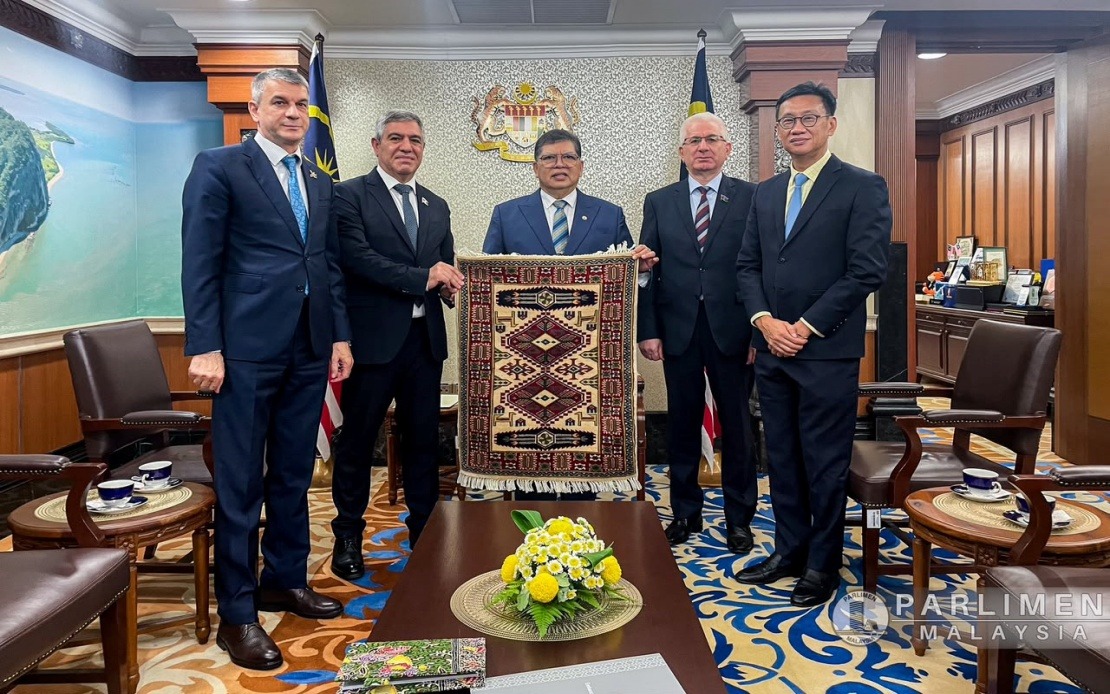
A working delegation from Azerbaijan's Parliament recently travelled to Malaysia to reinvigorate bilateral cooperation, signalling renewed diplomatic momentum between the two countries. Vugar Bayramov, head of the Working Group for Azerbaijani-Malaysian Interparliamentary Relations, led the visit alongside fellow Member of Parliament Bakhtiyar Aliyev, underscoring Baku's commitment to elevating ties with Kuala Lumpur across both political and economic spheres.
The visit centred on several rounds of high-level meetings with Malaysia's parliamentary leadership. Bayramov and Aliyev called on Dewan Rakyat Speaker Tan Sri Johari Abdul, establishing direct contact with the nation's legislative upper house. These courtesy visits, while ceremonial in nature, carry symbolic weight in diplomatic protocol, positioning the discussions as formal and substantive rather than informal exchanges.
The delegation engaged with key parliamentary committees responsible for Malaysia's international affairs. Wong Chen, who chairs the Special Select Committee on International Relations and International Trade, met with the visitors to explore how enhanced trade frameworks might benefit both nations. Similarly, Zahir Hassan, leading the West Asia Friendship Group, participated in discussions that reflect growing interest within Malaysian Parliament in strengthening bonds with Middle Eastern and Caucasian partners.
At the upper house, Dewan Negara President Datuk Awang Bemee Awang Ali Basah received the delegation, enabling a comprehensive dialogue on future parliamentary cooperation. These meetings between legislative branch leadership suggest that both countries see value in sustained institutional engagement rather than ad-hoc political interactions. Such structured dialogue mechanisms help ensure continuity in bilateral relations regardless of electoral cycles or changes in individual officials.
Beyond parliament, the Azerbaijani delegation prioritised economic engagement, reflecting recognition that lasting partnerships require mutual commercial benefit. Meetings with more than 20 Malaysian business entities and the Malaysian National Chamber of Commerce and Industry's secretary-general S.Gnanasambanthan demonstrated careful orchestration of the visit to address both public sector and private sector interests. This two-pronged approach—political and commercial—is increasingly seen as essential for building comprehensive partnerships.
Discussions focused on expanding business-to-business connections and identifying untapped trade and investment opportunities. For Malaysian companies, Azerbaijan represents potential market access in the Caucasus region and beyond, while Azerbaijani firms may view Malaysia as a gateway to Southeast Asian markets. The emphasis on exploring new avenues for cooperation suggests current bilateral trade levels remain modest, with substantial room for growth should commercial frameworks be developed strategically.
Dewan Rakyat Speaker Johari articulated a broader vision underlying such exchanges, emphasising that parliamentary diplomacy extends beyond formal procedures and legislative business. In remarks shared publicly, he highlighted how people-centred diplomatic initiatives build human connections that transcend national borders, offering a counterweight to geopolitical tensions and miscalculations that increasingly characterise global relations. This perspective resonates with Malaysia's longstanding position as a bridge-builder among diverse civilisations and political systems.
The visit occurs amid evolving geopolitical complexities in the Middle East and Caucasus regions. Malaysia, as a prominent Muslim-majority nation with significant economic interests across multiple regions, maintains careful diplomatic balances. Strengthening parliamentary ties with Azerbaijan, a secular Muslim-majority country with strong ties to Turkey and the West, aligns with Malaysia's strategy of maintaining multifaceted international relationships without ideological rigidity or excessive alignment with particular blocs.
For Azerbaijan, deepening parliamentary connections with Southeast Asia's largest economy signals intent to diversify its diplomatic and commercial relationships beyond traditional European and Russian spheres. As Baku navigates post-conflict reconstruction in Nagorno-Karabakh and competition for influence in the Caucasus, cultivating partnerships with rising economic powers like Malaysia provides leverage and alternative channels for economic cooperation.
The coordination between parliamentary and business community engagement during the visit reflects sophisticated diplomacy. Rather than limiting discussions to formal government-to-government interactions, including chamber of commerce participation and private sector representatives acknowledges that contemporary international cooperation increasingly depends on commercial viability. Without genuine business opportunities, even enthusiastic parliamentary gestures risk remaining superficial.
These types of inter-parliamentary missions, while less prominent in media coverage than high-level state visits, frequently establish groundwork for substantive bilateral agreements. The networks formed during such visits—personal relationships among legislators, business leaders, and officials—often prove crucial when formal negotiations commence on trade agreements, investment frameworks, or joint development projects.
Looking forward, the success of this delegation's visit may be measured not in immediate tangible outcomes but in establishing momentum for continued engagement. Follow-up visits from Malaysian parliamentarians to Azerbaijan, reciprocal business delegations, and sustained dialogue through the newly emphasised interparliamentary working group would indicate genuine commitment from both sides. For Malaysia's business community, the visit presents an opportunity to research and develop commercial interests in the Caucasus, while Azerbaijani enterprises gain insights into Southeast Asian market dynamics and investment climate.
The emphasis on diplomatic engagement rooted in human connection, as articulated by Speaker Johari, reflects understanding that sustainable international relationships ultimately depend on building trust and understanding between peoples, not merely between governments. As global interconnectedness deepens and regional tensions persist, such bridge-building efforts acquire heightened importance, positioning Malaysia and Azerbaijan's parliamentary cooperation as a modest but meaningful contribution to international stability and mutual prosperity.

