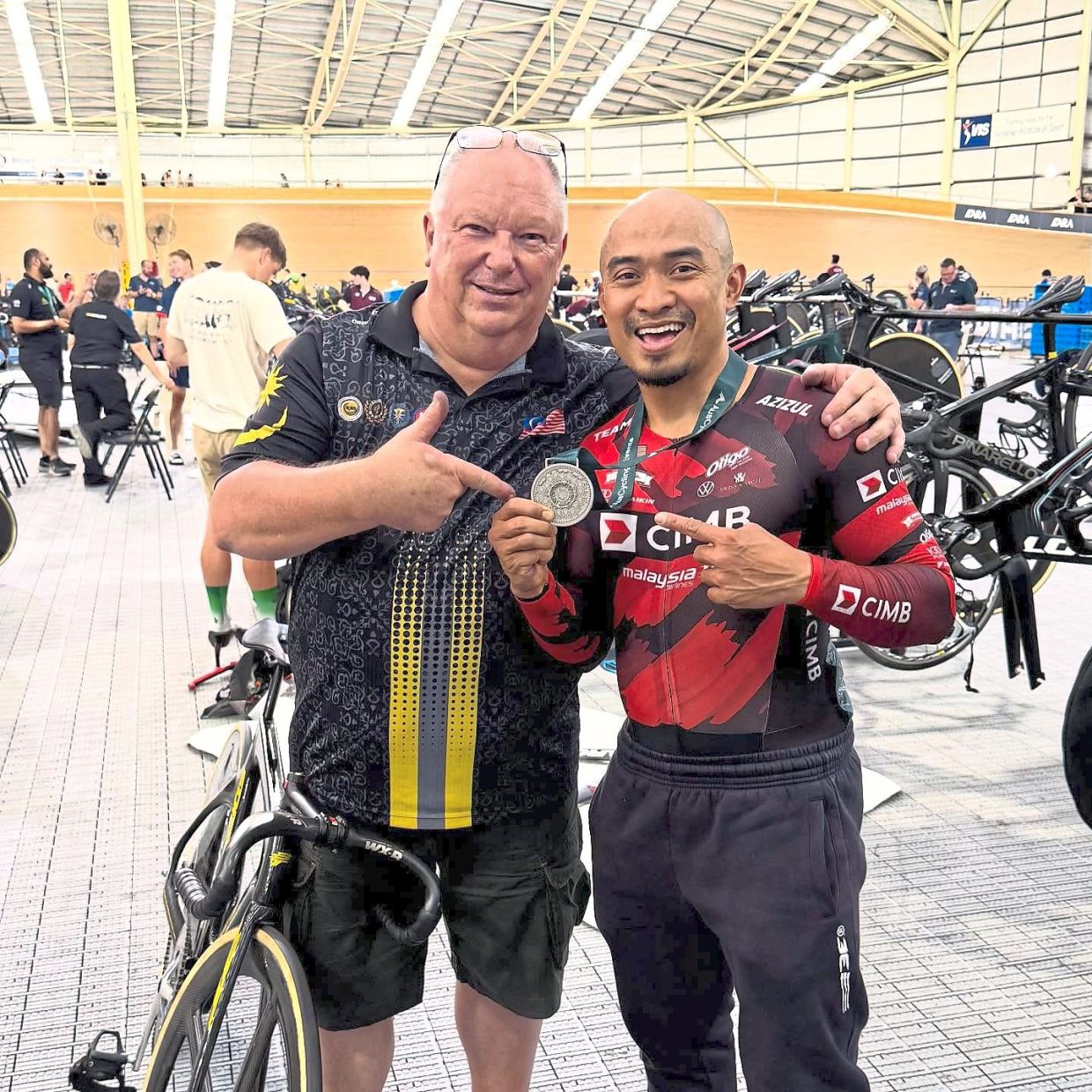
National track cyclist Azizulhasni Awang has taken a principled stance by publicly defending technical director John Beasley, fully aware that his support may invite criticism and attempts to undermine him should Malaysia's performance falter at the looming Commonwealth Games and Asian Games. The two-time Olympic medallist has made clear he understands the political terrain he is now entering, yet remains resolute in backing Beasley's track record as a transformative figure in Malaysian cycling.
Azizul's decision to speak out carries genuine risk. In the hypercompetitive world of national sports administration, publicly championing a controversial figure typically opens the door to scrutiny and blame-shifting. Should Malaysia's cyclists underperform in the coming tournaments, Azizul recognises that media coverage and public commentary may pivot to attack him as well as Beasley. This is not mere speculation on his part—it reflects the accountability dynamics that govern high-stakes international competition, where success and failure become battlegrounds for internal power struggles.
Yet Azizul, who claimed silver at the Tokyo 2020 Olympics, has signalled he is prepared to absorb that cost. In explaining his willingness to defend Beasley, he emphasised the Australian's substantial contributions to Malaysian track cycling over two decades. The technical director's influence extends across multiple world-class cyclists, with Azizul himself among the beneficiaries of Beasley's coaching and strategic vision. For Azizul, this historical debt outweighs the reputational gamble he now faces.
The cyclist's motivation appears rooted in frustration with the manner in which criticism of Beasley has been aired. Rather than engaging through formal administrative channels, certain parties have levelled complaints publicly, according to Malaysia National Cycling Federation (MNCF) president Datuk Amarjit Singh Gill. This circumventing of proper procedure has prompted the MNCF to issue show-cause letters to two individuals from state affiliates, signalling that unauthorised public attacks are considered damaging to the federation's standing and governance structure.
Azizul's religious faith appears to inform his posture. In discussing his decision, he invoked Islamic principle, stating that he believes Allah guides all decisions and that what is meant to be will manifest through divine will. This theological framing allows him to transcend immediate pragmatic concerns about self-preservation; in his worldview, defending a person he considers deserving of support aligns with deeper values that supersede tactical calculations about career risk.
The context surrounding Beasley's tenure has become increasingly contentious. While his credentials as a transformative coach are widely acknowledged—particularly given Malaysia's emergence as a competitive force in track cycling on the global stage—questions and critiques have nonetheless surfaced. Some officials and affiliated parties clearly harbour reservations about his continued role or approach. Rather than shy away from this friction, Azizul has chosen to position himself as a voice affirming Beasley's value to the sport and nation.
For Malaysian readers and regional observers, Azizul's stance reflects a broader tension in Asian sports governance. The intersection of meritocracy, loyalty, institutional politics, and international competitiveness creates complex scenarios where individuals must navigate between personal advancement and principled commitment. Azizul's gambit suggests he prioritises credibility and integrity over self-protection—a choice that may resonate with some observers but invites scepticism from others who view his move as politically naive or strategically miscalculated.
Azizul has reframed the conversation around the Commonwealth Games and Asian Games as dependent on unified support rather than internal sabotage. His emphasis on seamless preparation and cohesive backing from all stakeholders reflects an athlete's perspective that distractions and discord undermine medal prospects. From this standpoint, defending Beasley becomes not merely a personal endorsement but a statement about what Malaysian cycling requires to compete effectively at the highest level.
The media scrutiny Azizul anticipates is entirely realistic. Performance at elite international competitions invites intense post-event analysis, with success attributed broadly and failure scrutinised granularly. Any shortfall in medals or individual results will likely spawn investigations into causes, and those investigations frequently become vehicles for blaming specific individuals or decisions. By pre-emptively aligning himself with Beasley now, Azizul has signalled that he accepts potential association with either vindication or culpability, depending on outcomes.
What remains uncertain is how other athletes and federation members will respond to Azizul's public position. Some may follow his lead, viewing his stance as courageous and worthy of support. Others may calculate that distance from contested figures offers better protection. The MNCF's decision to issue show-cause letters suggests that management takes internal dissent seriously, potentially making public defence of Beasley either exceptionally bold or potentially rewarding for those seen as stabilising forces within the organisation.
Azizul's broader message is that sporting success requires more than just training and talent—it demands institutional stability and trust in leadership. By defending Beasley despite obvious risks, he is arguing implicitly that Malaysian cycling's future depends on allowing technical leadership to operate without constant second-guessing and public undermining. Whether this gambit strengthens or weakens his position will ultimately depend on whether Malaysia's athletes deliver medals and memorable performances on the Commonwealth Games and Asian Games stages.

