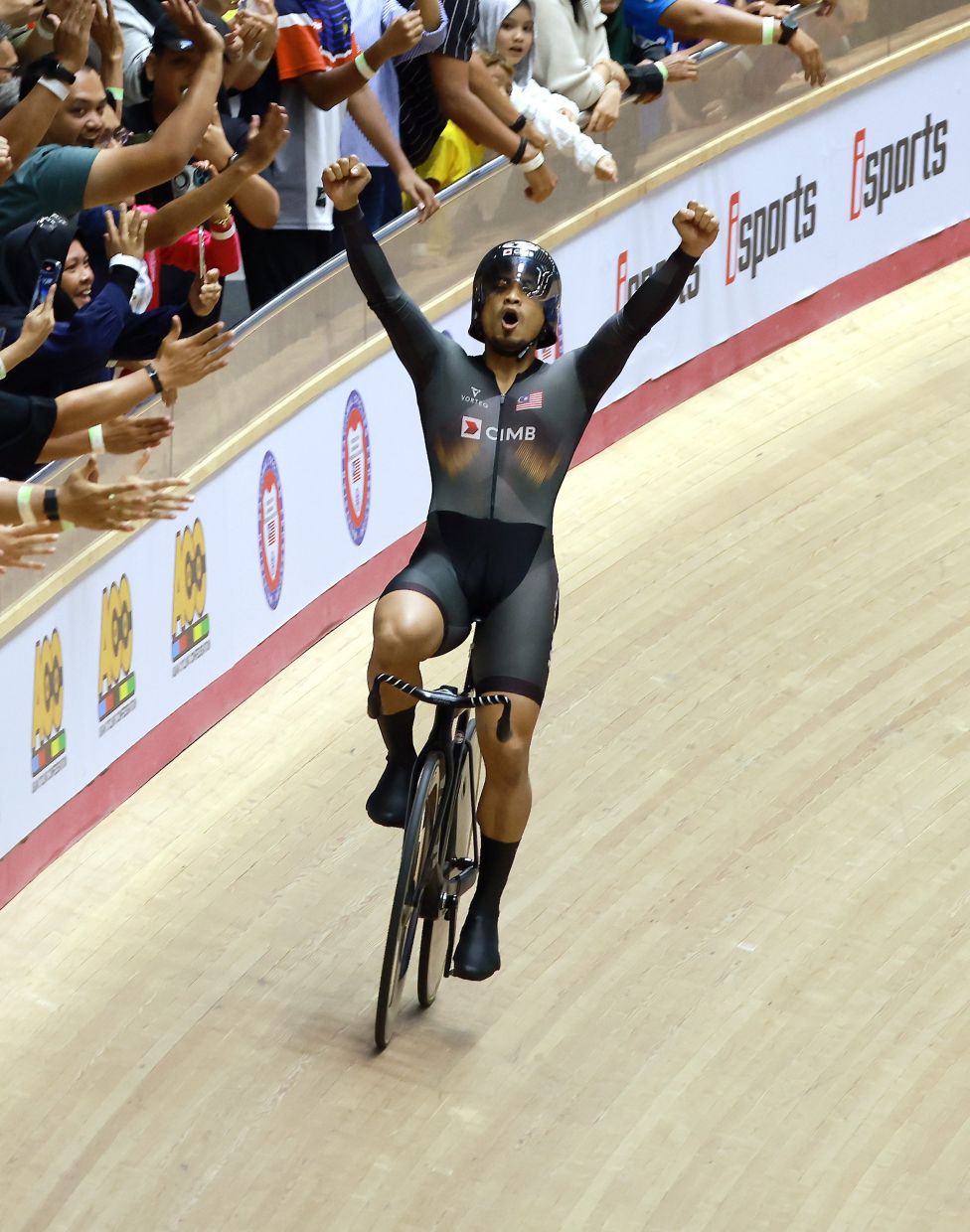
Petaling Jaya-based track cyclist Azizulhasni Awang experienced a profound moment of vindication when the National Sports Council (NSC) and Youth and Sports Ministry formally confirmed they would continue supporting his Olympic ambitions. The 38-year-old veteran, who has represented Malaysia across multiple Olympic Games, received the decisive communication through email on Merdeka Day, August 31, marking an emotional turning point after weeks of uncertainty that had left him unable to focus on training.
The veteran cyclist shared his raw emotional response through social media, describing how he had struggled to concentrate during the previous week as he waited for clarity on his future. Appearing at his first training session following a period of mental and physical withdrawal, Azizul expressed the profound relief that the official confirmation brought. His words resonated deeply with Malaysian sports fans, capturing the psychological toll that administrative uncertainty places on elite athletes who have dedicated their lives to representing their nation at the highest level of international competition.
Azizul's struggle for clarity highlighted a significant gap in Malaysia's sports governance structures. The cyclist had made his desire to continue competing conditional upon receiving formal confirmation from sporting authorities, understanding that without such backing, mounting an Olympic qualification campaign would be financially and logistically impossible. His public questioning of the delay underscored how delays in bureaucratic decision-making can create unnecessary anxiety for athletes operating at the twilight of their careers, particularly those contemplating retirement and requiring certainty to commit to another Olympic cycle.
The Malaysian National Cycling Federation (MNCF) had previously indicated that they had received assurances regarding NSC and ministerial support for Azizul's qualification efforts. However, the lack of direct communication from the authorities themselves to the athlete had created a credibility gap and fuelled public frustration. This disconnect between federation-level communications and athlete-facing confirmation demonstrated organizational weaknesses that ultimately required public pressure to resolve.
Azizul's public advocacy on social media proved instrumental in shifting the situation. His transparent sharing of his emotional and physical state resonated with Malaysian sports enthusiasts, who mobilized to express their support through various digital platforms. The outpouring of public backing placed subtle but meaningful pressure on decision-makers, illustrating how social media has become a legitimate channel for athletes to hold sports administrators accountable when traditional institutional mechanisms move too slowly.
Youth and Sports Minister Dr Taufiq Johari faced considerable online criticism during this period, with netizens questioning the ministry's preparedness to support a world-class athlete who remained capable of bringing Olympic medals to Malaysia. The minister's office ultimately responded by ensuring the necessary confirmation reached Azizul, suggesting that the public pressure had effectively communicated the political cost of leaving such decisions unresolved. This episode underscores how Malaysian sports governance must balance institutional deliberation with athlete welfare and the time-sensitive nature of Olympic qualification campaigns.
Azizul's previous achievements provided strong justification for continued investment. As a former keirin world champion and multi-time Olympic competitor, he represented Malaysia's most viable prospect in track cycling for the 2028 Los Angeles Olympics. His experience navigating international track cycling circuits, combined with his proven medal-winning capabilities, made him a strategically valuable asset for Malaysia's Olympic program. Discontinuing support would have effectively conceded a potential medal opportunity in a discipline where Malaysia has demonstrated international competitiveness.
The cyclist's gratitude toward the Malaysian public revealed how isolated many elite athletes feel when navigating bureaucratic systems. Azizul's emphasis that only those who have sacrificed for the nation could fully comprehend his emotional journey spoke to the broader psychological demands placed on Malaysian athletes who must balance personal ambitions with nationalistic obligations. His tears were not merely expressions of relief but acknowledgements of the collective support that had sustained him through an uncertain period.
Looking forward, Azizul's commitment to compete until Los Angeles 2028 provides Malaysia with a defined timeline for track cycling development. The 38-year-old has explicitly stated that this Olympic cycle represents his final competitive period, allowing both athlete and administrators to develop a focused qualification strategy. His decision to continue was conditional rather than unconditional, reflecting a pragmatic approach from a veteran who recognizes that extended career longevity carries diminishing returns without proper institutional backing.
This resolution carries implications for how Malaysian sports ministries manage athlete relations in the future. The incident demonstrated that lack of communication to individual athletes about funding and support decisions can create unnecessary distraction during critical training periods. Future Olympic cycles would benefit from more structured, athlete-centered communication protocols that ensure competing representatives receive timely confirmation of support status, enabling them to concentrate fully on performance development rather than administrative uncertainty.
The broader context involves Malaysia's positioning within regional and global track cycling. With Southeast Asian nations increasingly investing in cycling infrastructure and training programs, maintaining competitive representation from experienced athletes like Azizul remains strategically important. His potential contributions to Los Angeles 2028 extend beyond individual medal prospects to include mentoring emerging cyclists and maintaining Malaysia's reputation in international cycling federations.
Azizul's vindication also reflected wider changes in Malaysian sports culture, where athletes increasingly feel empowered to publicly question administrative decisions affecting their careers. Rather than accepting institutional delays passively, contemporary athletes leverage digital platforms to seek accountability and transparency. This shift toward athlete advocacy, while occasionally contentious, ultimately strengthens sports governance by forcing administrators to justify decisions and communicate more effectively with the individuals most affected by policy choices.
Moving forward, the confirmation of Azizul's continued support marks both a personal victory for an athlete who refused to accept ambiguity and a institutional learning moment for Malaysia's sports authorities. The resolution demonstrates that when communication gaps threaten athlete welfare, public engagement can catalyze necessary decisions. For Azizul specifically, the path to Los Angeles is now cleared, enabling him to focus his remaining competitive years on qualifying and competing at what will likely be his final Olympic Games.

