Bahrain has resisted drawing on a $5.3 billion currency swap facility arranged with the United Arab Emirates, according to Noor bint Ali Alkhulaif, the kingdom's Minister of Sustainable Development and Chief Executive of the Bahrain Economic Development Board. Speaking to Reuters, Alkhulaif confirmed that the standby arrangement, secured in April, remains unused despite mounting economic pressures facing the small Gulf economy. The decision to preserve the swap signals Bahrain's confidence in its immediate liquidity position, even as foreign exchange reserves have slipped to their lowest point since the COVID-19 pandemic at roughly $3 billion.
The kingdom's resilience in the face of regional instability comes amid severe headwinds. Bahrain has emerged as one of the Gulf states most vulnerable to the fallout from escalating hostilities between the United States and Iran, which intensified just as the government was attempting to stabilise one of the region's highest debt burdens. Fresh Iranian attacks over the preceding 48 hours underscored the persistent security challenges confronting policymakers. Credit rating agency S&P Global has projected that the conflict will contract Bahrain's economy by 3 percent this year while generating a fiscal deficit approaching 8.5 percent of gross domestic product—a sobering assessment that underlines the scale of the disruption.
Alkhulaif acknowledged the severity of the disruption, noting that current circumstances diverged sharply from official expectations at the outset of the year. "What has happened is unfortunate, not what we planned for," she remarked during an interview conducted on Tuesday as tensions reignited. The minister had hoped 2024 would mark a turning point for the nation's economic trajectory, describing the ambition as "a year of building the new Bahrain." That optimistic vision has been tested by circumstances beyond the government's control, forcing a reassessment of priorities and strategies across multiple sectors.
Yet signs of recovery are beginning to materialise across key economic segments. Large manufacturing and logistics enterprises have successfully identified alternative trade routes that circumvent the Strait of Hormuz, enabling operations to continue despite the unstable environment. More encouraging still, inbound tourism from neighbouring Gulf states—which represented approximately 90 percent of the country's 15 million visitor arrivals in the previous year—has rebounded to levels comparable with the pre-conflict period. This restoration of regional travel patterns provides some indication that economic activity is stabilising, though broader recovery remains uneven and vulnerable to further escalation.
The situation has forced the government to navigate carefully between competing financial imperatives. While the unused currency swap represents a form of insurance against acute liquidity stress, Bahrain's steadiness in avoiding recourse to the facility stems partly from successful economic management and partly from deliberate policy choices. Alkhulaif, who also serves on the board of Bahrain's central bank, disclosed that she had verified the non-utilisation of the UAE arrangement. "Based on the information I have, it was not exercised," she confirmed, emphasising the central bank's active stewardship of the arrangement.
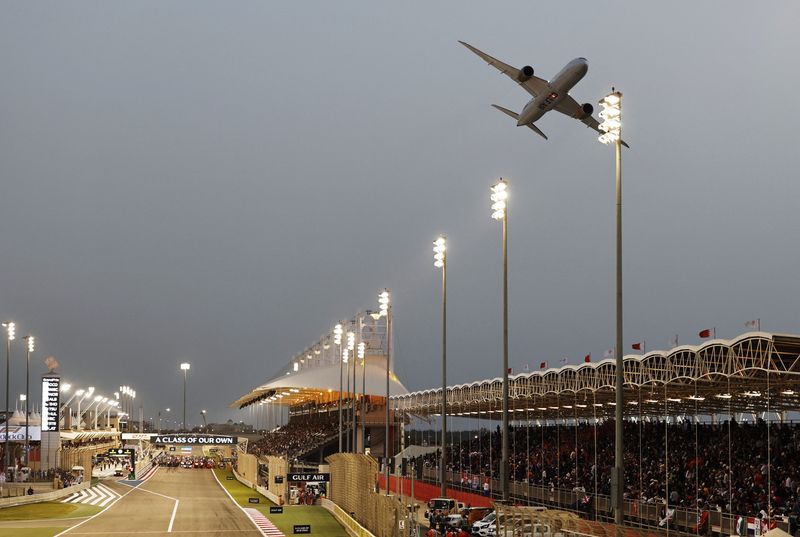
Beyond currency management, Bahrain is pursuing another significant objective: the reinstatement of its Formula One Grand Prix. The prestigious motorsports event, together with Saudi Arabia's race, was cancelled in March following the outbreak of hostilities. The cancellation represented a symbolic and financial blow to a nation where the annual race weekend generates substantial revenue and international profile. Now, Bahrain is engaged in discussions about restoring the event to the 2024 calendar, signalling the government's determination to recover lost ground across multiple fronts.
Formula One sources have identified the weekend of October 3-4 as the most feasible window for a reinstated Bahrain race. This proposed slot would fit logistically between the Azerbaijan Grand Prix in Baku and the Singapore Grand Prix scheduled for October 11, minimising disruption to the broader racing calendar and allowing teams to manage their schedules. However, any confirmation remains contingent on a fundamental condition: the de-escalation of US-Iran hostilities. Alkhulaif acknowledged this constraint, stating cautiously that "there is the talks about maybe plugging in some of the races that were cancelled back into the calendar. No confirmation still on that, (but) potentially."
Industry analysts emphasise that a definitive decision on the race's restoration must be reached fairly soon to permit teams adequate preparation time and allow logistical arrangements to proceed. The compressed timeline underscores the practical complexities of integrating a cancelled event back into a tightly scheduled professional calendar. Delays in confirmation could jeopardise the October slot entirely, forcing organisers to consider alternative arrangements or postponement to the 2025 season.
The prospective return carries substantial economic implications for Bahrain. The Grand Prix weekend typically attracts approximately 105,000 spectators, with international visitors accounting for roughly 10 to 15 percent of attendance and spending at considerably higher rates than domestic fans. This high-value visitor segment generates disproportionate economic value through hospitality, dining, accommodation, and retail spending, making the race weekend an important calendar fixture for the hospitality and service sectors. Beyond immediate revenue, the event enhances Bahrain's international profile as a stable, event-capable destination.
Looking further ahead, Bahrain appears positioned to claim additional prestige from the Formula One calendar. With Ramadan scheduled to occur earlier in 2026, the kingdom is expected to reclaim the coveted opening race of the 2026-27 Formula One season, alongside responsibility for hosting the mandatory pre-season testing rounds. These assignments would cement Bahrain's place in the sport's commercial ecosystem and generate sustained economic benefit across multiple years. However, the realisation of these plans hinges critically on sustained de-escalation and the absence of future security disruptions that could force cancellations or relocations. The government's ability to project stability and manage geopolitical risks will therefore determine whether the nation can capitalise on these opportunities to rebuild its international reputation and diversify its economic revenue streams.

