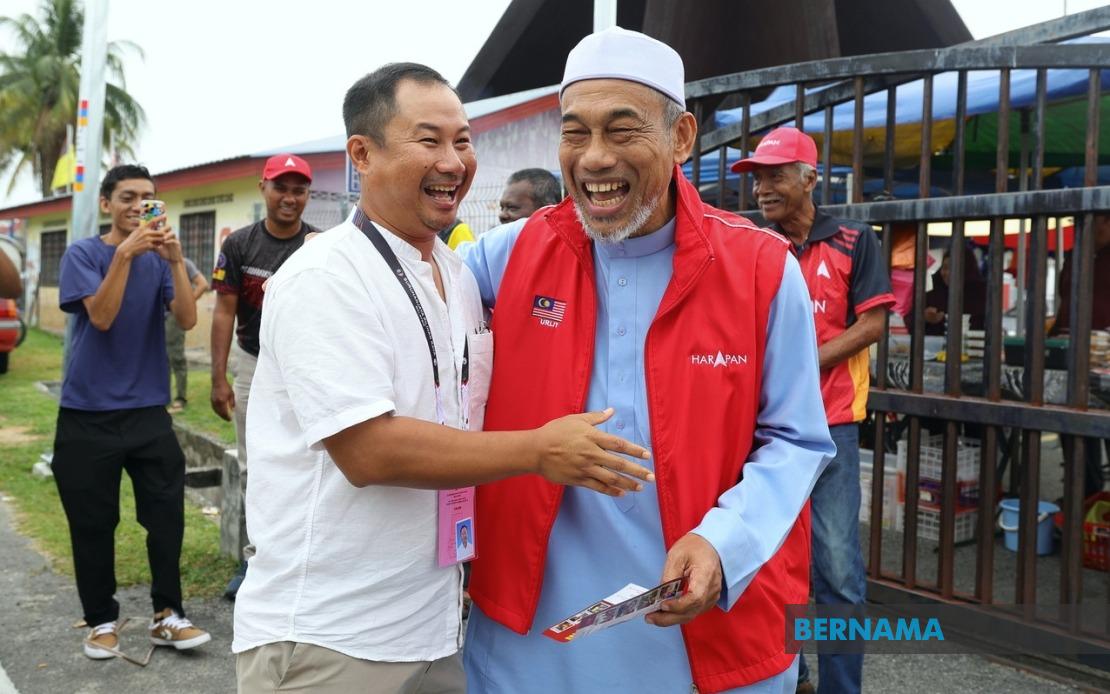
Datuk Bakri Sawir, the Pakatan Harapan candidate defending the Klawang state seat, is anchoring his re-election campaign on nearly two decades of direct community engagement and tangible development work within his constituency. The 67-year-old incumbent assemblyman, who has represented Klawang since 2018, believes his hands-on approach and commitment to being physically present in the district give him a decisive advantage over challengers in a three-way contest that will determine representation in the upcoming 16th Negeri Sembilan State Election.
The Klawang constituency presents an intimate political arena with fewer than 14,000 registered voters, a scale that has allowed Bakri to cultivate meaningful relationships with residents through persistent personal outreach. Rather than waiting for constituents to visit his service centre, he has made it his practice to visit residents at their homes, a strategy he believes distinguishes his approach from politicians who appear in their constituencies only intermittently. This ground-level methodology has become the defining feature of his political identity and the central narrative of his campaign messaging.
Bakri's staying power in Klawang is reinforced by his decision to live within the constituency, a factor that enables him to remain accessible to residents throughout the year, not merely during election periods. This residential commitment underscores his broader philosophy of viewing political office as a form of community service rather than a transactional engagement with voters. During campaigning at the weekly market in Pekan Kuala Klawang, he articulated this worldview by framing politics as a spiritual undertaking—a deliberate positioning that appeals to the values-oriented dimensions of Malaysian electoral politics.
While acknowledging that universal support is unattainable, Bakri has adopted a respectful stance toward political opposition, suggesting that competing ideologies represent legitimate choices within democratic discourse. This measured tone may signal an effort to retain floating voters and those considering switching allegiances in an increasingly fragmented political landscape where no single coalition commands overwhelming support. His willingness to accept electoral outcomes with grace, regardless of outcome, attempts to position him as a unifying figure within a divided electorate.
Looking beyond the immediate campaign, Bakri has articulated an ambitious long-term vision centred on positioning Jelebu as a regional hub for higher education and tourism development. His proposal to establish Universiti Malaysia Negeri Sembilan represents the most transformative element of his development agenda, though he candidly acknowledges current financial constraints that render such an initiative temporarily unfeasible. Rather than abandoning this aspiration, he has framed it as an ongoing commitment that transcends electoral cycles, suggesting continuity and persistence in pursuit of district-level transformation.
The immediate focus of his development strategy emphasises infrastructure projects with near-term economic multiplier effects. The proposed Rest and Recreation Area in Tembun, Hulu Klawang, targets the passing tourist traffic along major routes, positioning the constituency as a convenient stopover destination. Bakri's articulation of this project reflects an understanding that constituency development must balance long-term institutional building with pragmatic initiatives that generate immediate employment and commercial activity for local residents. Enhanced tourism infrastructure, he reasons, will naturally attract visitor spending and create entrepreneurial opportunities for small business operators.
Complementing the R&R facility is Bakri's vision to transform Bukit Tajali into a multipurpose recreational park accommodating diverse leisure and adventure tourism activities. This initiative exemplifies contemporary approaches to rural economic development that leverage natural attractions and outdoor recreation trends to diversify income sources beyond traditional agricultural sectors. The transformation of underutilised land into tourism destinations represents a politically attractive narrative in district-level politics, particularly where youth unemployment and rural outmigration present ongoing governance challenges.
A distinctive element of Bakri's development strategy involves the capitalisation of heritage tourism through the British Memorial Stone, a historically significant landmark within Jelebu. By integrating this heritage site into broader agrotourism development, he positions the constituency as offering layered tourism experiences combining historical education, agricultural experiences, and outdoor activities. This integrated approach to tourism development reflects contemporary thinking about sustainable rural development in Malaysia that emphasises cultural preservation alongside economic opportunity.
The electoral contest in Klawang involves three candidates representing ideologically distinct coalitions. Beyond Bakri, the Perikatan Nasional coalition fields Danni Rais, 38, while Parti Pribumi Bersatu Malaysia presents Muhammad Adib Musa, 25, in what amounts to a generational and ideological triangle. The presence of two opposition candidates potentially fragments the anti-PH vote, though Bakri cannot assume complacency given shifting voter preferences evident in recent Malaysian elections. The entry of a youthful Bersatu candidate may appeal to demographic segments dissatisfied with mainstream coalition politics.
The broader electoral context involves the 16th Negeri Sembilan State Election, scheduled for August 1 following the dissolution of the state assembly on June 5. An electorate of 889,490 registered voters—comprising ordinary voters, military personnel and spouses, and police personnel—will participate, with early voting commencing on July 28. The state-level election carries implications for coalition positioning ahead of potential federal-level electoral contests, making individual constituency races like Klawang potentially significant as indicators of voter mood and coalition viability.
Bakri's campaign strategy ultimately rests on the proposition that demonstrated competence, consistent engagement, and tangible developmental outcomes outweigh abstract political messaging. In an era characterised by voter volatility and declining partisan loyalty, his emphasis on personal accessibility and concrete project delivery represents a calculated bet that Malaysian voters value performance and availability over ideological positioning. Whether this approach proves sufficient to overcome the competitive pressures from opposition candidates in an increasingly multipolar political environment remains to be determined when Klawang residents cast their votes on August 1.

