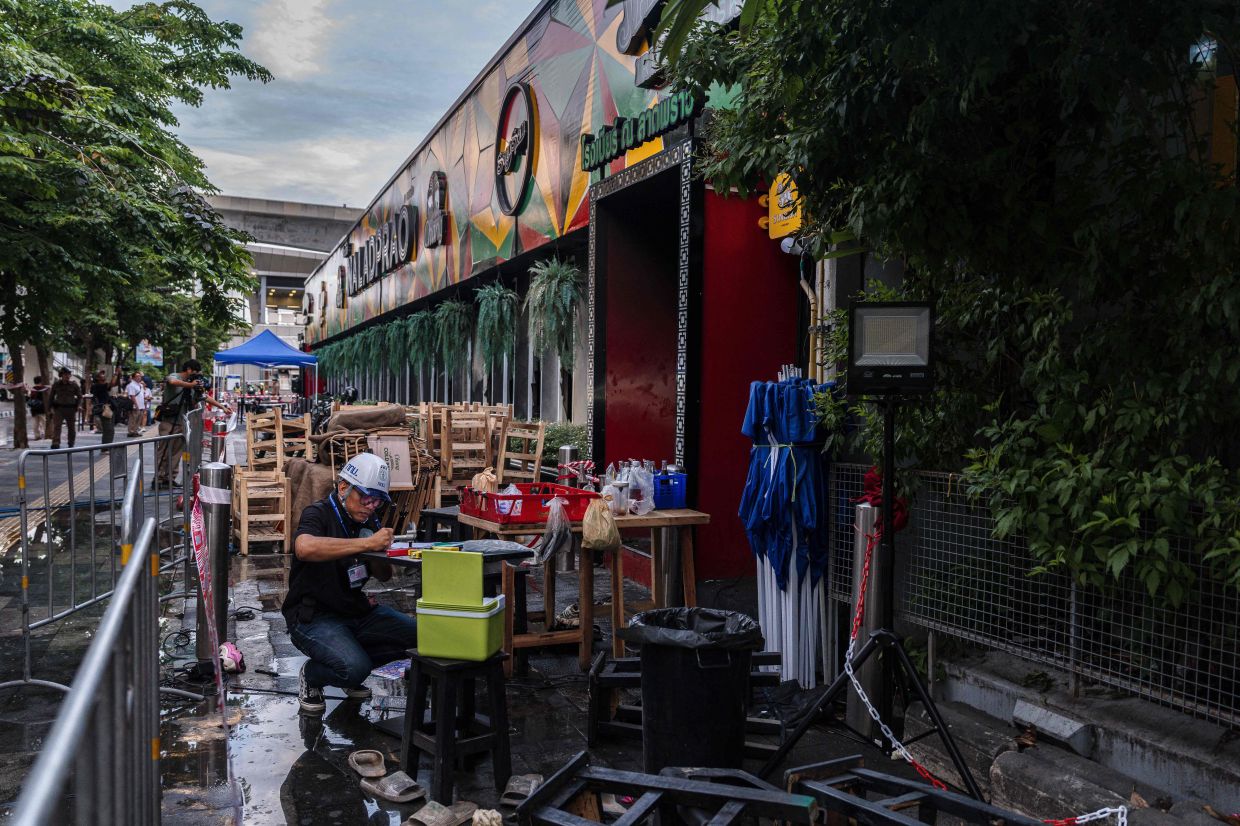
A catastrophic fire that swept through a Bangkok restaurant and brewery-style establishment in the Lat Phrao district has left 27 people dead and 18 others injured, prompting immediate action from city authorities to support victims' families and investigate critical gaps in fire safety standards. Bangkok Governor Chadchart Sittipunt arrived at the scene around 2.40am on Monday and quickly initiated multiple coordinated responses, including the establishment of a dedicated assistance centre for affected families and an urgent audit of the venue's operating credentials and safety infrastructure. The scope of the tragedy underscores persistent vulnerabilities in building safety protocols that extend far beyond this single incident, raising questions about enforcement mechanisms across Bangkok's hospitality sector.
The victims comprised nine men and 18 women, according to initial firefighting reports released at 3.45am. However, formal identification remains ongoing as medical examiners and relevant agencies conduct thorough procedures to confirm each death, a process that authorities have stressed could take considerable time. Bangkok officials established multiple contact channels through the Chatuchak District Office to help relatives obtain verified information and avoid misinformation during the chaotic aftermath. The 18 injured persons received varying degrees of treatment, with eight classified as critically injured, seven moderately wounded, and three sustaining minor injuries; all were transported to hospitals for ongoing care.
Firefighters responding to emergency calls reached the venue approximately five minutes after receiving the alarm, but discovered that flames had already consumed much of the building and thick smoke had penetrated throughout the interior. The rapid spread of fire combined with dense smoke created near-impossible rescue conditions, forcing emergency personnel to navigate through obscured corridors while searching for trapped occupants. This combination proved particularly lethal in areas where structural design or contents may have hindered escape routes. Many victims attempted to flee toward the rear toilets, a response that may have reflected inadequate emergency signage or blocked primary exits, thereby diverting people away from the most viable escape routes.
Initial observations at the scene suggested that flames propagated with unusual speed across ceiling areas while plastic furniture in various sections appeared comparatively unscathed, leading Governor Chadchart to propose a preliminary hypothesis that toxic smoke generated by interior decorative materials caused rapid incapacitation. Preliminary findings revealed that some fatalities were located near an emergency exit on the building's left side where obstructions may have blocked the passage, suggesting that even available escape routes were potentially rendered inaccessible by debris or structural elements. The Bangkok Fire and Rescue Department's initial assessment pointed to smoke inhalation as the primary cause of death for most victims, though forensic specialists cautioned that formal cause-of-death determinations would require complete investigation and laboratory analysis before any conclusions could be officially confirmed.
An initial inspection of the venue identified two emergency exit routes, one of which passed through the kitchen area—a layout that raises serious questions about evacuation protocol compliance and route practicality during active emergencies. Officials acknowledged that comprehensive examination would be necessary to determine whether the existing escape infrastructure met legal requirements and whether the exits were properly maintained, clearly marked, and genuinely accessible to evacuating patrons. The Bangkok Metropolitan Administration's immediate priorities centre on three interconnected objectives: providing immediate support to affected families through the coordination centre, conducting thorough verification of the venue's operating permits and business licences, and determining definitively whether fire-escape systems satisfied legal standards and safety regulations.
Governor Chadchart pledged accelerated work across all three fronts, committing to assist those affected while implementing measures to reduce recurrence risk. The comprehensive safety audit will examine the quantity and condition of fire exits, the conspicuousness of emergency-exit signage, obstruction of evacuation pathways, compliance of the exit layout with safety requirements, and whether the venue held proper operating documentation. This multi-layered approach reflects recognition that the incident likely resulted not from a single failure but from a combination of deficiencies spanning design, maintenance, compliance, and enforcement. Suriyachai Rawiwan, director of the Bangkok Fire and Rescue Department, confirmed that firefighters faced extraordinary difficulty penetrating the smoke-filled interior, a reality that emphasises how quickly such fires overwhelm rescue capacity when structural design or safety protocols fail.
For Southeast Asian readers, particularly those in Malaysia where similar nightlife venues operate across major cities, the Bangkok incident highlights persistent risks in establishments that prioritise entertainment and capacity over rigorous adherence to fire codes. The incident raises uncomfortable questions about enforcement consistency, venue ownership compliance culture, and whether inspections are conducted with sufficient thoroughness and frequency. Many hospitality businesses across the region operate in a regulatory environment where formal safety standards exist on paper but face weak implementation on the ground, with inspections sometimes becoming routine formalities rather than genuine safety assessments. The Bangkok tragedy demonstrates that such complacency carries lethal consequences.
Authorities have not yet released definitive information regarding the fire's origin, with investigators and forensic specialists still examining evidence from the scene. The Bangkok Fire and Rescue Department has assumed responsibility for determining where the fire originated, what triggered it, and what preventive measures should be implemented sector-wide. This investigative phase will take weeks or months to complete fully, but preliminary findings will likely inform immediate regulatory adjustments. The incident will inevitably trigger broader scrutiny of nightlife establishments throughout Bangkok and potentially across Thailand, as regulators and venue operators reassess their safety commitments in light of this catastrophe.
The establishment of the Chatuchak District Office's coordination centre represents standard crisis response protocol, yet such centres exist because disasters of this magnitude remain recurrent rather than exceptional in the region. The availability of multiple contact channels through designated personnel suggests authorities anticipated overwhelming volume of inquiries from anxious families, a reality that reflects the sheer scale of the tragedy and the numerous lives instantly transformed by this single incident. Beyond the immediate support function, the centre serves to channel information flow, reduce speculation and misinformation, and demonstrate visible government response during the critical period when public confidence in institutional competence is most fragile.
The Bangkok Metropolitan Administration's commitment to comprehensive assistance and thorough review of relevant safety measures represents necessary damage control, yet such promises, while appropriate, often precede slow-moving bureaucratic processes that may or may not result in substantive reform. History suggests that major tragedies generate urgent post-incident reviews that produce recommendations, which are then subjected to extended implementation timelines and resource constraints. For Malaysia and other Southeast Asian jurisdictions, the Bangkok incident should serve as a catalyst for independent audits of high-risk venues, particularly those operating with high occupancy in poorly-ventilated spaces. The specific vulnerabilities identified in this case—inadequate escape routes, blocked exits, rapid flame spread, dense toxic smoke, and potential design flaws—remain common across the region's hospitality sector until deliberately and comprehensively addressed.

