Bangladesh's Health and Family Welfare Minister Sardar Mohammad Sakhawat Hossain has underscored how Prime Minister Tarique Rahman's visit to Malaysia in June has substantially reinforced the diplomatic and economic foundations between Dhaka and Kuala Lumpur. Speaking at a forum organised by the Bangladesh-Malaysia Chamber of Commerce and Industry in the capital on Saturday, Sakhawat positioned the recent high-level engagement as emblematic of the broader strategic partnership the two countries are cultivating across multiple sectors.
The minister's remarks come at a time when Bangladesh is actively seeking to diversify its international relationships and strengthen economic ties with key regional partners. Malaysia, as a developed Southeast Asian economy with established trade networks and investment expertise, represents a significant opportunity for Bangladesh to access technology, capital, and market expertise. The timing of such statements also reflects Bangladesh's broader strategy to position itself as an emerging economic force within ASEAN and South Asia, leveraging partnerships to accelerate development across manufacturing, services, and financial sectors.
Central to Sakhawat's message was the assertion that the Bangladesh-Malaysia relationship rests upon a foundation of mutual trust and shared interests. This framing is particularly significant given the complex geopolitical dynamics of South and Southeast Asia, where smaller and medium-sized economies must carefully calibrate their international engagements. By emphasising trust rather than transactional interests alone, the minister sought to signal to Malaysian policymakers and investors that Bangladesh views the partnership as long-term and stable, attributes that are essential for attracting sustained foreign investment and facilitating cross-border business ventures.
A critical dimension of the bilateral relationship that Sakhawat highlighted is the active role of private sector actors. The presence of both business communities in fostering economic cooperation suggests that Bangladesh recognises how government-to-government relations must be supported by commercial networks and trading enterprises. The Bangladesh-Malaysia Chamber of Commerce and Industry itself exemplifies this approach, serving as a bridge between policy-making circles and the business ecosystems of both countries. Such institutional frameworks are increasingly vital in contemporary international relations, where private capital and cross-border commerce often drive political outcomes as much as formal diplomatic channels do.
The minister's explicit call for Malaysia to increase imports from Bangladesh addresses a persistent concern for developing South Asian economies: achieving more balanced trade flows with wealthier regional neighbours. Bangladesh, as a major exporter of garments, textiles, and agricultural products, has historically relied on access to markets in wealthier nations. Expanding Malaysian demand for Bangladeshi goods would diversify Bangladesh's export markets beyond traditional destinations in North America and Europe, thereby reducing vulnerability to protectionist policies or economic fluctuations in any single market. This request also aligns with broader ASEAN trade frameworks, where member states are increasingly focused on intra-regional commerce.
For Malaysian policymakers and business leaders, the Bangladeshi government's emphasis on economic cooperation carries distinct implications. Bangladesh's labour-intensive manufacturing sectors and growing consumer market of over 170 million people present genuine opportunities for Malaysian enterprises seeking to expand regional operations or secure supply chain partnerships. Malaysian companies, particularly in financial services, technology, and infrastructure development, could benefit substantially from increased engagement with Bangladesh as the country continues its trajectory of rapid urbanisation and industrialisation.
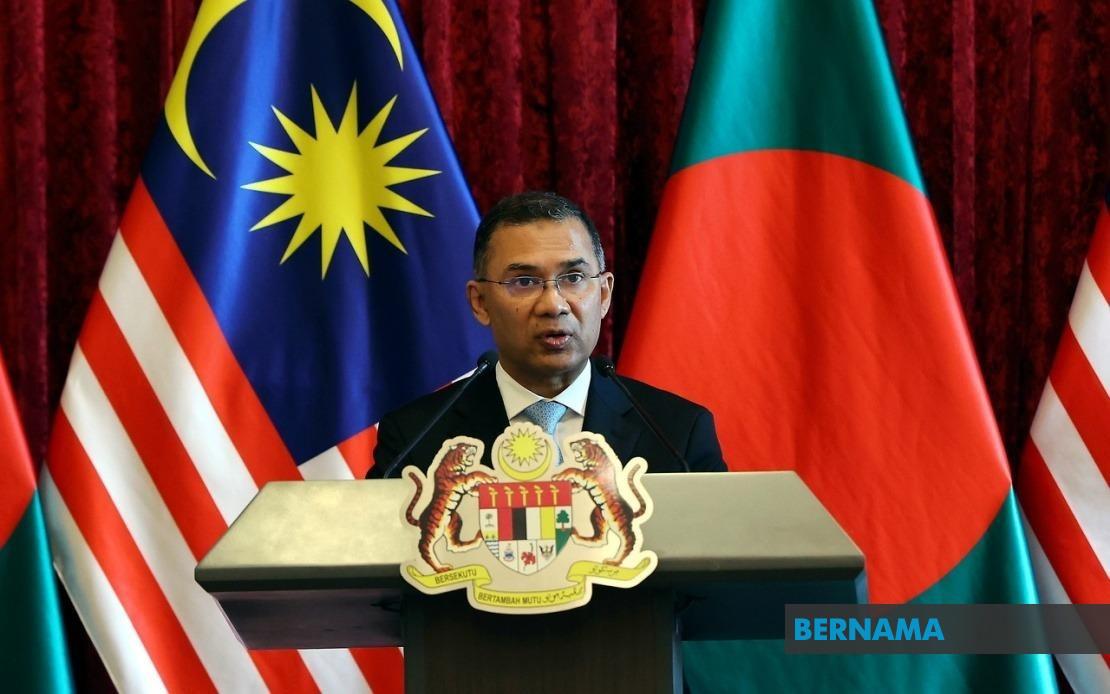
The presence of Malaysia's High Commissioner to Bangladesh, Mohd Shuhuda Othman, at the Saturday event underscores Kuala Lumpur's commitment to advancing bilateral relations at both state and non-state levels. High commissioners and embassy officials increasingly participate in business forums and chamber events to signal their governments' support for commercial integration. Such visible engagement also provides a platform for diplomats to gather intelligence about market conditions, regulatory environments, and potential friction points between the business communities, information that informs strategic policy decisions back in the capital.
Mohammad Fazlul Haque, the administrator of the Federation of Bangladesh Chambers of Commerce and Industry, represented the institutional voice of Bangladesh's private sector at the gathering. The FBCCI serves as a crucial intermediary between government and business, articulating the needs of entrepreneurs to policymakers whilst advocating for policies that support commercial growth. His participation signals that Bangladesh's business elite are actively engaged in positioning the country as an attractive partner for Malaysian investors and trading partners.
The forum itself, titled "Towards a Stronger Bangladesh-Malaysia Partnership", reflects the aspirational framing that both governments are adopting. The language of strengthening, deepening, and broadening cooperation has become standard in contemporary bilateral diplomacy, but such language matters because it creates momentum and expectations. When government officials and business leaders repeatedly invoke partnership-building language in public forums, they create political and commercial constituencies with vested interests in seeing those partnerships succeed, thereby helping to institutionalise relationships that might otherwise remain fragile or transactional.
From a Malaysian perspective, deepening engagement with Bangladesh aligns with broader ASEAN objectives of promoting regional integration and reducing development gaps between member states. Malaysia, as a relatively prosperous middle-income country, has incentives to support the development of poorer neighbours, both from humanitarian considerations and from pragmatic recognition that more developed, stable, and prosperous neighbours ultimately provide better markets and more predictable partnerships. Bangladesh's economic success directly benefits the entire Southeast Asian region by creating opportunities for intra-regional trade, investment, and technology transfer.
Looking forward, the challenge for both governments will be translating diplomatic goodwill and ministerial rhetoric into concrete commercial outcomes. This requires addressing practical impediments to trade and investment, including tariff structures, regulatory harmonisation, and the development of logistics infrastructure that reduces transaction costs for businesses operating across borders. Malaysian businesses will need confidence that Bangladesh's regulatory environment remains stable and predictable, whilst Bangladeshi exporters require assurance that Malaysian markets will remain genuinely open to their products without the emergence of non-tariff barriers.
The June visit by Prime Minister Tarique Rahman appears to have functioned as a catalyst for accelerated engagement rather than as a culmination of existing efforts. The subsequent ministerial statements and business forum activities suggest that both governments recognise significant untapped potential in the relationship. For Malaysian readers and business communities, this represents an emerging opportunity to participate in Bangladesh's continued economic growth, whilst for Bangladesh, it reflects a strategic effort to deepen ties with a successful regional economy that can contribute to its own development objectives.

