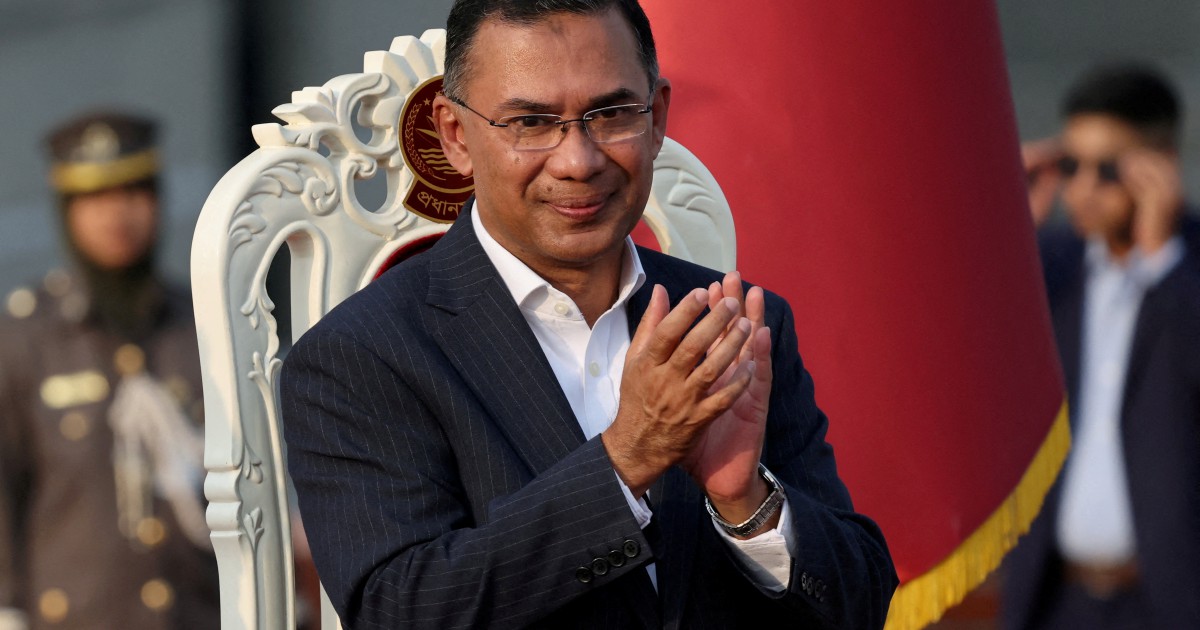
Bangladesh has officially stated that Prime Minister Tarique Rahman will not travel to India until the Indian government extradites Sheikh Hasina, the nation's former premier who fled across the border during a period of widespread civil turmoil in 2024. The declaration, made public on Sunday, represents a significant hardening of Dhaka's position and underscores the deep political divisions that continue to shape Bangladesh's foreign policy in the aftermath of the uprising that forced the longtime leader from power.
The flight of Sheikh Hasina to India in August 2024 marked a dramatic conclusion to her 15-year grip on power, which had been marked by accusations of authoritarian rule and widespread allegations of extra-judicial killings. The uprising that toppled her administration was driven by popular discontent over issues ranging from job quotas affecting university admissions to broader concerns about democratic freedoms and governance. Her departure left a power vacuum that was eventually filled by an interim government followed by elections that brought Tarique Rahman's faction to the fore.
Sheikh Hasina's presence in India has become a persistent diplomatic irritant between the two neighbours, particularly for Bangladesh's new leadership, which has adopted an increasingly assertive stance toward their larger neighbour. The interim government that governed after Hasina's departure had initiated legal proceedings against her, bringing charges related to crimes against humanity and extra-judicial killings. For Tarique Rahman's government, her continued residence in India represents an unresolved legal and political matter that cannot be overlooked in bilateral relations.
The extradition demand reflects deeper anxieties within Bangladesh's new administration about maintaining legitimacy and establishing clear accountability for the previous regime's alleged abuses. By conditioning any high-level state visit to India on Hasina's return, Dhaka is signalling to its domestic audience that it will not compromise on matters of justice, even when dealing with a much larger regional power. This positioning has considerable symbolic weight in Bangladesh, where the uprising generated genuine momentum for accountability and systemic change.
India has not indicated any willingness to extradite Sheikh Hasina, viewing her residence in the country as a sovereign matter. New Delhi has historically maintained a complex relationship with Bangladesh, marked by strategic partnership and shared interests in regional security, but also periodic tensions over resource-sharing arrangements, particularly concerning shared river systems. The Indian government's refusal to extradite Hasina must also be considered within the context of India's broader foreign policy orientation, which has traditionally emphasized stability and strategic partnership with Bangladesh despite changes in leadership.
Tarique Rahman's government faces its own legitimacy challenges following its assumption of power. The new administration must navigate between satisfying public demands for accountability against the previous regime while also maintaining functional relationships with major regional players, particularly India, upon which Bangladesh depends for security cooperation, trade, and energy supplies. This balancing act has proven delicate, with the extradition demand representing one flashpoint in a broader recalibration of bilateral ties.
For Malaysia and other Southeast Asian nations watching these developments, Bangladesh's assertiveness offers a case study in how newly empowered governments navigate the complex demands of transition and regional diplomacy. The standoff also illustrates the challenges faced by smaller nations in the region when seeking accountability from powerful neighbours without jeopardizing critical bilateral relationships. The precedent set by Bangladesh's stance could influence how other nations in the Indo-Pacific approach similar situations involving refugee leaders and extradition matters.
The Bangladeshi government's public statement on Sunday was deliberate in its clarity, suggesting that this is not merely a rhetorical position but rather a firm condition for normalization of high-level bilateral engagement. Such declarations typically precede extended periods of cool relations, and observers expect the impasse to persist unless either India reverses course on extradition or Bangladesh moderates its demands. Neither outcome appears likely in the near term, given the domestic political imperatives driving each side.
The broader implications for South Asian stability merit attention. Bangladesh-India relations have historically served as a stabilizing force in a region prone to geopolitical tensions, and sustained diplomatic friction between them could create space for other regional powers to assert influence or exploit divisions. Additionally, the unresolved situation regarding Sheikh Hasina's legal status and physical location creates a permanent irritant that risks periodic escalation, particularly should domestic political circumstances shift in either nation.
Looking ahead, the question of whether Sheikh Hasina's situation will eventually be resolved remains uncertain. Her continued residence in India as a protected figure complicates Bangladesh's efforts to close the chapter on her administration, while any perceived compromise on accountability could undermine the legitimacy of Tarique Rahman's government at home. This dynamic ensures that the extradition issue will remain a defining feature of Bangladesh-India relations for the foreseeable future, with potentially significant ramifications for both nations' regional standing and domestic political trajectories.

