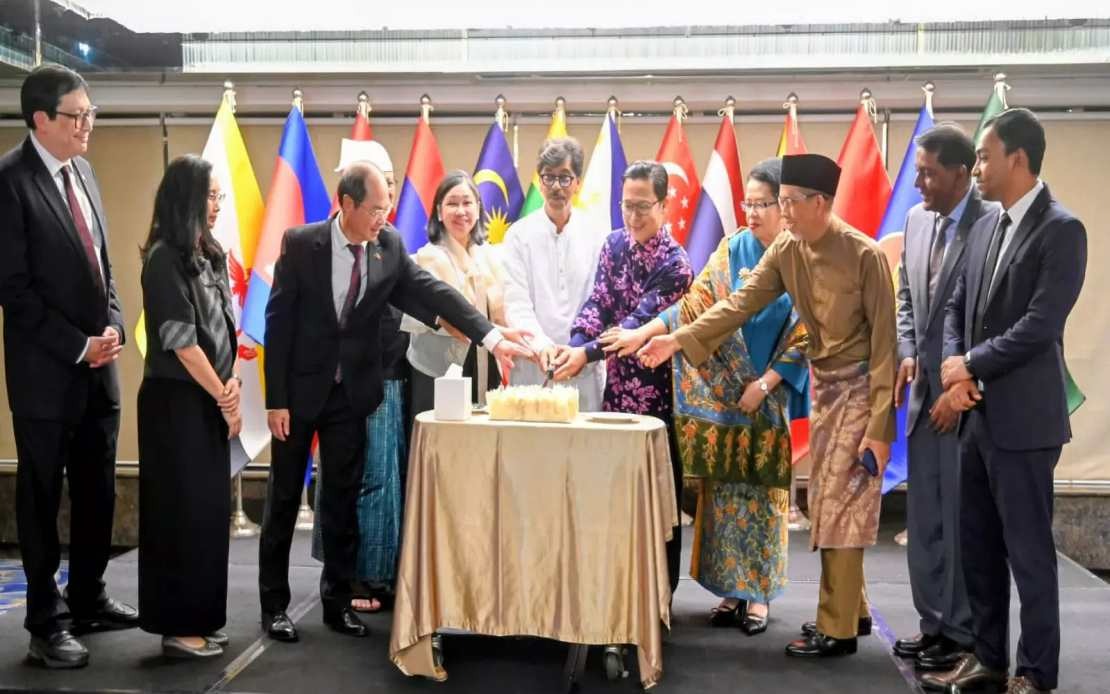
Bangladesh has formally lodged an application to become a Sectoral Dialogue Partner of ASEAN, a significant step in formalising its relationship with Southeast Asia's premier regional organisation. The announcement came during a reception marking the 59th ASEAN Day in Dhaka, where Fisheries, Livestock and Agriculture Minister Mohammed Aminur Rashid underscored the government's determination to deepen engagement across the grouping's 11 member states. This initiative signals a shift towards institutionalising Bangladesh's regional role beyond ad-hoc cooperation, positioning the country as an active participant in ASEAN's broader economic and diplomatic framework.
Minister Rashid's remarks reflected the priority attached to ASEAN relations by the current government under Prime Minister Tarique Rahman. The selection of Malaysia as the Prime Minister's first official foreign destination carries symbolic weight, suggesting that Dhaka views deepening ties with the region as central to its diplomatic strategy. The choice also underscores Malaysia's particular importance within the ASEAN constellation for Bangladesh, given shared maritime interests, cultural affinities, and economic complementarities that have long characterised bilateral engagement.
The SDP application represents a calculated move to graduate Bangladesh beyond informal observer status into a structured framework that would enable regular consultations and collaborative initiatives with ASEAN institutions. Currently, Bangladesh maintains various engagement channels with the bloc, but formalising this relationship through an SDP designation would create institutional mechanisms for sustained dialogue on priority sectors. This structural upgrade would align Bangladesh with other major dialogue partners and strengthen its voice in regional decision-making processes.
Bangladesh's outreach to ASEAN encompasses multiple dimensions already under active development. The US$1 million Bangladesh-ASEAN Cooperation Project on Fisheries and Aquaculture, administered through Rashid's ministry, demonstrates Dhaka's capacity to deliver on collaborative initiatives addressing shared regional challenges. Beyond fisheries, the government is pursuing joint programmes in tourism, information and communications technology, and cultural exchange. These sectoral initiatives provide the practical foundation upon which the SDP status application rests, showing potential partners that Bangladesh offers concrete cooperation opportunities rather than merely seeking diplomatic recognition.
The maritime and connectivity dimensions of Bangladesh-ASEAN relations carry particular strategic significance for Malaysian and Southeast Asian readers. Bangladesh's geographical position along major shipping lanes and its role as a transit hub make it a natural partner for ASEAN states managing regional trade flows and security challenges. Enhanced land connectivity through initiatives like the Bangladesh-China-India-Myanmar Economic Corridor and maritime arrangements create interdependencies that make formalised engagement increasingly essential for managing shared challenges ranging from maritime security to transnational environmental issues.
People-to-people connections form another pillar of Bangladesh's regional engagement strategy. With significant diaspora communities across ASEAN nations and rising tourism flows, the human dimension of Bangladesh-ASEAN relations extends well beyond government-to-government channels. These grassroots links provide resilience to bilateral relationships and generate constituencies within both Bangladesh and ASEAN nations supportive of deeper institutional ties. Cultural and educational exchanges, when formally coordinated through structured dialogue mechanisms, can amplify these organic connections.
The reception itself served as a diplomatic gathering where Minister Rashid sought active support from ASEAN diplomatic heads for Bangladesh's SDP bid. The attendance of Malaysian High Commissioner Mohammad Shuhada Othman, Philippine Ambassador Neena Padilla Cinglet, and other ASEAN envoys created an informal setting for advancing the application. Such diplomatic engagement illustrates how multilateral processes operate alongside formal channels, with national interests being advanced through personal relationships and face-to-face advocacy within the diplomatic community.
Bangladesh's economic interests within ASEAN are substantial and multifaceted. Trade relations with member states have grown steadily, encompassing textiles, raw materials, and agricultural products. A formal SDP designation would facilitate the negotiation of preferential trade arrangements and reduce barriers to market access for Bangladeshi exports. For Malaysian businesses and investors, deepened engagement with Bangladesh provides access to a market of over 170 million people and positions Bangladesh as a gateway to South Asian markets that ASEAN companies seek to penetrate.
The cultural dimension, highlighted through the traditional Bangladeshi cuisine served at the reception, reflects how nation branding and soft power underpin diplomatic engagement. Products like Black Bengal Goat, recognised as a geographical indication internationally, and indigenous Kalijira rice represent Bangladesh's agricultural distinctiveness. Promoting these products through ASEAN platforms could open market opportunities while enhancing Bangladesh's profile within the region as a source of specialised agricultural goods and culinary traditions.
From a broader Southeast Asian perspective, Bangladesh's intensified engagement with ASEAN reflects shifting regional dynamics. As the bloc seeks to expand its relevance and influence, welcoming structured partnerships from major South Asian players like Bangladesh strengthens ASEAN's centrality in regional affairs. For Bangladesh, ASEAN membership remains a long-term aspiration, but the SDP pathway offers a pragmatic intermediate step that accelerates integration into regional mechanisms while demonstrating commitment to the ASEAN Way and established rules of engagement.
The timing of Bangladesh's SDP application coincides with growing recognition of South Asia's importance to Southeast Asian prosperity. Regional value chains, energy security, and maritime trade increasingly bind ASEAN nations to South Asian partners. Bangladesh, with its strategic location and economic dynamism, represents a particularly valuable partner. The formal institutionalisation sought through the SDP status would create ongoing forums for addressing challenges from climate change to irregular migration that no single nation can resolve alone.
Success in obtaining SDP status would mark a watershed moment in Bangladesh's regional diplomacy, translating decades of informal engagement into a structured partnership framework. This formalisation would create obligations and opportunities for deepened collaboration across multiple sectors, from defence and security dialogues to environmental cooperation and technology transfer. For neighbouring Malaysia and other ASEAN members, a more institutionally integrated Bangladesh would offer expanded avenues for cooperation while contributing to regional stability and prosperity through diversified partnerships.

