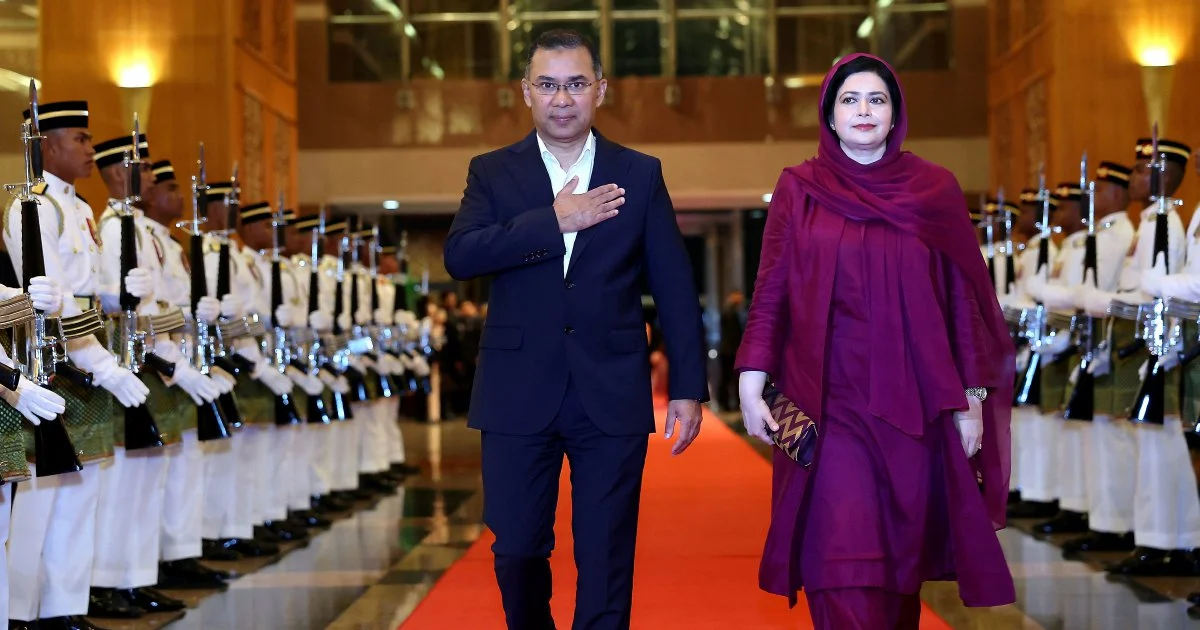
Bangladesh Prime Minister Tarique Rahman has launched a direct appeal to Malaysian businesses to explore the expanding investment prospects emerging from his nation's economic reformation, signalling a deliberate pivot towards attracting Southeast Asian capital during a critical phase of institutional rebuilding. The overture comes as Bangladesh navigates a complex transition period following recent political upheaval, with the administration positioning itself as a stable and commercially receptive destination for foreign investors seeking alternatives to traditional markets in the region.
The timing of Rahman's invitation reflects Bangladesh's strategic recognition that Malaysian companies possess both the sectoral expertise and regional networks that could accelerate development across multiple industries. Malaysian firms have long maintained a competitive advantage in manufacturing, financial services, and technology sectors—domains where Bangladesh faces significant capacity gaps and growth potential. By directly soliciting Malaysian participation, the Bangladesh government is signalling that it views Southeast Asian peers as natural partners rather than competitors, a nuanced diplomatic approach that emphasises regional cooperation over external dependency.
Bangladesh's business environment has undergone notable structural improvements in recent years, despite occasional governance challenges that have deterred some international investors. The nation's young, expanding workforce, combined with relatively low labour costs compared to established manufacturing hubs, continues to present compelling advantages for companies seeking to diversify production bases or establish regional operations. These fundamentals remain attractive to Malaysian investors evaluating emerging market strategies, particularly those in the textiles, electronics assembly, and light manufacturing sectors where Bangladesh has established credible capabilities.
The invitation also signals Bangladesh's determination to rehabilitate its international economic standing following internal disruptions that created uncertainty among potential investors. By engaging proactively with Malaysian business communities, Rahman's administration is attempting to rebuild confidence and demonstrate that the nation remains committed to maintaining investor-friendly policies, streamlined regulatory processes, and transparent commercial frameworks. This diplomatic engagement is especially important given Malaysia's substantial influence as a developed Southeast Asian economy; Malaysian endorsement could catalyse broader investor interest across the region.
For Malaysian investors, the proposition presents both genuine opportunities and notable considerations. Bangladesh's market of over 170 million people offers substantial domestic consumption potential, while the nation's geographic positioning provides convenient access to Indian and wider South Asian supply chains. Companies operating in sectors from pharmaceuticals to fast-moving consumer goods could leverage Bangladesh's manufacturing capacity and developing distribution infrastructure to strengthen regional competitiveness. However, potential investors must carefully assess political stability, infrastructure limitations, and regulatory consistency—factors that have historically influenced foreign direct investment decisions in the country.
The textile and apparel sector represents perhaps the most immediately viable avenue for Malaysian investment expansion in Bangladesh. Already established as the world's second-largest garment manufacturer after China, Bangladesh possesses infrastructure, skills, and export networks that Malaysian fashion retailers and producers could integrate into sophisticated supply chains. Additionally, Malaysian expertise in quality management and sustainability standards could help Bangladeshi manufacturers meet increasingly stringent international requirements, creating mutually beneficial partnerships that enhance both partners' competitive positioning.
Beyond manufacturing, Bangladesh's digital economy presents emerging opportunities that particularly appeal to Malaysian technology companies and entrepreneurs. The nation's improving telecommunications infrastructure, expanding mobile internet penetration, and youthful demographic increasingly enable fintech services, software development, and e-commerce platforms to flourish. Malaysian digital innovators could establish regional headquarters in Dhaka, leveraging lower operational costs while serving broader South Asian markets—a model that several Malaysian tech firms have already explored with varying degrees of success elsewhere in the region.
The financial services sector also warrants serious Malaysian consideration. Bangladesh's banking system, while still developing, demonstrates growing sophistication and increasing openness to foreign institutional participation. Malaysian financial expertise in Islamic banking, a sector where Malaysia maintains global leadership, could address Bangladesh's substantial Islamic finance market gap. Joint ventures between Malaysian and Bangladeshi financial institutions could establish valuable footholds for Malaysian banks seeking to expand their South Asian footprints while introducing world-class banking practices to the Bangladeshi market.
Infrastructure development represents another significant opportunity area. As Bangladesh pursues ambitious infrastructure modernisation programmes—including port expansion, railway upgrades, and energy projects—Malaysian construction companies, engineering firms, and project developers could bid competitively for contracts. Malaysian expertise in managing complex infrastructure projects in challenging environments could prove particularly valuable, while participation would strengthen long-term relationships between the two nations' business communities.
However, successful Malaysian investment in Bangladesh requires careful risk assessment and realistic timeframes. Political uncertainty, occasional infrastructure deficiencies, and bureaucratic inconsistencies remain legitimate concerns that investors must navigate thoughtfully. Malaysian firms should conduct thorough due diligence, establish local partnerships with reputable Bangladeshi counterparts, and develop contingency planning that accounts for Bangladesh's sometimes unpredictable policy environment. Those willing to invest time in relationship-building and patient capital approaches are likely to identify genuine opportunities within the market's considerable potential.
Rahman's invitation ultimately reflects Bangladesh's strategic recognition that its economic future depends on attracting quality foreign investment alongside domestic capital mobilisation. Malaysian investors represent precisely the calibre of partner Bangladesh seeks—technically competent, culturally compatible within the Southeast Asian context, and experienced in operating within developing market conditions. As Bangladesh works to stabilise its political institutions and demonstrate renewed economic commitment, deepening Malaysian business involvement could catalyse mutual regional prosperity while positioning both nations advantageously within broader Asian economic integration trends.

