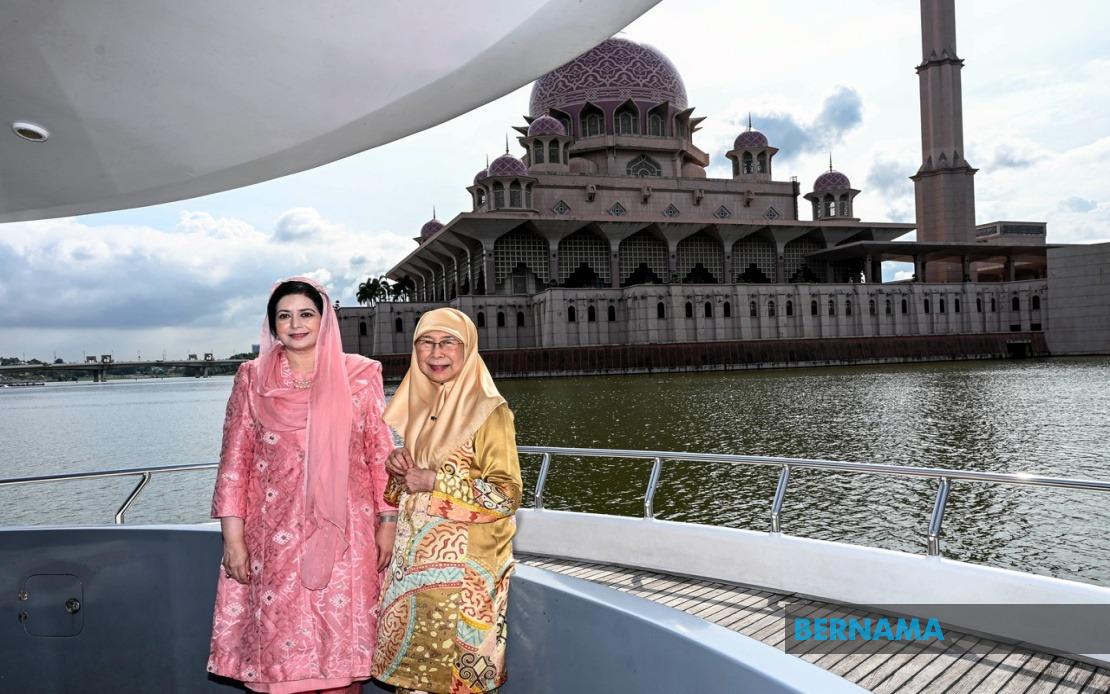
Dr Zubaida Rahman, wife of Bangladesh Prime Minister Tarique Rahman, embarked on a scenic Putrajaya Lake Cruise on June 22, experiencing the administrative capital's distinctive architecture and waterfront landscapes from the water. The leisurely excursion provided the visiting dignitary with an intimate perspective of the purpose-built city's notable structures and natural setting, a common feature of diplomatic itineraries designed to showcase Malaysia's development achievements and cultural attractions to international guests.
Upon her 9.30 am arrival at the lake embarkation point, Dr Zubaida received a formal welcome from Datuk Seri Dr Wan Azizah Wan Ismail, wife of Prime Minister Datuk Seri Anwar Ibrahim, and Hannah Yeoh, the Minister in the Prime Minister's Department responsible for Federal Territories. This greeting reflected protocol befitting a visit from the spouse of a neighbouring country's chief executive, underscoring the diplomatic significance of the occasion despite its recreational framing.
During approximately one hour on the water, Dr Zubaida engaged in extended conversation with her Malaysian hosts while viewing Putrajaya's waterfront vistas. The informal setting of a lake cruise traditionally facilitates candid exchanges between senior officials' spouses, potentially opening channels for discussion on matters ranging from cultural cooperation to humanitarian initiatives that fall outside formal bilateral negotiating forums.
The lake outing formed part of a broader two-day official visit by Bangladesh Prime Minister Tarique Rahman and his wife, who arrived in Malaysia on Sunday evening. Anwar had extended a personal invitation to facilitate this engagement, signalling Malaysia's commitment to deepening relationships with significant South Asian partners at multiple governmental levels.
For Bangladesh, this journey represents a milestone in Tarique Rahman's tenure since assuming the prime ministerial office in February 2026. The trip constitutes his inaugural official bilateral overseas visit since taking office, underscoring Malaysia's strategic importance to Bangladesh's early diplomatic agenda and reflecting the priority Dhaka places on strengthening ties with the region's leading economy.
The bilateral relationship carries substantial economic weight. Bangladesh currently ranks as Malaysia's 28th-largest trading partner globally, with total bilateral commerce reaching RM12.18 billion. More significantly within the South Asian context, Bangladesh functions as Malaysia's second-most important trading partner in the subcontinent, surpassed only by India. This commercial foundation provides tangible substance to the diplomatic pleasantries exchanged during official visits, with trade corridors and investment partnerships underpinning the stated commitment to closer ties.
The official visit's emphasis on "strengthening already close bilateral ties" and "expanding cooperation in various areas of mutual interest" suggests both nations view their relationship as foundational rather than peripheral. For Malaysia, engagement with Bangladesh offers opportunities to deepen connections with a nation of over 170 million people occupying a strategically important position in South Asia. For Bangladesh, the relationship provides access to Malaysia's advanced financial services, investment capital, and technological expertise.
Putrajaya itself functions as a powerful diplomatic asset during such visits. The purpose-built capital, with its distinctive architectural landmarks and landscaped waterways, projects an image of Malaysia as a modern, well-organised nation capable of ambitious infrastructure projects. Lake cruises specifically allow visitors to appreciate the city's planning coherence and development trajectory without the formality of conventional state dinners or conference room meetings. The relaxed atmosphere permits genuine interaction between senior officials' families, potentially fostering personal connections that facilitate future cooperation.
The presence of Hannah Yeoh alongside the Prime Minister's wife indicates the Malaysian government's deliberate approach to showcasing successful female leadership to international counterparts. As Federal Territories Minister, Yeoh's involvement in welcoming Bangladesh's first lady carries symbolic weight, demonstrating Malaysia's commitment to gender representation in governance and providing an additional avenue for substantive dialogue beyond traditional diplomatic channels.
The timing of this visit, occurring within months of Tarique Rahman's assumption of office, reflects Bangladesh's eagerness to establish its foreign policy direction and identify key partners for development cooperation and regional stability. Malaysia's response through a personal invitation from the Prime Minister and coordinated welcoming ceremonies demonstrates reciprocal commitment to nurturing the relationship during this formative period of the new Bangladesh administration.
Looking forward, the exchanges during this visit—both formal and informal—will likely inform the trajectory of Malaysia-Bangladesh cooperation across trade, investment, education, and cultural domains. The Putrajaya Lake Cruise, while seemingly a modest recreational interlude, exemplifies how diplomatic engagement operates across multiple registers, combining official statements and economic discussions with more personal interactions that build the interpersonal relationships upon which sustained international cooperation ultimately depends.