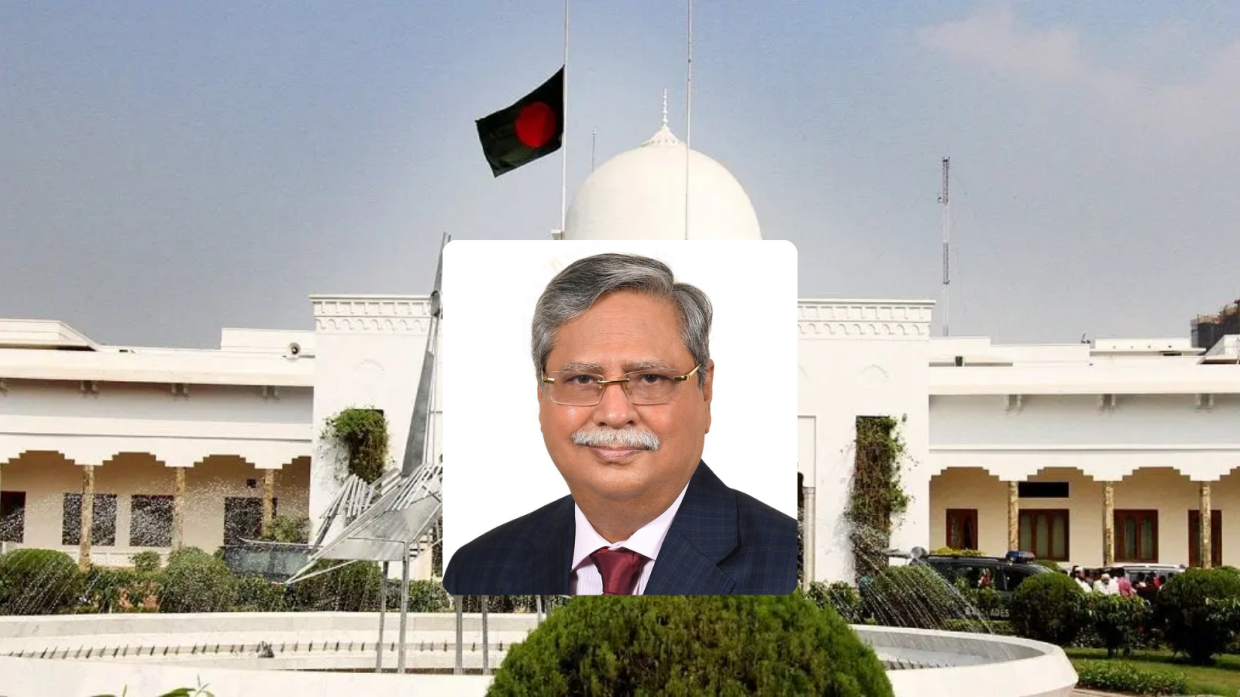
The resignation of Bangladesh's President Mohammed Shahabuddin appears imminent, according to multiple sources with direct knowledge of the political situation unfolding in Dhaka. The expected departure marks a significant turning point in the country's political landscape as the post-uprising government consolidates power and seeks to distance itself entirely from the administration that preceded the mass demonstrations of July 2024. Shahabuddin, who assumed the presidency in April 2023, has become an increasingly uncomfortable symbol of continuity with the old order, a distinction that officials now appear unwilling to tolerate.
The timing of the anticipated resignation coincides with intensifying political pressures stemming from multiple interconnected developments. Sources indicate that Shahabuddin, during a visit to London in May for medical treatment, engaged in a telephone conversation with former Prime Minister Sheikh Hasina, who has remained in self-imposed exile in India since fleeing the country following the July 2024 uprising. The exchange was subsequently detected by intelligence agencies, and this discovery reportedly triggered informal suggestions to the president that his continued tenure had become untenable. However, according to senior figures within the ruling Bangladesh Nationalist Party, the phone conversation alone does not explain the mounting pressure for his departure, pointing instead to a far more intricate set of political considerations at play.
The situation has grown more volatile following former Prime Minister Hasina's recent announcement of plans to return to Bangladesh around December, alongside senior members of her Awami League party. Hasina, who faces a death sentence in absentia and whose party's activities remain suspended, has indicated her intention to surrender upon arrival. This prospect has galvanized hardline elements within the current government, who view any potential reconciliation or rehabilitation of the previous administration's figures with alarm. Government sources have made clear their determination to prevent any resurgence of Awami League influence or organizational capacity, treating such efforts as potential destabilization threats requiring immediate suppression.
The intelligence establishment has reportedly been tracking attempts by Awami League members operating within Bangladesh to revive party structures in anticipation of the former PM's return. These organizational efforts, combined with the revelation of Shahabuddin's contact with Hasina, have created a political environment where the president's continued presence is viewed as inconsistent with the government's security priorities. Prime Minister Tarique Rahman emphasized this point during a Cabinet meeting on July 17, explicitly directing authorities to intensify their campaign against the Awami League, its affiliated youth and student wings, and related organizations, sending an unmistakable signal about the administration's zero-tolerance approach.
Shahabuddin's position has been compromised by the perception, articulated by a senior government source, that he has been attempting to rebuild relationships with figures and networks associated with the previous era. Officials have indicated that retaining a symbolic representative of the pre-uprising period in the country's highest constitutional office is no longer strategically prudent or politically acceptable. The government's displeasure appears rooted not in any overt wrongdoing by the president, but rather in what officials regard as an incompatibility between his historical position and the revolution's cleansing aims. This reflects a broader insistence that the post-July 2024 order requires complete institutional renewal, with no remnants of the old guard permitted to occupy positions of national importance.
The president's own statements have suggested his awareness of this precarious situation. During the tenure of the interim government, Shahabuddin expressed his intention to step down before completing his full term, acknowledging feelings of humiliation stemming from his treatment by then-Chief Advisor Muhammad Yunus. After the BNP-led government took office, Shahabuddin adopted a more pragmatic stance, indicating through a newspaper interview in February that he would remain if requested but resign voluntarily if the government expressed such a preference. This carefully calibrated positioning reveals his understanding that his tenure ultimately rests on governmental tolerance rather than constitutional security.
The institutional mechanics of a presidential departure have already been clarified within government circles. Under Bangladesh's constitutional framework, if Shahabuddin resigns, the Speaker of Parliament would serve as acting president until the National Assembly elects a successor. This arrangement ensures continuity of the constitutional order while enabling the replacement process to proceed without procedural complications. Officials have not yet disclosed a specific timeline for the resignation or identified a likely successor, indicating that the succession planning, while apparently advanced, remains fluid and subject to ongoing deliberation among senior government figures.
For observers across Southeast Asia, Shahabuddin's anticipated resignation underscores the profound structural changes that have occurred in Bangladesh's political system since the mass uprising. The complete removal of pre-revolutionary institutional figures represents a level of revolutionary consolidation rarely achieved in the modern region, reflecting the depth of popular anger that propelled the recent upheaval. Malaysia and other regional democracies may observe these developments with particular interest, as they reveal patterns of post-crisis political engineering that contrast sharply with other Asian transitions.
The timing of Shahabuddin's departure could come with remarkable speed. A source close to Bangabhaban suggested that a formal decision might materialize within days, with the president maintaining a scheduled meeting with non-resident ambassadors from four countries on July 29, a date that may or may not occur depending on the resignation timeline. This imminent nature of the expected announcement indicates that the decision-making process has advanced considerably beyond mere speculation into the realm of practical implementation. The political machinery appears positioned to move swiftly once the president formally indicates his intention to step down, ensuring that the transition occurs cleanly and without prolonged constitutional ambiguity.

