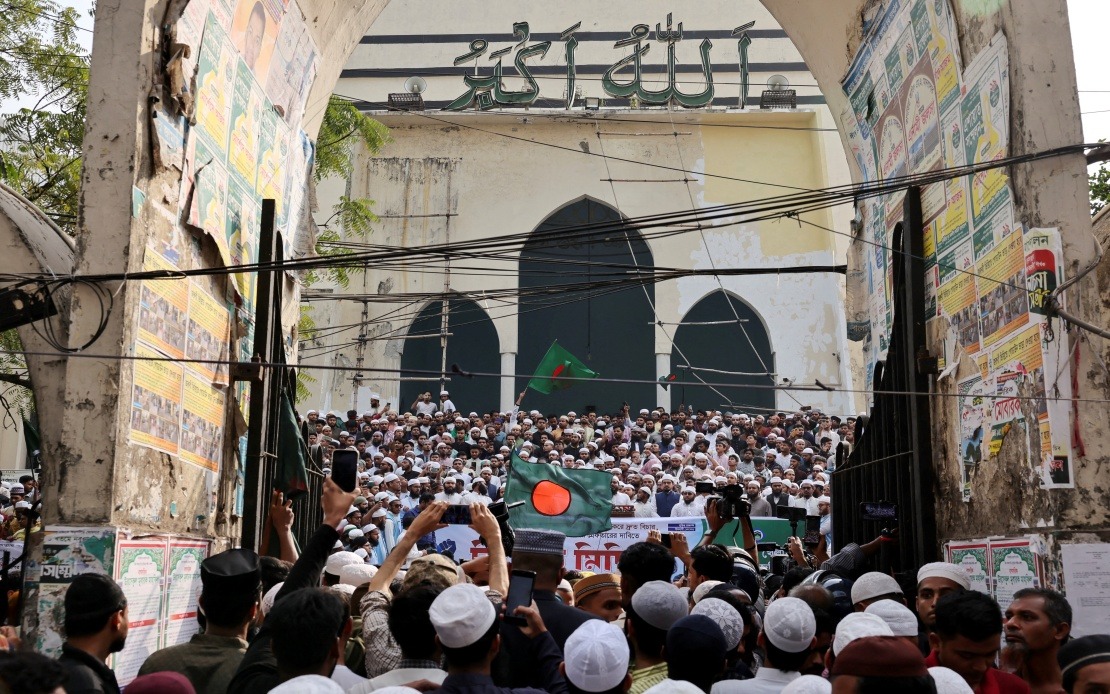
A Bangladeshi tribunal has delivered capital sentences against three high-ranking police officials for their involvement in the fatal suppression of mass protests during the turbulent uprising of 2024. The International Crimes Tribunal, presided over by Justice Md Golam Mortuza Mozumder, issued verdicts on Sunday in a case that underscores the ongoing accountability efforts following the dramatic political upheaval that gripped the South Asian nation last year.
The three convicted officers facing death sentences are Habibur Rahman, the former commissioner of the Dhaka Metropolitan Police; Md Rashedul Islam, an additional deputy commissioner with the same force; and Md Mashiur Rahman, who formerly commanded the Rampura police station. All three remain at large, designated as fugitives beyond the reach of Bangladeshi law enforcement. Rahman has previously been sentenced to death in an unrelated case, indicating a pattern of serious allegations against the security apparatus during the tumultuous period.
The tribunal simultaneously imposed a combined sentence of life imprisonment plus an additional 20 years on two other defendants in the proceedings. Among these is Tariqul Islam Bhuiyan, a former sub-inspector stationed at Rampura, who now faces lifetime incarceration for his involvement in the violence. These supplementary convictions reflect the broader scale of institutional complicity that investigators uncovered while examining the security forces' response to civil unrest.
The charges levelled against these officers centre on crimes against humanity, a designation that reflects the systematic nature of the violence deployed against civilians. Particularly shocking evidence presented to the tribunal involved the shooting death of a young man who was shot whilst attempting to seek refuge by hanging from a building in Dhaka. Two additional fatalities within the capital were attributed to these officers, cases that gained widespread circulation on social media platforms and galvanised public outrage across Bangladesh.
The viral spread of images and videos documenting these incidents proved pivotal in mobilising broader societal resistance to the government in power at the time. What began as localised protest actions escalated into a nationwide movement that ultimately proved irresistible to state authority. The cumulative effect of graphic evidence shared across digital networks transformed individual tragedies into symbols of systemic state violence, compelling millions to demand fundamental political change.
These convictions form part of an accelerating pattern of judicial reckoning following the departure of former Prime Minister Sheikh Hasina from office in August 2024. Hasina herself received a death sentence last November from the same tribunal in a parallel case addressing crimes against humanity, cementing her status as a figure the new political dispensation holds fundamentally accountable for the uprising's bloodshed. Her exile since fleeing the country marks a dramatic reversal for one of South Asia's longest-serving leaders.
International scrutiny of the 2024 violence has remained intense, with UN assessments estimating that approximately 1,400 individuals lost their lives during the uprising, with several thousand additional casualties sustaining injuries. The overwhelming majority of fatalities resulted from police gunfire, concentrated particularly among those affiliated with or perceived as supporting Hasina's Awami League political party. This casualty toll positions the 2024 uprising among the deadliest episodes of civil unrest in Bangladesh's post-independence history.
For observers across Southeast Asia and the broader region, the Bangladeshi tribunal's proceedings offer a contemporary case study in post-conflict transitional justice mechanisms. The trials demonstrate how emerging democracies navigate the delicate balance between accountability for past violence and the imperative for societal reconciliation. Malaysia and other neighbouring nations contending with historical grievances or potential future political instability may observe how Bangladesh's judicial framework addresses institutional violence and state responsibility.
The fugitive status of the convicted officers represents an ongoing challenge to Bangladesh's sovereignty and legal system. Their continued freedom, likely with assets and networks beyond Bangladeshi jurisdiction, raises questions about regional cooperation in extradition and cross-border law enforcement. The presence of accused individuals escaping justice also complicates the psychological and institutional closure that accountability proceedings typically aspire to deliver for affected communities and bereaved families.
These tribunal verdicts signal that the Bangladeshi state apparatus is systematically pursuing institutional and individual accountability for the 2024 violence. The proceedings extend beyond the security forces to encompass the political leadership that directed them, suggesting an effort to establish that responsibility flows across hierarchical levels rather than being confined to field operatives. This comprehensive approach distinguishes Bangladesh's response from previous instances in the region where accountability mechanisms focused narrowly on lower-ranking personnel.
Regional stability considerations permeate the Bangladeshi government's handling of these trials. The new political configuration must balance demands for justice from affected constituencies against concerns about destabilising military and police institutions upon which state function depends. The capital sentences, particularly in absentia, may serve a symbolic function in satisfying public demands for accountability while pragmatically avoiding the complications that arresting sitting security leaders might provoke.
Looking forward, the tribunal's work continues to evolve as investigations into the 2024 violence remain ongoing. Additional cases may emerge as evidence accumulates and additional witnesses come forward, potentially expanding the scope of accountability further up institutional chains of command. The success or limitations of these processes will substantially shape how Bangladesh transitions from this period of profound political turbulence and whether durable mechanisms for accountability and prevention take root within the nation's governance structures.

