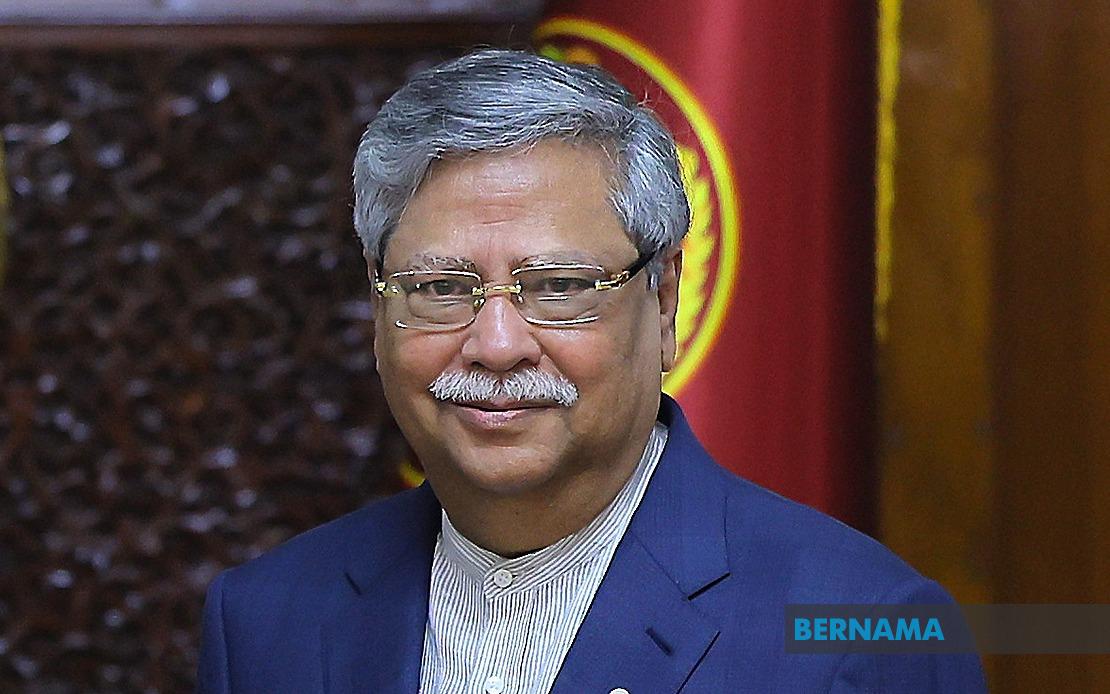
Bangladesh faces a constitutional transition period following the resignation of President Mohammed Shahabuddin, with the nation's law minister confirming that a presidential election will take place when parliament reconvenes in September. The announcement clarifies the timeline for filling the vacant office and sets the stage for parliamentary proceedings that will determine the country's next head of state within the framework established by Bangladesh's Constitution.
Md Asaduzzaman, serving as Law Minister, outlined the constitutional requirements governing the presidential succession during remarks to journalists in Dhaka on Saturday. Under Bangladesh's constitutional framework, a presidential election must occur within 90 days following the sitting president's resignation. This provision ensures that the nation maintains continuity in its highest ceremonial office while allowing sufficient time for parliamentary arrangements and party deliberations.
The parliamentary calendar provides a precise deadline for when this election must occur. The second session of parliament concluded on July 15, and constitutional rules mandate that the third parliamentary session must be convened no later than September 14—precisely two months after the second session ended. This timing creates a defined window during which the electoral process must be completed, ensuring the country avoids an extended period without a constitutionally empowered president.
Speaker Hafiz Uddin Ahmad has already assumed the functions of the presidency, taking on ceremonial and constitutional duties in accordance with Bangladesh's legal provisions. This interim arrangement, confirmed by the Parliament Secretariat to media outlets on Friday, allows for the orderly functioning of state apparatus while the permanent succession is arranged through the formal parliamentary process. The transition reflects the constitutional safeguards built into Bangladesh's governance structure to prevent power vacuums during leadership changes.
President Shahabuddin's departure from office came due to serious health concerns. According to Md Sarwar Alam, the presidential press secretary, Shahabuddin submitted his resignation letter directly to the Speaker, citing the severity of his medical condition as the reason for stepping down. This voluntary resignation, driven by personal health circumstances rather than political pressure, represents a departure from some recent leadership transitions in South Asian politics and underscores the medical complexities that can affect high office.
The presidential election mechanism in Bangladesh vests significant authority in the legislative branch. Members of parliament themselves serve as the electoral college for selecting the nation's president, a system that ties the presidency directly to parliamentary representation and party strength. This arrangement means that control of the legislature effectively determines the presidency, concentrating political influence in the hands of those commanding parliamentary majorities.
With Prime Minister Tarique Rahman's Bangladesh Nationalist Party commanding a substantial majority in the current parliament, the party's choice for the presidency is widely anticipated to prevail in the September election. The BNP's parliamentary dominance translates directly into the power to select the next president, essentially guaranteeing that the party's nominated candidate will secure the office. This concentration of control underscores the significance of recent parliamentary elections in determining Bangladesh's political trajectory for the coming years.
The presidential role in Bangladesh's constitutional system carries ceremonial weight alongside certain constitutional functions, though executive authority rests primarily with the Prime Minister. Understanding this distinction proves important for Southeast Asian observers tracking Bangladesh's political developments, as the presidency represents an important symbolic position and constitutional office rather than the primary locus of executive power. The position nonetheless carries prestige and constitutional significance within the nation's democratic framework.
This succession process occurs against the backdrop of Bangladesh's ongoing political dynamics and its relationship with neighbouring nations in the region. The stability demonstrated through orderly constitutional succession procedures reflects institutional maturity, even as various political forces contend for influence within the democratic system. The September parliamentary session will thus carry considerable weight as a demonstration of constitutional functionality and continuity.
For Malaysian readers monitoring South Asian developments, Bangladesh's presidential succession illustrates the diverse constitutional arrangements existing across the region. While Malaysia operates under a different system of monarchy and parliamentary democracy, understanding how neighbouring nations manage leadership transitions provides context for regional political stability. Bangladesh's constitutional processes, including the 90-day election requirement and parliamentary voting mechanisms, represent a distinct approach to executive succession within the Commonwealth tradition adapted to local circumstances.
The September election also arrives at a moment when Bangladesh continues addressing various governance challenges and development priorities. The transition of the presidency, while constitutionally routine, nevertheless occurs within a broader context of national political dynamics and regional considerations. How the BNP exercises its electoral mandate in selecting the new president may signal priorities and leadership approaches for the coming period.
Looking ahead, the September parliamentary session will mark a formal constitutional milestone as Bangladesh's legislature convenes to elect its new president. The process represents the functioning of democratic institutions and constitutional governance in a major South Asian nation, demonstrating both the predictability of institutional procedures and the reality that parliamentary majorities determine outcomes in this particular system. For observers across Southeast Asia, the Bangladeshi process offers instructive parallels and contrasts to their own systems of governance and succession.

