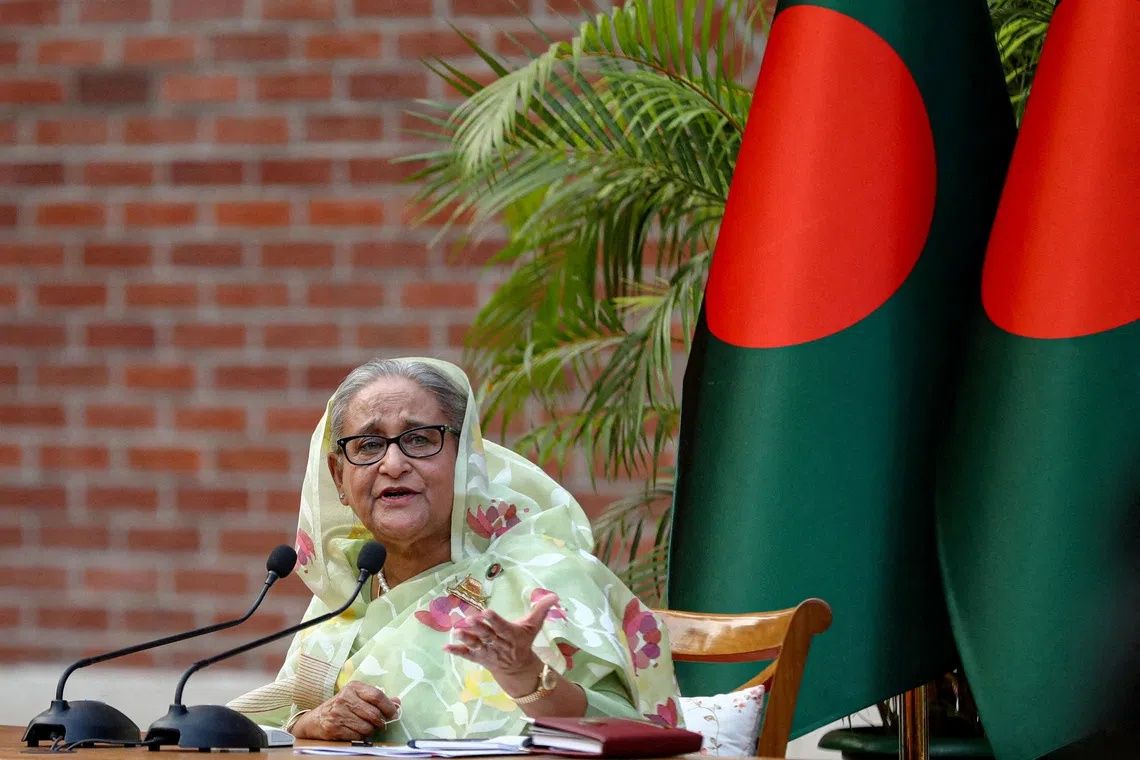
Bangladesh has formally demanded that India clarify its position on permitting exiled former Prime Minister Sheikh Hasina to deliver a virtual speech from New Delhi, cautioning that such allowances could undermine the steady improvement in bilateral relations the two neighbours have been cultivating. The intervention marks Dhaka's first official response to Hasina's planned participation in an August 5 event organised by the Foreign Correspondents' Club of South Asia, which will commemorate the second anniversary of the student-led uprising that toppled her government in 2024.
State Minister for Foreign Affairs Shama Obaed Islam articulated Bangladesh's position to journalists on Monday evening, emphasising that Dhaka seeks constructive engagement with New Delhi and does not wish to see that progress jeopardised by what it views as inappropriate political activities conducted by individuals with fugitive status. The timing of Hasina's intended address has proven particularly sensitive given the recent thaw in Indo-Bangladesh relations and the new political trajectory charted following February's elections that brought Tarique Rahman's government to power. Islam specifically requested clarity from the Indian government on whether it intends to permit such conduct, noting that Dhaka has already raised concerns through diplomatic channels on multiple occasions regarding Hasina and other Awami League figures making political statements from Indian territory.
Since her departure from Bangladesh in August 2024, Hasina has resided in India while facing mounting legal jeopardy in her homeland. The former premier now contends with numerous criminal charges, and in 2025 she was sentenced to death for crimes against humanity linked to a government crackdown on protesters that the United Nations estimates claimed up to 1,400 lives. Hasina has categorically rejected the verdict as legally invalid and lacking legitimacy. Despite these circumstances, she maintained in a recent interview with Reuters that she intends to return to Bangladesh in December, a declaration that compounds the complexity of the current diplomatic situation.
Bangladesh's extradition request remains pending with Indian authorities, representing one of the more delicate aspects of the relationship between the two South Asian neighbours. New Delhi has not yet formally acted on the extradition petition, and the handling of this matter will likely influence how the international community perceives India's commitment to cooperation with Dhaka's new administration. The planned speech from Indian soil raises questions about the boundaries of diplomatic hospitality and the responsibilities of a host nation regarding individuals facing criminal allegations in their country of origin.
The Foreign Correspondents' Club of South Asia has announced that Hasina, now 78 years old, will participate in the August 5 event via video link alongside her son, Sajeeb Wazed Joy, and other speakers. The club declined to immediately respond to inquiries regarding the concerns raised by the Bangladesh government. This arrangement, which allows Hasina to address an international audience from secure premises in New Delhi, presents a test case for how India balances its traditional role as a refuge for political exiles with its contemporary diplomatic obligations to its neighbours.
Islam was careful to note that while Bangladesh does not hold the Indian government responsible for organising the event itself, Dhaka views the provision of a platform for political speech by a fugitive as a matter requiring urgent clarification through official channels. She reiterated that India had previously conveyed to Bangladesh that it did not anticipate fugitives engaging in political activities from its territory, a position that Dhaka is now asking India to enforce in this instance. The statement suggests that the two countries had reached some understanding on this matter during earlier discussions, and Dhaka is calling on New Delhi to honour that understanding.
The Indian foreign ministry has not yet responded to enquiries about its stance on the matter, leaving open the question of how New Delhi will navigate this diplomatic impasse. India's response will carry significant weight, as it could set precedent for how the country handles similar situations involving political exiles from neighbouring states. The silence thus far may indicate that India is considering its options carefully, particularly given the broader context of improving ties with the new Bangladesh government.
The relationship between India and Bangladesh had experienced considerable strain following Hasina's removal from power and her subsequent asylum in India. The transition from her government to Tarique Rahman's administration following February's elections, however, has created fresh opportunities for reconciliation and renewed cooperation on matters of mutual concern, including security, trade, and cross-border issues. Both countries have publicly expressed willingness to move forward constructively, yet this incident threatens to undermine the goodwill that has been painstakingly rebuilt.
From a broader Southeast Asian perspective, the situation underscores the complex dynamics that emerge when political upheaval in one country intersects with regional power relationships and international law. The question of how to balance humanitarian considerations toward political exiles with the sovereign interests of neighbouring nations remains a persistent challenge in the region. India's handling of this particular case will likely influence how other South Asian nations approach similar situations in future, making the stakes higher than they might initially appear.
For Malaysia and other ASEAN members observing from the sidelines, this situation offers lessons about the importance of clear diplomatic protocols governing the conduct of political exiles within national territories. The incident also demonstrates how domestic political transitions can rapidly reshape bilateral relationships and create unexpected friction even as governments publicly commit to improved engagement. As Bangladesh and India continue their diplomatic dance around this issue, the international community will be watching to see whether principle, pragmatism, or politics ultimately determines the outcome.

