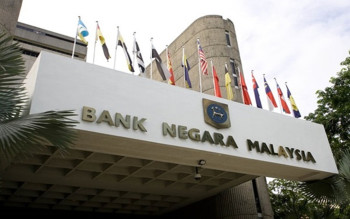
Bank Negara Malaysia issued five separate warning letters to the leadership of Tabung Haji regarding a critical gap between the institution's assets and liabilities, Religious Affairs Minister Dr Zulkifli Hasan disclosed during a parliamentary briefing on the Royal Commission of Inquiry findings. The central bank's escalating warnings underscored serious concerns that TH's financial distress could threaten broader stability in Malaysia's financial system, yet these alerts were reportedly disregarded by the fund's management.
Dr Zulkifli presented his account of TH's regulatory failures during a special parliamentary sitting focused on the RCI report and government action to stabilize the institution. He emphasized that the bank regulator had explicitly stressed the urgency of corrective measures, warning that TH risked continued legal violations if its financial position did not improve immediately. The repeated nature of BNM's correspondence—five distinct letters rather than a single warning—suggests mounting frustration within the regulatory apparatus as TH's situation deteriorated without adequate response from leadership.
The central bank's warnings were subsequently reinforced by criticism from Malaysia's Auditor-General, who issued an Emphasis of Matter notation in relation to TH's 2017 Financial Statements. This auditor's comment flagged manipulation of TH's impairment policy, which the institution revised twice within the same financial year. The sequential policy changes appeared designed to artificially inflate reported profits for 2017, indicating that TH was employing accounting adjustments to mask its true financial condition rather than addressing underlying operational weaknesses.
Following these regulatory rebukes, TH's reconstituted board commissioned PricewaterhouseCoopers to conduct an independent reassessment of the fund's financial standing and operational performance. The international audit firm, appointed in 2018, was tasked with applying rigorous and internationally recognized accounting standards to establish an accurate picture of TH's true position. PwC's subsequent findings proved damaging, confirming that TH had engaged in material financial manipulation.
The PwC audit revealed that of TH's reported RM4.6 billion in total assets, only RM556 million had been valued by qualified professional valuers. This shocking discrepancy meant that more than 88 per cent of TH's stated asset base lacked independent professional validation, representing a massive gap between reported figures and verifiable value. The finding vindicated the concerns raised by BNM and the Auditor-General, establishing beyond doubt that TH's financial statements had been seriously misrepresented to stakeholders and regulators.
The 211-page RCI report, released publicly on July 29, presented a comprehensive examination of TH's institutional weaknesses spanning the 2014-2020 period. The inquiry identified governance failures, operational deficiencies, and control breakdowns that had enabled the financial mismanagement to persist unchecked for years. The extended timeframe covered by the investigation underscores how systemic the problems had become within the organization, suggesting that corrective action required more than superficial reforms.
Among its key recommendations, the RCI proposed 25 substantive improvements to TH's management framework, governance structures, and operational processes. By July 30—just one day after the report's public release—TH indicated that 75 per cent of these recommendations had already been implemented or were in the process of implementation. The rapid action suggests either that TH had begun rehabilitation work in advance of the RCI's formal conclusions, or that many recommendations addressed measures already underway.
For Malaysian depositors and pilgrims who rely on TH as their primary savings and hajj financing vehicle, the revelations carry profound implications. The systematic financial misrepresentation identified by PwC and the regulatory warnings ignored by TH management raised serious questions about the safety of their deposits and the institution's capacity to fulfill its Quranic obligations. The subsequent governance reforms and BNM's enhanced oversight are intended to restore confidence, but rebuilding trust after such extensive institutional failure requires sustained demonstration of competence and transparency.
The government established the RCI in 2021, with formal member appointments confirmed on January 20, 2022. The inquiry's formal presentation to the Yang di-Pertuan Agong occurred on August 30, 2022, establishing the official record of findings. The timeline reveals that awareness of TH's serious problems existed within government circles well before public disclosure, raising separate questions about transparency and how long deterioration had been tolerated before triggering formal investigation.
Regionally, TH's experience carries cautionary implications for other Islamic financial institutions and pilgrimage funds operating across Southeast Asia. The case illustrates how inadequate governance, weak regulatory compliance, and manipulated financial reporting can flourish within institutions entrusted with substantial public assets. Malaysia's experience with TH may prompt neighboring countries to strengthen audit protocols and regulatory frameworks governing similar entities.
The restoration of TH requires not merely technical financial restructuring but fundamental rebuilding of institutional culture and accountability mechanisms. The progression from BNM's unheeded warnings through independent audit findings to formal RCI investigation demonstrates that Malaysian regulatory institutions ultimately possessed sufficient authority and determination to compel accountability. However, the years of tolerance for TH's deterioration before triggering formal inquiry highlight gaps in early intervention mechanisms that authorities might strengthen to prevent similar institutional failures in future.

