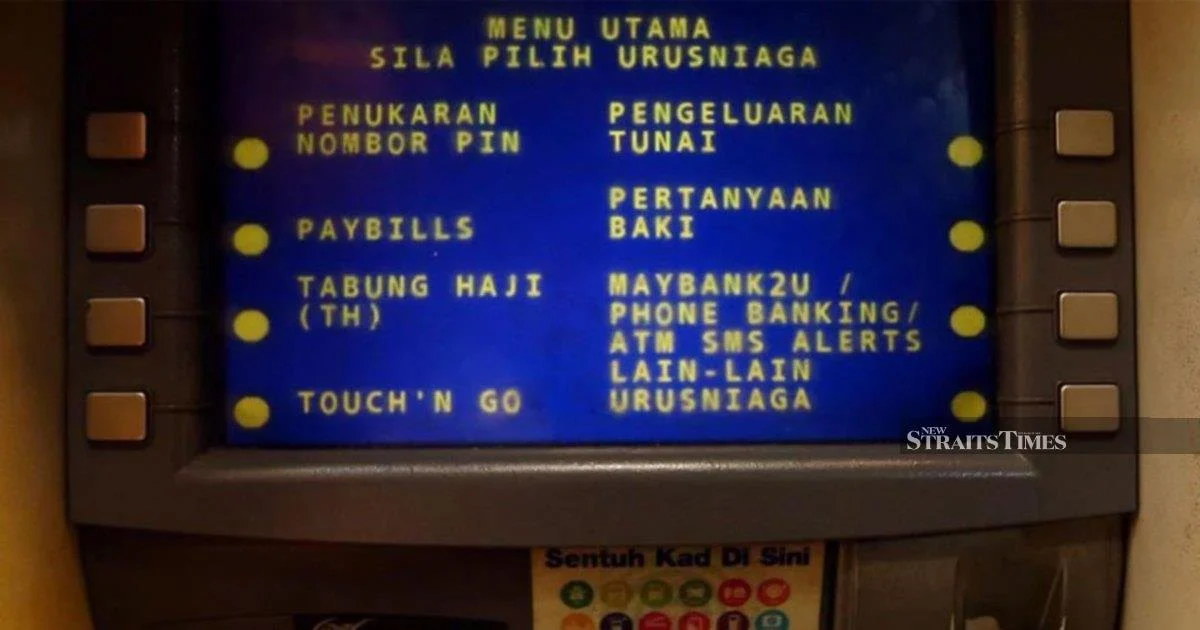
Bank Negara Malaysia is calling on the public to report instances where they are unexpectedly charged the RM1 interbank withdrawal fee while using automated teller machines operated by their own financial institutions, Communications Minister Datuk Fahmi Fadzil announced. The directive underscores the central bank's ongoing commitment to ensuring that banks comply with established rules surrounding ATM transaction fees and protect consumers from erroneous or improper charges.
The RM1 interbank withdrawal fee—a charge applied when customers withdraw cash from ATMs operated by banks other than their own—has long been a point of contention among Malaysian consumers and consumer advocacy groups. The fee structure is designed to offset the operational costs incurred by the ATM-owning bank when serving customers from rival institutions. However, problems emerge when customers are incorrectly charged this fee for transactions conducted at machines belonging to their own bank, where no such fee should apply under the established framework.
Bank Negara's proactive stance in soliciting complaints reflects a broader pattern of regulatory vigilance in the financial services sector. By encouraging customers to document and report these anomalies, the central bank is building a comprehensive picture of compliance failures across the banking industry. This intelligence-gathering approach enables regulators to identify systemic issues, pinpoint institutions with recurring problems, and take corrective action where necessary. The public reporting mechanism effectively transforms consumers into frontline auditors of the banking system.
For Malaysian consumers, many of whom may not fully understand the distinction between interbank and own-bank ATM charges, this development carries practical significance. A customer who uses an ATM belonging to their bank should never encounter the RM1 fee; such charges represent either a technical glitch in the ATM network, human error during transaction processing, or in rarer cases, deliberate misconduct. The frequency with which such incorrect charges occur remains unclear, but Bank Negara's explicit advisory suggests the problem warrants attention and remediation at scale.
The banking sector in Malaysia operates within a competitive environment where customer service and fee transparency have become key differentiators. Banks that consistently apply charges accurately and treat customer complaints fairly build trust and loyalty, while those with poor compliance records face reputational damage and regulatory scrutiny. This incident highlights why operational excellence in transaction processing matters not only for regulatory adherence but for customer retention and brand reputation management.
Consumers wishing to report improper RM1 charges face several avenues of recourse. They can lodge complaints directly with their bank's customer service department, escalate to the bank's internal ombudsman or complaints unit if initial resolution fails, or file reports with Bank Negara through its official channels. Bank Negara Malaysia operates a consumer feedback portal and accepts complaints through multiple platforms, ensuring accessibility for customers across different technical backgrounds and circumstances. Documenting transaction details—including the date, time, ATM location, specific branch, transaction amount, and the charge applied—strengthens complaint cases and aids investigators.
The broader context surrounding ATM fees in Malaysia reflects the central bank's push toward financial inclusion and consumer protection. Excessive or hidden charges can disproportionately affect lower-income Malaysians who rely heavily on cash transactions and may lack sophisticated knowledge of fee structures. By enforcing transparent practices and eliminating erroneous charges, Bank Negara supports equitable access to financial services and reduces the hidden costs of banking for vulnerable populations.
Industry observers note that this advisory also signals Bank Negara's willingness to address friction points in Malaysia's payment infrastructure. As the nation progresses toward greater digital adoption and reduced cash dependence, ATM networks remain critical infrastructure, particularly in underserved areas where digital payment adoption lags. Maintaining public trust in ATM services—and ensuring customers are charged fairly—supports the overall health and acceptance of the financial ecosystem.
For banks themselves, the directive serves as a reminder to audit their systems and staff training protocols. Incorrect fee application can stem from outdated banking software, poor configuration of transaction classification algorithms, or customer service representatives lacking clarity on fee policies. Banks that proactively review their charging systems and rectify errors before complaints accumulate demonstrate responsible stewardship and avoid potential regulatory action. Given that consumer satisfaction remains linked to accurate billing, addressing these issues serves banks' long-term commercial interests.
Looking forward, customers who encounter RM1 charges on own-bank ATM transactions should act decisively rather than accept such charges passively. Reporting ensures that patterns of non-compliance surface, enabling Bank Negara to intervene where systemic failures exist. The central bank's public advisory, delivered through Communications Minister Fahmi Fadzil, legitimises and encourages this reporting behaviour, empowering consumers to play an active role in maintaining banking system integrity and fairness in Malaysia's financial landscape.

