The landscape of corporate lending in Malaysia is shifting beneath the feet of business leaders who have not yet embraced sustainability reporting. Financial institutions across the country are moving beyond suggestions and are now making environmental, social and governance (ESG) documentation a formal requirement for companies seeking credit facilities. This emerging standard reflects a fundamental reorientation of how lenders assess risk and opportunity in an era where sustainability considerations have become inseparable from financial performance.
According to Prathab V, principal consultant at ESGright Sdn Bhd, this transformation carries significant implications for Malaysian companies of all sizes. Both large corporations and small and medium enterprises stand to gain substantial advantages by meeting these reporting demands, as compliance opens pathways to capital, market access, and sustained competitive advantage. The move by banks reflects a broader global trend where investors and lenders view sustainability performance as a material indicator of long-term viability and operational resilience. Companies that can demonstrate robust environmental and social practices increasingly signal lower risk profiles to financial decision-makers.
While listed companies in Malaysia face mandatory requirements to publish sustainability statements under Bursa Malaysia rules, unlisted firms currently face no such obligation. However, this regulatory distinction masks a deeper commercial reality taking shape in boardrooms and bank headquarters. To genuinely compete for investment capital and access the world's most attractive markets, companies of any listing status are discovering that voluntary adoption of sustainability reporting has become practically necessary. The competitive pressure is mounting not from regulation alone but from the financial sector's own risk assessment calculus.
The Malaysian government has been actively encouraging businesses to pursue sustainability reporting through various regulators and industrial guidelines, recognising that corporate environmental and social responsibility strengthens the nation's economic resilience. Prathab emphasised that companies demonstrating superior sustainability performance gain preferential access to what he terms "smart capital"—investment from sophisticated funds prioritising long-term value creation over short-term returns. Conversely, enterprises that neglect this agenda face a gradual but inexorable erosion of competitive standing as they confront peers who have already embedded sustainability into strategy and operations.
The financial burden of launching sustainability reporting often deters smaller firms, yet evidence suggests the costs are manageable. Prathab stressed that implementing these practices does not require prohibitively expensive outlays. Rather, the investment involves developing governance systems, formalising policies, and transparently documenting existing or planned environmental and social initiatives. For many companies, the exercise involves rationalising and communicating work already underway rather than engineering entirely new operations from scratch.
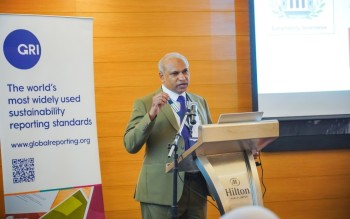
To underscore the urgency of this transition, ESGright recently convened a dialogue between roughly forty corporate sustainability executives and industry stakeholders in partnership with the Global Reporting Initiative (GRI), an international standard-setter for sustainability disclosure. The assembly alone testified to the stakes involved: participating firms collectively commanded market capitalisation exceeding RM380 billion. Such concentration of economic power in the room signalled how seriously Malaysia's corporate establishment views the sustainability reporting pivot. ESGright itself has ascended to the fifth position globally among GRI professional trainers by 2025 participant numbers, while ranking third across the Asia-Pacific region—a measure of how rapidly demand for expertise in this domain is escalating.
Malaysia has cultivated one of the highest concentrations of trained GRI professionals within ASEAN, a distinction reflecting government commitment to building domestic expertise. Recently, ESGright secured appointment as Malaysia's first approved education partner for the International Financial Reporting Standards Foundation, which administers qualifications in sustainability-related financial disclosure aligned with the International Sustainability Standards Board standards. This partnership equips Malaysian corporate professionals, investors, auditors and consultants with knowledge and practical competencies required to navigate increasingly sophisticated global expectations around sustainability-linked financial reporting.
GRI chief executive Robin Hodess highlighted an often-overlooked dimension of this movement: the particular challenges facing small and medium enterprises. Unlike multinational corporations with dedicated sustainability departments and substantial budgets, SMEs typically operate with constrained resources and multiple competing priorities. A one-size-fits-all reporting framework would overwhelm many family businesses and emerging companies struggling with operational challenges. Hodess advocated for frameworks calibrated to business needs and resource realities, allowing SMEs to progress meaningfully on their sustainability journeys without facing compliance regimes designed for Fortune 500 enterprises. She noted that suppliers especially should embrace reporting, as it unlocks supply chain opportunities that remain crucial for survival in an increasingly transparent global economy.
Large Malaysian corporations, particularly those listed on Bursa Malaysia, have largely embraced the sustainability transition. Many adopted GRI Standards well before mandatory disclosure requirements took effect, anticipating that embedding ESG practices would become essential for exporting goods and competing internationally. This foresight reflected recognition that sustainability has evolved from a corporate responsibility appendix into a core business requirement. The firms that moved earliest now enjoy operational fluency and investor familiarity with their disclosures, while laggards must compress years of development into months to avoid market disadvantage.
Yet complexity remains an impediment even for committed organisations. The proliferation of reporting frameworks and disclosure standards—each with distinct methodologies and demands—has created what specialists call compliance fatigue. Prathab identified this as a significant challenge, as companies struggle to balance rigorous sustainability accountability with their primary mission of generating shareholder returns. The executive recommended a pragmatic approach: rather than attempting comprehensive excellence across all ESG dimensions, companies should identify where their activities create the greatest environmental or social impact and concentrate resources on achieving excellence in those priority areas. This focused strategy yields more authentic improvements than superficial compliance across numerous metrics.
The evolving Malaysian financial landscape signals that companies can no longer treat sustainability reporting as peripheral to strategy. As banks condition credit access on ESG documentation and investors increasingly scrutinise sustainability performance, the financial ecosystem itself is enforcing what was once merely encouraged. For Malaysian firms—from established conglomerates to emerging enterprises—the question has shifted from whether to engage sustainability reporting to how quickly they can build credible, material disclosures that reflect genuine commitment to environmental stewardship, social responsibility, and sound governance. Those who recognise this inflection point and act decisively will find capital easier to access and markets more welcoming. Those who delay risk discovering that their competitors have already claimed the ground they are now scrambling to defend.

